
Infections and ulcers
Infection can damage the corneal surface and deeper tissue. Prompt examination helps identify the cause and guide treatment.
Care for the clear front window of your eye—from infections and surface problems to corneal transplantation.
Book a cornea assessmentThe cornea is the transparent front surface of the eye. It helps focus light so you can see clearly. Scarring, swelling or an uneven surface can affect how light enters the eye.
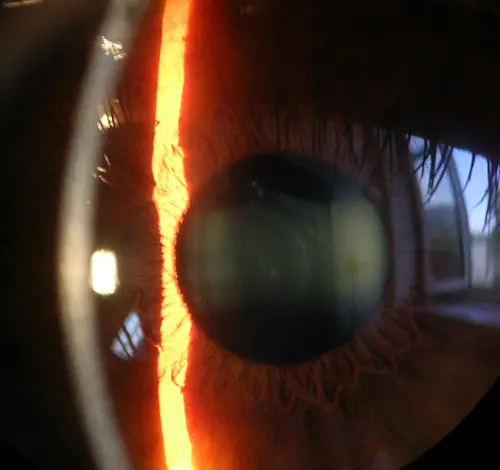
Infection can damage the corneal surface and deeper tissue. Prompt examination helps identify the cause and guide treatment.
Scars after infection or injury may reduce clarity or distort vision. Treatment depends on their depth, location and effect on sight.
The inner cell layer helps keep the cornea clear. When these cells do not work well, fluid can build up and blur vision. Fuchs dystrophy is one cause.
The surface layer can repeatedly loosen, causing pain, watering or light sensitivity, sometimes on waking. Treatment helps the surface heal and stay protected.
Blurred or distorted vision, light sensitivity, recurrent discomfort or a known corneal condition may need specialist assessment. We examine the cornea and eye surface to identify the cause and discuss the next step.
Your visit includes an eye examination and review of symptoms, contact lens use and previous treatment. Corneal mapping, thickness measurement, anterior segment OCT or endothelial cell assessment may be recommended. Suspected infections may need a sample for testing. Investigations are selected according to your condition.
Treatment may include prescription drops, treatment of infection or inflammation, and measures to protect the eye surface. Selected patients may benefit from a surface procedure or corneal transplant. The choice depends on the diagnosis, the affected corneal layers and investigation results.
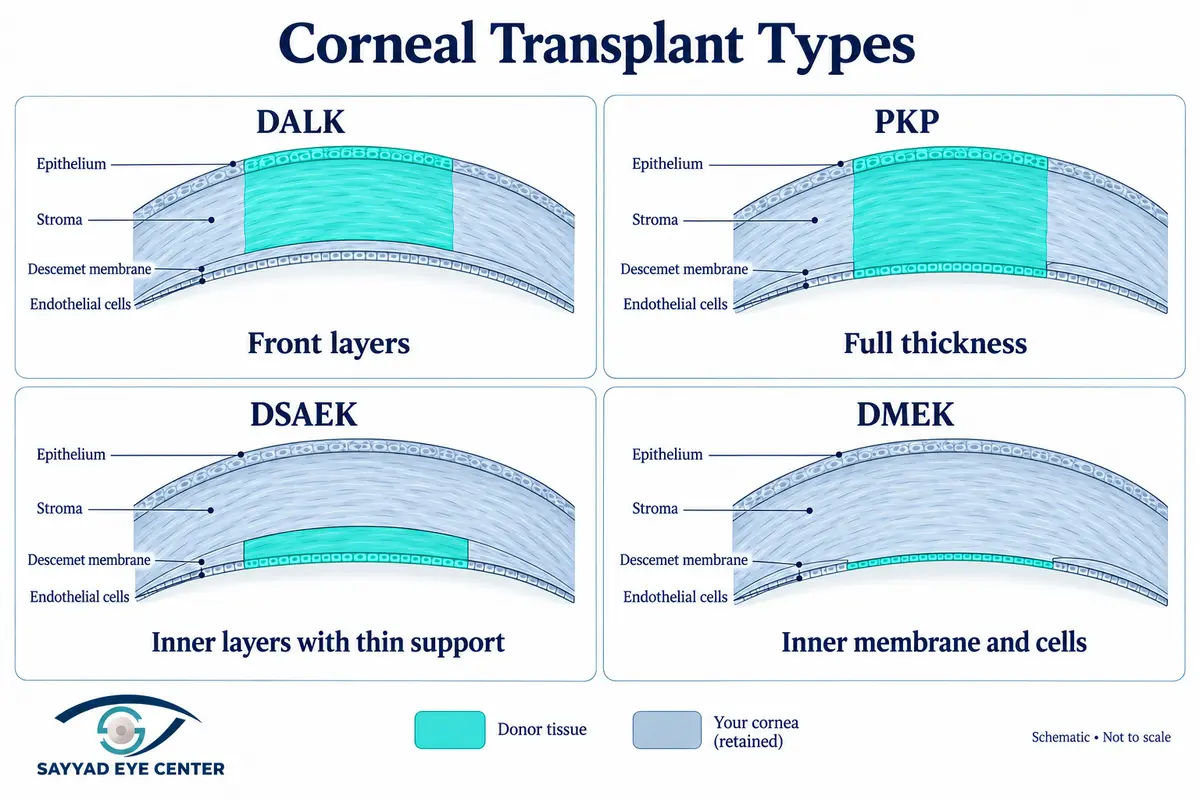
A transplant replaces damaged corneal tissue with donor tissue. Where suitable, only the affected layers are replaced.
A transplant may be considered when lasting corneal damage significantly affects vision despite suitable treatment. Occasionally, severe infection or thinning requires surgery to preserve the eye. The aim, timing and expected benefit are discussed for your individual case.
| Procedure | What it replaces |
|---|---|
| DALK | Front corneal tissue, preserving the healthy inner lining. |
| DMEK | The inner cell layer and its thin supporting membrane. |
| DSAEK | The inner cell layer, its membrane and a thin layer of supporting tissue. |
| PKP | All layers of a central section of the cornea. |
DALK may suit selected scars or other damage in the front layers when the inner lining is healthy. DMEK or DSAEK may be considered for inner-layer failure, including Fuchs dystrophy. PKP may be needed when damage involves the full thickness. Examination and investigations determine which approach is suitable.
Recovery varies with the condition and procedure. Transplants require prescribed drops and ongoing follow-up; glasses or contact lenses may still be needed. Risks include infection, rejection or graft failure, pressure changes and further procedures. Your surgeon will explain the benefits, limitations and aftercare for your case.
No. Many conditions are managed with medicines, lubrication or specialist contact lenses. Surgery is considered when these are unsuitable or do not provide enough benefit, or when urgent treatment is needed to protect the eye.
The decision follows examination and investigations. Your surgeon considers which layers are damaged, the health of the inner lining, previous surgery and the rest of the eye.
Possibly. A clearer cornea does not guarantee freedom from glasses or contact lenses. The final vision also depends on healing and the health of the rest of the eye.
There is no single recovery timetable. Your surgeon will advise when you can work, exercise and drive, and whether you need temporary positioning after surgery. Vision may continue changing while the eye heals.
Book an assessment to review your symptoms, examination findings and treatment options.
Book a cornea assessment