
Tear quantity
Too little watery tear secretion can leave the surface inadequately lubricated.
A stable tear film supports comfortable eyes and clear vision. Effective dry-eye care starts by identifying why the surface is becoming dry or irritated.
Book an eye assessmentDry eye develops when the tear film is unstable or insufficient and the eye surface becomes irritated or inflamed. Symptoms can include burning, grittiness, fluctuating blur, tired eyes and contact-lens discomfort. Some people have watering rather than a dry sensation.
Assessment distinguishes reduced tear production from excessive evaporation, often linked to meibomian gland dysfunction in the eyelids. Both mechanisms can occur together. Allergy, lid inflammation and incomplete closure can also contribute to surface symptoms.
Too little watery tear secretion can leave the surface inadequately lubricated.
An altered oil layer can allow tears to break up or evaporate too quickly.
Blinking, lid position and inflammation affect how tears spread and protect the cornea.
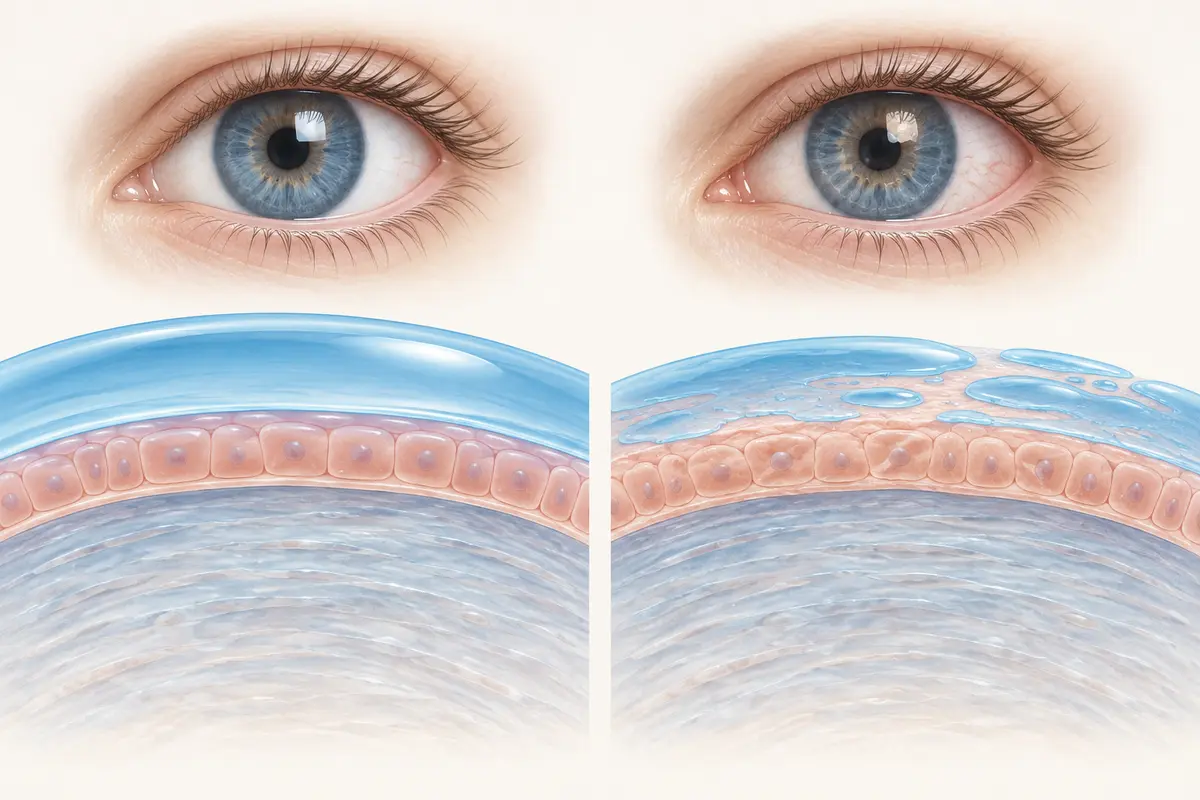
The examination checks the lids, gland openings, blinking and corneal surface using the slit lamp. Tear breakup time and surface staining help assess stability and irritation. Tear-production testing, such as a Schirmer test, is useful in selected cases.
Symptoms, screen habits, contact-lens use, medicines and previous eye surgery help explain the findings. Dry mouth, joint symptoms or other systemic features may support further investigation. No single measurement fully describes dry-eye disease.
| Option | When it may help | What to know |
|---|---|---|
| Lubricating drops, gels or ointments | Supplement the tear film and reduce surface friction. | Preservative-free preparations are often useful with frequent use or a sensitive surface. Thicker products may temporarily blur vision. |
| Eyelid care and comfortable warm compresses | Help selected cases of blepharitis or obstructed meibomian glands. | Use gentle cleaning and warmth, not excessive heat or forceful pressure. Regular care is often needed. |
| Prescription anti-inflammatory treatment | Addresses inflammation when lubrication alone is insufficient. | Some treatments take time to work. Steroid drops require a defined course and monitoring; they are not a routine self-treatment. |
| Tear-conserving plugs | Reduce tear drainage in selected patients with inadequate tears. | Suitability depends on the surface findings and control of inflammation. Watering or plug loss can occur. |
| Specialist surface protection | Selected severe cases may benefit from scleral lenses or other specialist therapy. | This requires individual fitting or a specific treatment plan and does not replace care of the underlying cause. |
Take regular screen breaks and blink fully. Avoid direct airflow from fans or air conditioning, reduce exposure to smoke and use eye protection in dry or windy conditions. A lower screen position can reduce the exposed eye surface.
Keep reusable contact lenses properly cleaned and reduce wear when they worsen symptoms. Persistent discomfort needs reassessment of fit and surface health, rather than simply increasing wearing time.
An irregular tear film can make vision fluctuate and affect corneal measurements used for cataract and refractive surgery. Treating surface disease first can improve the consistency of preoperative measurements; some tests may need repeating.
Dry eye often fluctuates and may require ongoing care. Treatment success is assessed through comfort, visual quality and examination findings. Persistent pain despite a relatively quiet surface may have additional causes and warrants reassessment.
Surface irritation can trigger reflex tearing. These extra tears may not form a stable film or address the underlying problem.
Yes. An unstable tear film can cause blur that changes with blinking. Persistent or sudden reduced vision needs assessment for other causes.
Concentrated screen use can reduce complete blinking and worsen evaporation. Breaks, full blinking and environmental changes can ease symptoms.
No. Formulations differ in viscosity, ingredients and preservatives. Selection depends on symptoms, frequency of use, contact lenses and examination findings.
They do not correct tear-film instability. Some products can mask redness or cause rebound redness with repeated use.
Some people can after improving surface health or changing the fit or material. Remove lenses if the eye becomes painful or red, and arrange prompt assessment.
No. Itching is common in allergy, while burning and grittiness are common in dry eye; overlap is possible. Examination helps distinguish them.
Some triggers are temporary, but many cases are chronic and need maintenance. Symptoms can recur when contributing factors persist.
A stable surface supports more reliable measurements and comfort. Significant surface disease may need treatment before final planning for cataract or refractive surgery.
Bring previous eye reports, current prescriptions and a list of medicines to your appointment.
Content prepared: 9 October 2026