
Anterior
Inflammation mainly in the front of the eye, often with pain and light sensitivity.
Inflammation inside the eye needs timely assessment. Treatment depends on where it occurs, how active it is and whether infection or another condition is involved.
Book an eye assessmentUveitis describes inflammation involving the uveal tract and often nearby structures. It may affect one or both eyes and can be a single episode, recurrent or persistent.
Possible causes include immune-mediated disease and infection. Associations include conditions such as Behçet disease, certain forms of arthritis and sarcoidosis. In some cases, no underlying cause is identified. Redness alone cannot distinguish uveitis from other eye conditions.
Inflammation mainly in the front of the eye, often with pain and light sensitivity.
Inflammation mainly in the vitreous region; floaters and blur may be prominent.
Posterior disease affects the retina or choroid. Panuveitis involves inflammation across the front, middle and back.
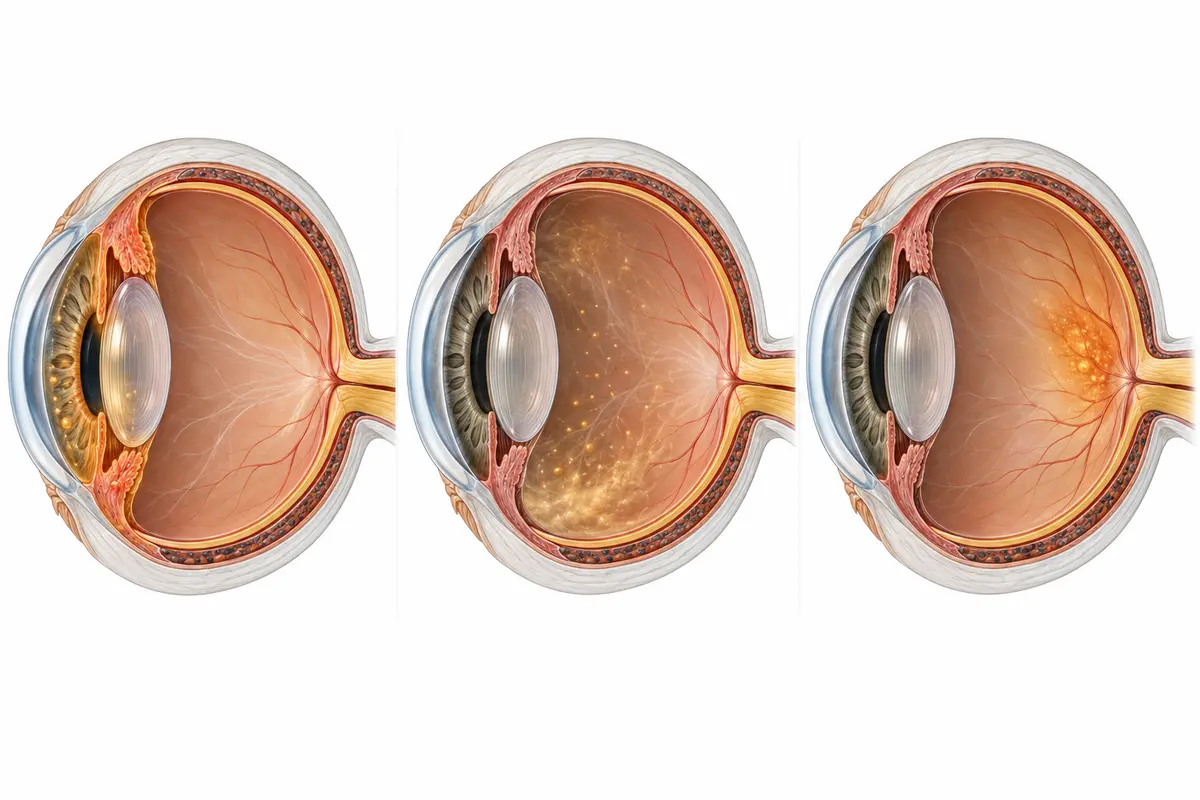
Examination includes vision, slit-lamp assessment of inflammatory cells, eye pressure and a dilated retinal examination. OCT can identify macular swelling; other imaging is used when it adds useful information.
Blood tests, infection testing or systemic assessment are selected from the eye findings, symptoms and medical history. There is no single test panel appropriate for every patient. Recurrent or complex disease may require coordinated care with rheumatology or other specialties.
| Option | When it may help | What to know |
|---|---|---|
| Anti-inflammatory eye drops | Often used for anterior inflammation. | Steroid strength and frequency are adjusted to activity, then tapered. Pressure and lens changes require monitoring. |
| Dilating / cycloplegic drops | Ease painful spasm and help prevent or manage iris adhesions in selected anterior cases. | They temporarily blur near vision and can increase light sensitivity. |
| Systemic or locally delivered treatment | Selected deeper, severe or persistent non-infectious disease may need steroid treatment beyond drops. | The route depends on the affected area and severity. Benefits are balanced against eye and whole-body risks. |
| Steroid-sparing medicines or biologics | Selected recurrent or chronic non-infectious inflammation. | Require specialist supervision, appropriate infection screening and ongoing monitoring, often including blood tests. |
| Treatment for infection | Antimicrobial treatment matched to the suspected or confirmed cause. | Steroids alone can worsen some infections. Infection must be considered before suppressing inflammation. |
Symptoms may improve before the eye is quiet. Follow-up checks disease activity, pressure and the retina, and guides treatment reduction. Do not restart leftover steroid drops or abruptly stop a prescribed steroid course without an agreed tapering plan.
Bring a full medicine list and mention joint pain, mouth or genital ulcers, skin changes, respiratory symptoms, recent infection and previous episodes. These details can help direct investigation.
Complications can include macular swelling, cataract, raised pressure or glaucoma, and adhesions involving the iris. Detecting these changes early is part of care, including during symptom-free periods.
Surgery may treat a complication such as cataract or glaucoma; it is not a general cure for the inflammatory tendency. The timing depends partly on inflammation control.
Some children with juvenile idiopathic arthritis develop silent anterior uveitis. Scheduled screening is needed according to their risk even if the eyes look normal and vision seems fine.
Inflammation itself is not contagious. If an infection is the underlying cause, any transmission advice depends on that infection.
No. Intermediate and posterior inflammation may cause floaters or blurred vision without obvious redness or pain.
Yes. Some people have a single episode, while others have relapses or persistent disease. The pattern influences treatment and follow-up.
They can investigate a suspected systemic or infectious cause, or monitor treatment safety. The choice depends on the examination and history.
They are effective when appropriately prescribed and monitored. Possible problems include raised eye pressure, cataract with prolonged use and worsening of an untreated infection.
Inflammation may remain after symptoms settle, and rapid withdrawal may allow it to flare. Dose reduction is based on examination findings and the treatment plan.
Dilation can blur vision and increase glare. Do not drive until vision has returned to a safe level; near work may also be difficult temporarily.
Surgery usually addresses a complication rather than the cause of inflammation. Medical control and monitoring may still be necessary.
Yes. Uveitis associated with juvenile idiopathic arthritis can be silent. Screening follows a risk-based schedule rather than waiting for symptoms.
Bring previous eye reports, current prescriptions and a list of medicines to your appointment.
Content prepared: 9 October 2026