
Eyelid position
Drooping, inward-turning or outward-turning eyelids can affect vision, comfort and protection.
Comfort, eye protection and appearance are closely connected. Oculoplastic care addresses the eyelids, tear-drainage system and tissues around the eye.
Book an eye assessmentA heavy upper eyelid can result from a low lid margin (ptosis), excess skin (dermatochalasis), a low brow or a combination. These problems need different corrections. Assessment also considers blinking, eye closure and the condition of the cornea.
Watery eyes may arise from blocked tear drainage, poor eyelid position or irritation—including dry eye. Identifying the cause helps avoid a procedure that does not address the problem.
Drooping, inward-turning or outward-turning eyelids can affect vision, comfort and protection.
Persistent watering or recurrent infection can indicate a drainage problem.
Lumps, changing lesions, eye prominence and asymmetry need a focused assessment.
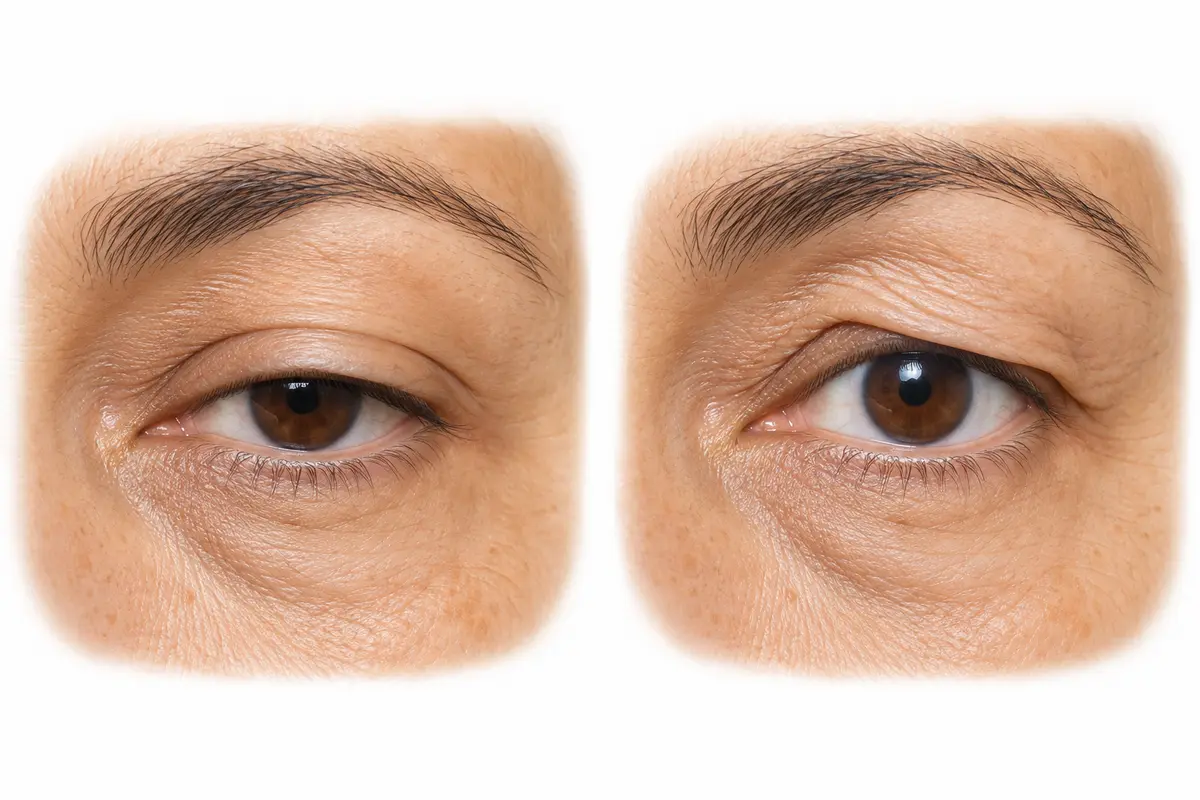
Eyelid assessment measures lid height, muscle function, brow position and closure, and checks the ocular surface. Photographs and visual-field testing may help document functional obstruction.
Watering-eye assessment may include tear-drainage tests or irrigation. Imaging or a biopsy is reserved for relevant findings, such as an orbital problem or a suspicious lesion. Medical history, previous procedures and medicines that affect bleeding are part of planning.
| Option | When it may help | What to know |
|---|---|---|
| Ptosis repair | Raises a low eyelid margin by adjusting its lifting mechanism. | The technique depends on muscle function; selected cases need a brow suspension. Perfect symmetry is not guaranteed. |
| Blepharoplasty | Removes or repositions selected excess eyelid tissue. | It does not automatically correct true ptosis or a low brow. Eye closure and surface comfort must be protected. |
| Entropion or ectropion repair | Corrects inward-turning lashes or an outward-turning lid. | Lubrication may ease irritation temporarily, while surgery addresses the underlying position. |
| Tear-drainage treatment / DCR | Treats selected obstruction; DCR creates a route from the tear sac into the nose. | Not all watering is due to a blockage. Persistent symptoms or narrowing of the new route can occur. |
| Lesion removal and reconstruction | Treats selected eyelid lumps or suspicious lesions. | Some lesions need tissue analysis. Reconstruction depends on the size and location of the defect. |
A procedure may improve a blocked upper visual field, lashes rubbing the eye or poor tear drainage, as well as appearance. The plan should match the anatomical problem and allow comfortable blinking and closure.
Orbital symptoms, including thyroid-related eye changes, may require imaging and coordinated care with other specialties. Treatment depends on the cause and activity of the condition.
Many eyelid procedures use local anaesthesia, sometimes with sedation; others need general anaesthesia. Bruising and swelling are common, and final contour takes time to settle. The return to work varies with the procedure and recovery.
Possible problems include asymmetry, over- or under-correction, dry eye, incomplete closure, visible scarring, bleeding and infection. Rare bleeding around the eye can threaten vision. Further treatment may be needed.
A persistent lump that enlarges, bleeds, ulcerates or causes lash loss needs assessment. Many eyelid lesions are benign, but appearance alone does not always establish the diagnosis.
No. It can address impaired visual fields, corneal irritation, poor closure and tear-drainage problems, as well as appearance.
No. Ptosis repair raises the lid margin; blepharoplasty addresses excess tissue. Some people need both, while others need a different approach.
Yes. Surface irritation can trigger reflex tearing. A tear-duct operation will not reliably solve watering caused mainly by an irritated ocular surface.
It bypasses an obstructed tear-drainage route by creating an opening between the tear sac and nose. It does not increase tear production.
Incisions are planned with the eyelid anatomy in mind, but a scar is possible. Its appearance depends on the procedure, skin and healing.
Do not stop them independently. Any change requires a preoperative plan that balances bleeding risk against the reason the medicine was prescribed.
Yes. Ageing, tissue healing and the underlying cause can affect the result. Some patients need further adjustment or treatment.
No; many are benign. Growth, bleeding, ulceration, distortion or lash loss increases the need for examination and sometimes biopsy.
Natural facial asymmetry and healing differences limit perfect symmetry. The aim is a balanced result with safe eyelid function.
Bring previous eye reports, current prescriptions and a list of medicines to your appointment.
Content prepared: 9 October 2026