
Open-angle glaucoma
The drainage angle is open, but fluid outflow is impaired. Progression is often gradual.
Protecting the optic nerve starts with early detection. Treatment lowers eye pressure and aims to slow or prevent further loss of vision.
Book an eye assessmentGlaucoma is a group of conditions that damage the optic nerve. The common open-angle form usually causes no early pain or noticeable symptoms. Peripheral vision may be affected before central vision changes.
High eye pressure is an important risk factor, but glaucoma can occur with pressure in the usual range. Conversely, raised pressure does not always mean glaucoma. Treatment protects remaining vision; it cannot restore nerve tissue already lost.
The drainage angle is open, but fluid outflow is impaired. Progression is often gradual.
The iris narrows or blocks the drainage angle. It may develop slowly or cause an acute emergency.
Pressure is raised without detectable glaucomatous damage. Monitoring or treatment depends on the risk of future damage.
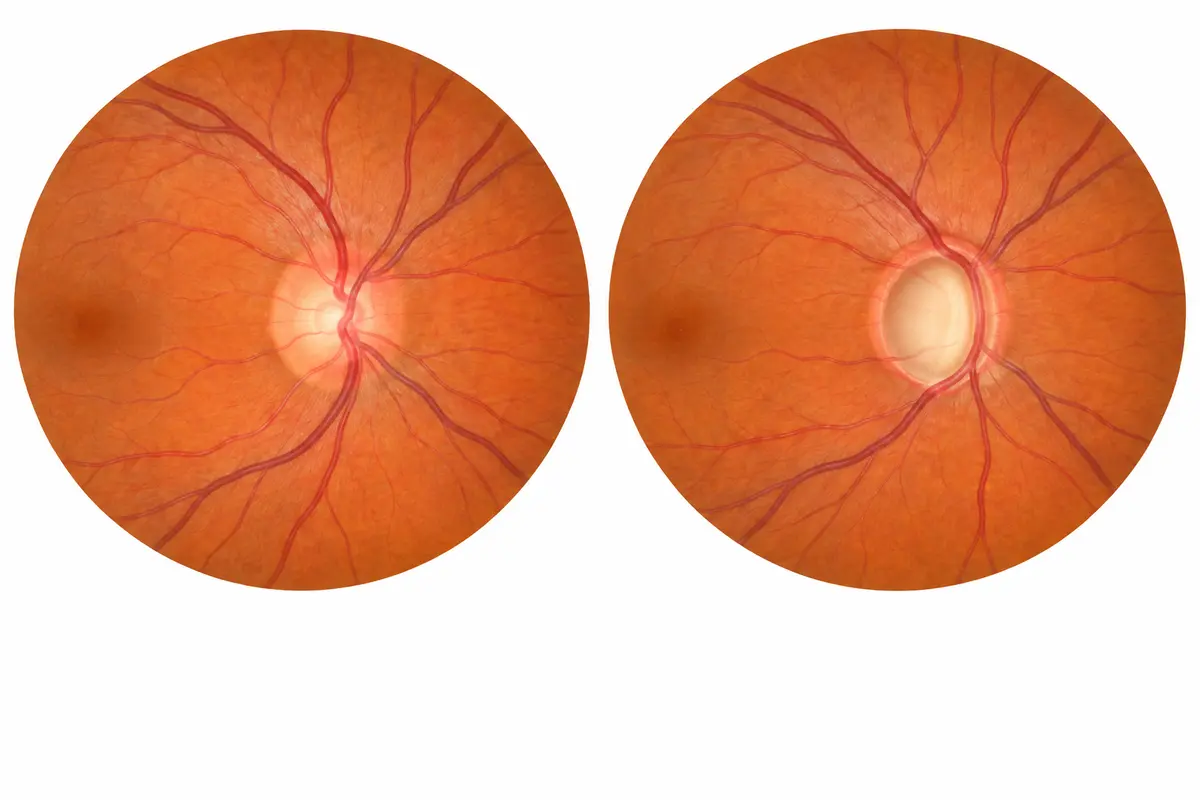
Assessment combines eye-pressure measurement, corneal thickness, examination of the drainage angle (gonioscopy), and a dilated optic-nerve examination. OCT measures nerve-fibre and related retinal layers; visual-field testing assesses function.
Repeat tests help distinguish normal variation from change over time. The target pressure and follow-up interval depend on the amount and rate of damage, baseline pressure, age and other risk factors.
| Option | When it may help | What to know |
|---|---|---|
| Prescription eye drops | Reduce fluid production or improve outflow. | Regular use matters. Side effects, other illnesses and difficulty using drops influence selection. |
| Selective laser trabeculoplasty (SLT) | Improves drainage in suitable open-angle disease; can be an initial treatment or an alternative/addition to drops. | Its effect varies and may lessen over time. Some people still need drops or further treatment. |
| Laser peripheral iridotomy | Creates a small opening in the iris for selected angle-closure mechanisms. | It is different from SLT. Lens surgery or other treatment may still be needed. |
| Trabeculectomy or drainage implant | Creates another route for fluid when greater pressure reduction is needed, including some advanced cases. | Needs close postoperative care; pressure may become too low or remain too high. |
| Minimally invasive glaucoma surgery (MIGS) | Selected cases, often alongside cataract surgery. | Different devices have different indications. MIGS may not achieve the low pressures required in advanced glaucoma. |
Use prescribed drops consistently and attend follow-up even when vision feels unchanged. Bring all drops to appointments and report irritation, breathing symptoms or other side effects. Do not stop treatment because one pressure reading is normal.
Visual fields and OCT trends guide care alongside pressure. A successful laser or operation does not remove the need for monitoring.
Risk rises with age, a family history of glaucoma and certain eye conditions. Previous eye injury and steroid exposure are also relevant. First-degree relatives of someone with glaucoma benefit from an eye assessment; the timing depends on their age and risk.
No. Cataract clouds the natural lens; glaucoma damages the optic nerve. They can coexist. Cataract surgery does not reverse glaucomatous nerve damage.
Yes. Normal-tension glaucoma occurs despite pressure readings within the usual range. Optic-nerve findings and visual-field changes are central to diagnosis.
It is usually managed as a long-term condition. Lowering pressure reduces the risk of progression, but existing nerve damage is irreversible.
No. Treatment for ocular hypertension is based on the likelihood of future visual impairment. Some people need monitoring; others benefit from pressure reduction.
No. Glaucoma lasers act on drainage or the iris to manage pressure or angle closure. LASIK and similar procedures reshape the cornea to change focus.
Possibly. The response and target pressure determine whether medicines remain necessary. Continue the prescribed regimen until it is formally changed.
Its main purpose is to preserve remaining sight by reducing pressure. It does not restore visual-field loss caused by optic-nerve damage.
Results can vary with attention and familiarity. Repeated tests confirm findings and show whether vision is changing.
Steroids can raise eye pressure in susceptible people. Use them only for a defined indication with appropriate monitoring, and include all steroid medicines in your medication history.
Bring previous eye reports, current prescriptions and a list of medicines to your appointment.
Content prepared: 9 October 2026