Eye and Eyelid Allergies
Learn how eye allergy differs from eyelid dermatitis, which triggers can cause itching or swelling, and when symptoms warrant an eye examination.
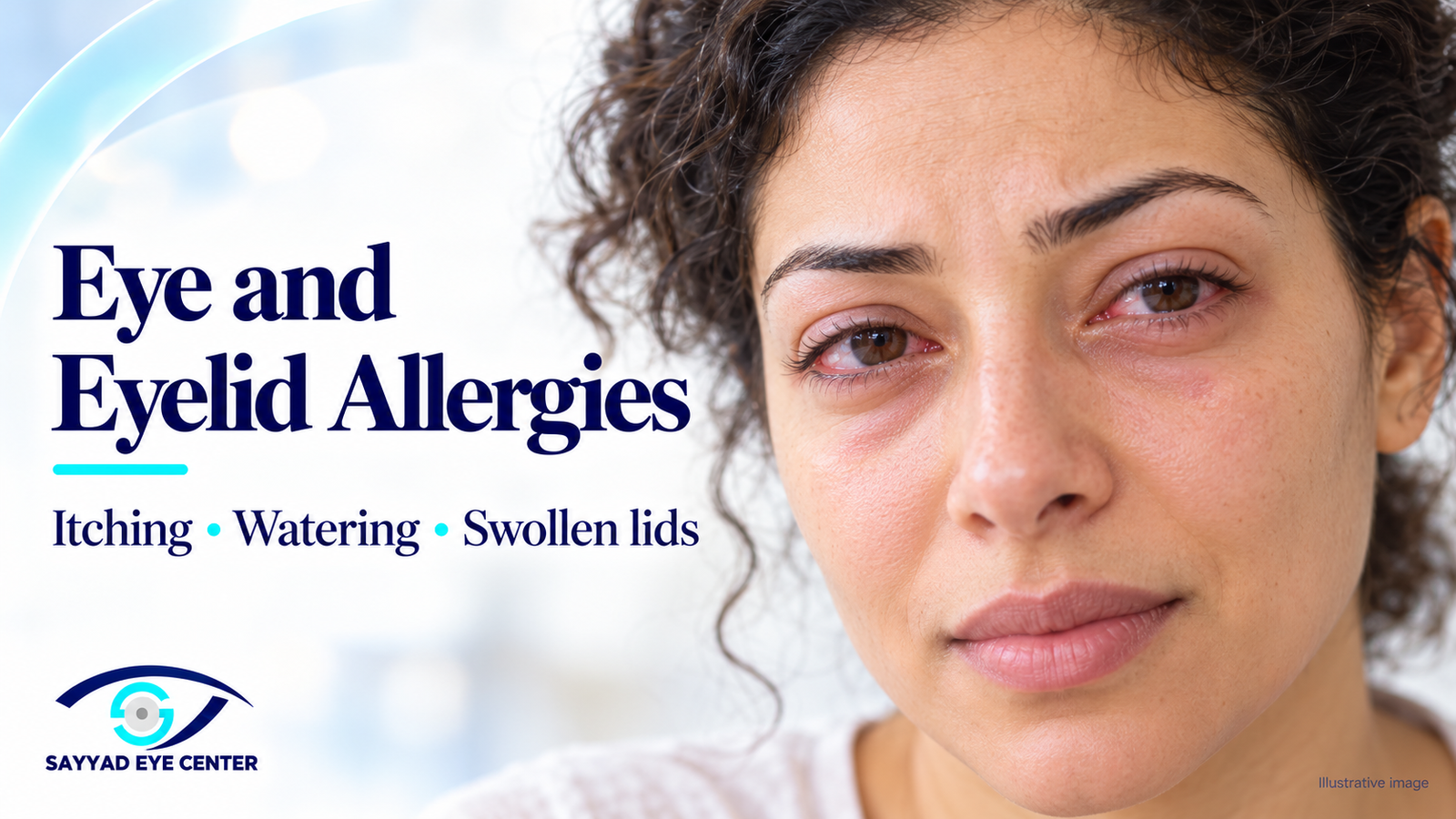
Why your eyes itch, why your eyelids swell, and what actually helps
Itchy eyes can be surprisingly disruptive. You rub them for a moment of relief, but the itching returns. Your eyes water, your eyelids look puffy, and the drops you tried may not seem to help.
Allergy is a common explanation, but not every itchy or swollen eye has the same problem. Sometimes the allergy affects the surface of the eye. Sometimes it affects the eyelid skin. Dry eye and eyelid inflammation can cause similar symptoms and may occur alongside an allergy.
Understanding which part is affected helps us choose the right treatment.
Is it an eye allergy or an eyelid allergy?
An eye allergy, also called allergic conjunctivitis, affects the thin membrane covering the white of the eye and lining the eyelids. Itching is usually the main symptom, often accompanied by redness, watering and swelling. Both eyes are commonly affected, although one may be more uncomfortable.
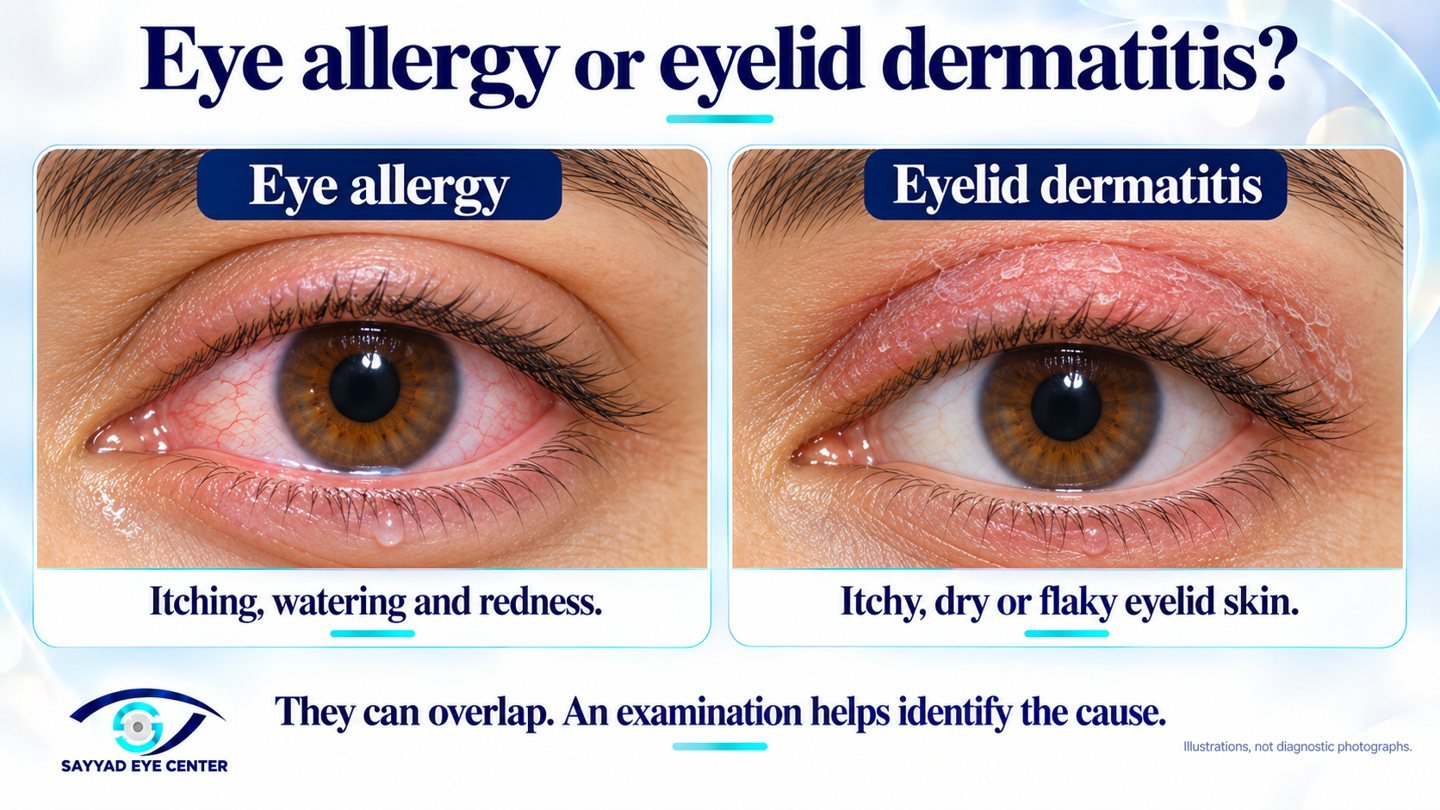
An eyelid skin reaction, called contact dermatitis, is different. The skin may become itchy, dry, flaky or swollen after contact with a product or substance. Some reactions are allergic, while others result from irritation.
These conditions can overlap. However, allergy eye drops alone may not settle an eyelid skin reaction if the triggering product is still being used.
What commonly triggers symptoms?
Airborne allergens include pollen, house dust mites, animal dander and mould. Symptoms may appear during particular seasons or continue throughout the year.
Smoke, dust and strong fragrances can irritate the eyes without necessarily causing a true allergy.
For eyelid skin, triggers can include:
Eye makeup, skincare products and fragrances.
Eyelash adhesives and some cosmetic treatments.
Hair dye and nail products transferred from the fingers to the eyelids.
Ingredients or preservatives in eye drops and contact lens solutions.
A reaction can develop even to something you have used previously without difficulty.
Could it be dry eye or an infection instead?
There are useful clues, but symptoms alone do not always give a definite answer.
Allergy usually causes prominent itching, often in both eyes. Sneezing or an itchy nose may occur too.
Dry eye commonly causes burning, grittiness and fluctuating vision, often worse during prolonged screen use.
Eyelid dermatitis mainly affects the skin, with itching, scaling or swelling.
Blepharitis affects the eyelid margins and may cause crusting around the eyelashes, irritation and burning.
Infection can cause redness and discharge that resemble allergy. An examination may be needed to distinguish them.
Allergy and dry eye frequently occur together. Treating only one may leave you uncomfortable.
What can you do at home?
Use a cool compress
Place a clean, cool compress over your closed eyelids for several minutes. Avoid pressing on the eyes or applying ice directly to the skin.
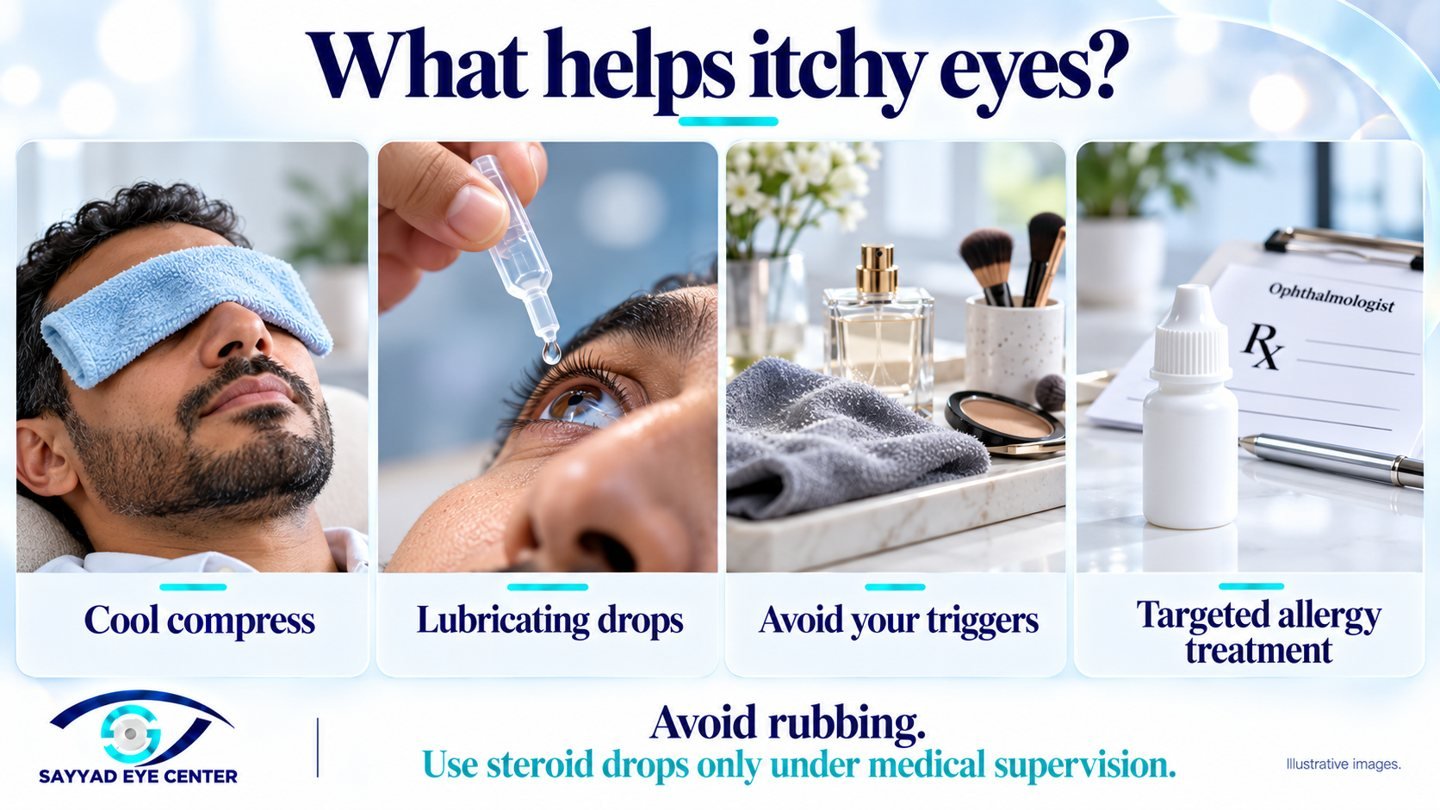
This can reduce discomfort and swelling and help you resist the urge to rub.
Use lubricating drops
Lubricating eye drops can soothe the surface and help dilute allergens. Preservative free formulations may be preferable when drops are needed frequently or the eye surface is sensitive.
Artificial tears can provide relief, but persistent itching may also need a specific allergy treatment.
Look for your triggers
Notice whether symptoms appear after cleaning, spending time outdoors, wearing makeup or using a particular product.
Reducing the relevant exposure is more useful than stopping every product indefinitely. If a cosmetic seems responsible, pause it while the eyelids recover. Avoid introducing several new products at once.
Do not stop essential prescribed eye medication on your own. If you suspect a reaction to a prescribed drop, arrange a review so an appropriate alternative can be considered.
Which eye drops treat allergy?
Common anti-allergy eye drops include olopatadine, ketotifen and alcaftadine. These medicines help relieve itching by blocking histamine and also have mast cell stabilizing activity, helping limit the allergic response.
The appropriate preparation and frequency depend on the product, your age and the condition of your eyes. Using drops more frequently than instructed does not necessarily provide better relief.
Some treatments relieve itching relatively quickly. Others work best with consistent use during the period of exposure. Persistent symptoms deserve a reassessment rather than repeatedly changing drops yourself.
Oral antihistamines may help accompanying nasal symptoms, but some can worsen eye dryness. The best choice depends on whether the problem mainly affects your eyes, nose or both.
What about steroid drops?
Steroid drops can be helpful for a significant flare, but they should be prescribed and monitored by an ophthalmologist.
They can raise eye pressure and, with inappropriate or prolonged use, contribute to cataract or worsen certain infections. Do not restart an old steroid prescription simply because your eyes feel itchy again.
An antibiotic and steroid combination is not a routine treatment for an itchy eye. Antibiotics do not treat allergy itself.
For severe or recurrent allergic eye disease, specialist treatment may include medicines such as cyclosporine or tacrolimus to reduce the need for repeated steroid treatment. These are selected treatments, not medications to start yourself.
What if the eyelid skin is the main problem?
Treatment starts with identifying and avoiding the trigger. Keep skincare simple and avoid rubbing or scrubbing irritated eyelids.
A doctor may prescribe a short course of an appropriate anti-inflammatory cream or ointment. Do not apply a strong steroid skin cream around the eyes without medical advice. Eyelid skin is thin and requires particular care.
If the rash repeatedly returns, patch testing may help identify a contact allergen. Bring your cosmetics, skincare products and eye drop names, or photographs of their ingredient lists, to the appointment.
Why avoiding eye rubbing matters
Rubbing may briefly feel soothing, but it can worsen irritation and keep the cycle of itching and rubbing going.
Repeated vigorous rubbing is associated with keratoconus, a condition in which the cornea becomes thinner and changes shape. This does not mean that everyone who rubs their eyes will develop keratoconus.
For someone who already has keratoconus, controlling itching is particularly important. Use a cool compress and treat the allergy rather than pressing or rubbing through closed eyelids.
Children who repeatedly rub their eyes should also be assessed, particularly if their vision is changing or their astigmatism is increasing.
When is it more than an ordinary allergy?
Some children and young adults develop a more severe condition called vernal keratoconjunctivitis, often known as spring catarrh. Despite its name, symptoms may continue beyond spring.
People with eczema can also develop more persistent allergic inflammation involving the eye surface, called atopic keratoconjunctivitis.
These conditions may affect the cornea and need closer follow-up. Marked sensitivity to light, pain or reduced vision should not simply be labelled “allergy.”
When should you seek help promptly?
Arrange urgent assessment if you have:
Eye pain, reduced vision or significant sensitivity to light.
A red, painful eye while wearing contact lenses.
Rapidly worsening eyelid swelling, especially with fever or pain when moving the eye.
Sudden swelling accompanied by difficulty breathing or swelling of the lips or tongue requires emergency care.
Frequently asked questions
Are eye allergies contagious?
No. Allergy does not spread between people. Some infections can look similar, which is why the diagnosis matters.
Can I wear contact lenses during a flare?
Use glasses while your eyes are red or irritated. Contact lenses can aggravate discomfort, and deposits or lens care products may contribute to symptoms.
A painful red eye in a contact lens wearer needs prompt assessment rather than being assumed to be allergy.
Can allergy blur my vision?
Watering and an unstable tear film can temporarily disturb vision. Persistent or substantial blurring needs an examination.
Why do the symptoms keep returning?
The trigger may still be present, treatment may be insufficient, or another problem, such as dry eye or eyelid inflammation, may be contributing.
If symptoms return whenever you stop treatment, it is worth reviewing the diagnosis and treatment plan rather than repeatedly using stronger drops.
How long does it take to improve?
Some allergy drops begin relieving itching quickly, but settling the whole flare may take longer. Symptoms can return if exposure continues.
Eyelid dermatitis may take longer to settle after the trigger is removed. If symptoms are worsening or not improving with treatment, the diagnosis should be reassessed.
Do I need allergy testing?
Not everyone does. Testing can be helpful when symptoms are persistent, severe or difficult to link to an exposure.
Patch testing is particularly useful for suspected eyelid contact allergy. This is different from the testing commonly used for pollen, dust mite or animal allergies.
Can I use drops that simply remove redness?
Some redness relief drops temporarily whiten the eye without treating the allergy. Repeated use of certain decongestant drops can cause rebound redness.
Choose treatment for the underlying problem rather than relying on how white the eye looks immediately afterwards.
Do I need antibiotics?
Not for allergy alone. Antibiotics are used when there is an appropriate reason to suspect or treat a bacterial infection.
Can I develop an allergy to my eye drops?
Yes. The active ingredient or another component, including a preservative, can sometimes cause a reaction.
Bring the bottle to your appointment. If it is an essential prescribed treatment, such as a glaucoma drop, do not discontinue it without arranging an alternative.
Your assessment at Sayyad Eye Center
Bring the names of your current drops and any products that seem to trigger symptoms. If the eyelid swelling comes and goes, a photograph taken during a flare can also be helpful.
An examination can distinguish allergy from dryness, eyelid dermatitis and other causes, so treatment addresses what is actually bothering your eyes.
Medical review
Medically reviewed by Dr Fouad El Sayyad
American Board certified ophthalmologist
Fellowship in Cornea, External Eye Disease and Refractive Surgery
Washington University in St. Louis, USA
References
American Academy of Ophthalmology. Eye Allergies: Why Are My Eyes Itchy?
European Academy of Allergy and Clinical Immunology. Management of ocular allergy. EAACI position paper. Allergy. 2019;74(9):1611–1630.
Leonardi A, et al. Allergic Conjunctivitis Management: Update on Ophthalmic Solutions. Current Allergy and Asthma Reports. 2024;24(7):347–360.
DermNet. Eyelid contact dermatitis.
Sahebjada S, et al. Eye rubbing in the aetiology of keratoconus: a systematic review and meta-analysis. Graefe’s Archive for Clinical and Experimental Ophthalmology. 2021;259(8):2057–2067.
NCBI Bookshelf, StatPearls. Allergic Conjunctivitis.