Diabetes and Your Eyes: Why You Need an Eye Examination Even When Your Vision Is Clear
Learn how diabetic retinopathy and macular swelling are detected, what happens at a retinal examination, and which treatment options your specialist may discuss.
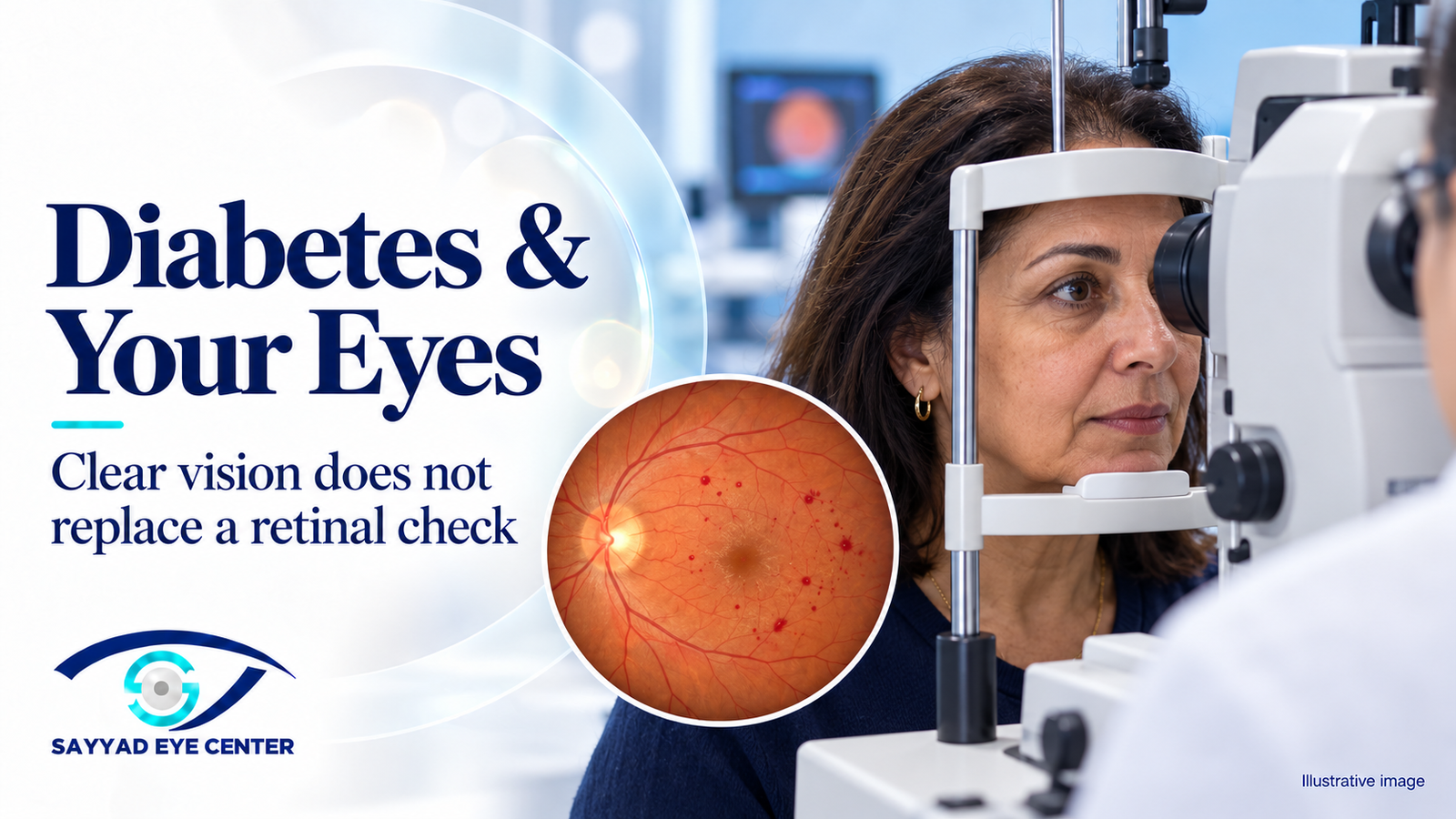
“My vision is fine. Do I still need an eye check?” If you have diabetes, the answer is yes. Changes can develop in the retina before you notice any loss of vision—even when you can read the chart normally (6/6).
Regular screening is an opportunity to find problems early. Good diabetes management and timely eye treatment can substantially reduce the risk of serious sight loss.
What is diabetic retinopathy?
The retina is the light-sensitive layer at the back of the eye. Its central area, the macula, helps you read and recognize fine detail. Diabetes can damage the small retinal blood vessels, causing leakage or poor circulation. This is diabetic retinopathy.
Diabetes can also affect the eye’s natural lens and contribute to cataracts. An examination helps distinguish these causes of blurred vision.
Understanding the stages
No apparent retinopathy: the examination shows no visible diabetic retinal changes. Screening still matters.
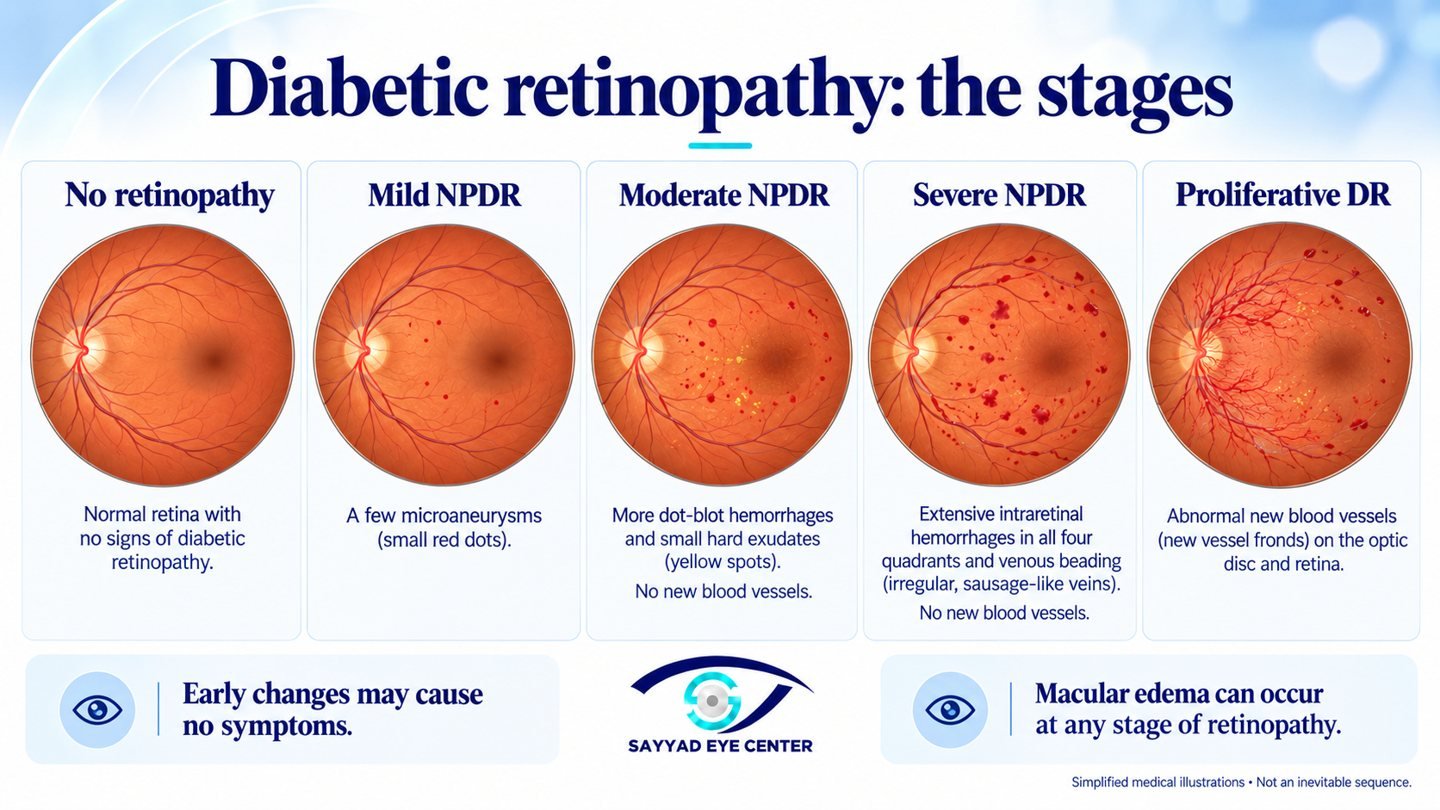
Mild non-proliferative diabetic retinopathy (NPDR): tiny swellings called microaneurysms appear in retinal vessels. Vision may remain normal.
Moderate NPDR: there are more changes, such as small hemorrhages, leakage deposits or abnormal vessels within the retina, but the findings do not meet the severe stage.
Severe NPDR: extensive hemorrhages and particular vessel abnormalities indicate a higher risk of progression. Abnormal new vessels have not yet developed. Close specialist follow-up is important.
Proliferative diabetic retinopathy (PDR): fragile new vessels grow on the retina or optic disc. They can bleed into the vitreous gel. Associated scar tissue can pull on the retina and sometimes cause a tractional retinal detachment.
These categories describe examination findings; they are not an inevitable sequence every patient will follow. Do not try to identify your stage from a photograph alone.
Macular swelling is a separate issue
Diabetic macular edema means fluid has accumulated in the macula. It can occur at any stage of retinopathy and may affect reading or distort central vision.
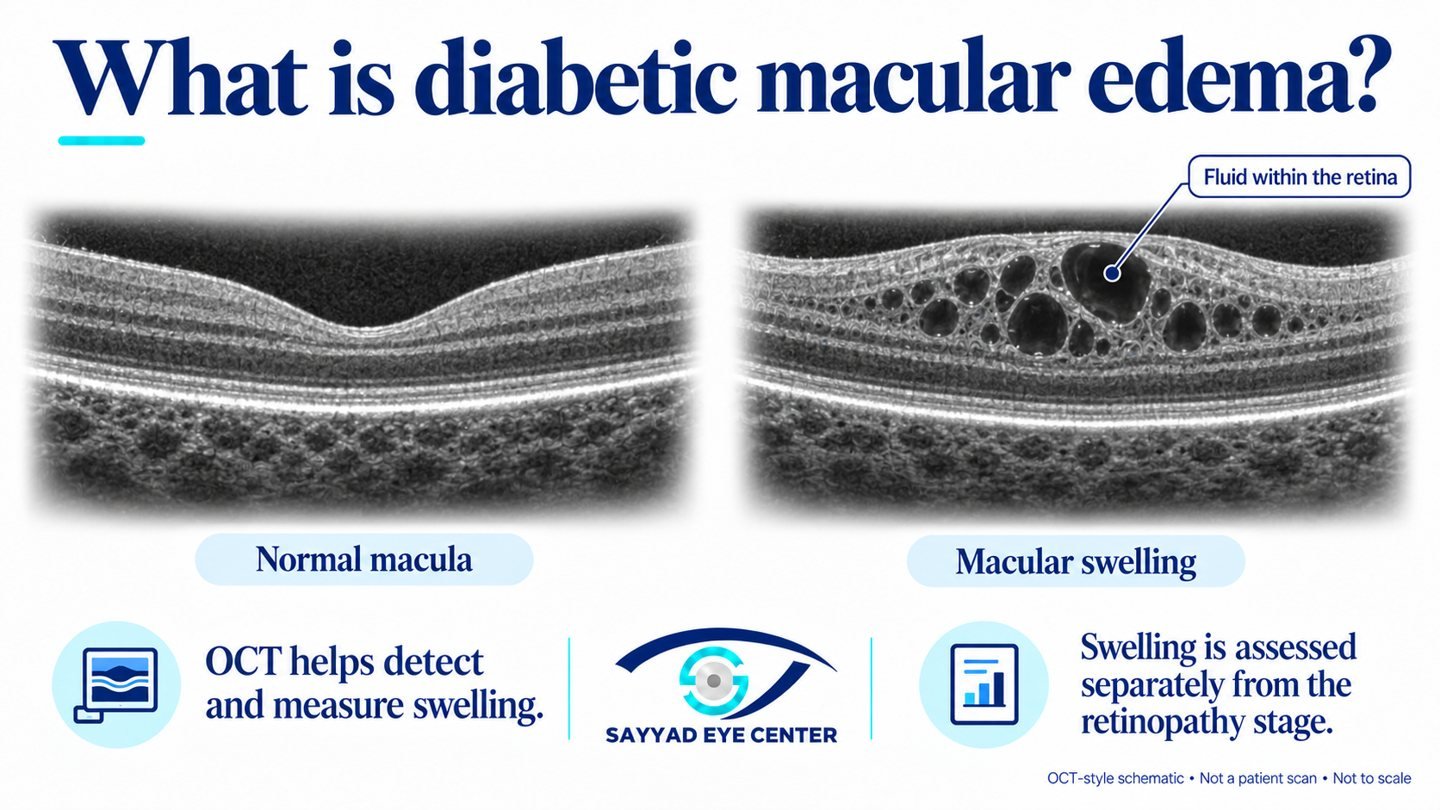
An OCT scan measures retinal thickness and shows fluid within the retinal layers. Treatment depends on whether swelling involves the center, whether vision is affected and other examination findings. Not every scan showing fluid means an immediate injection is necessary.
When should I have my eyes checked?
Adults with type 2 diabetes should have a comprehensive dilated eye examination at diagnosis. For adults with type 1 diabetes, the initial examination is generally within five years of diagnosis.
Annual review is common. With one or more normal examinations and glucose levels within the agreed targets, a clinician may consider a one-to-two-year interval. Retinopathy usually requires at least annual examination and sometimes much closer monitoring. Children have age-specific recommendations.
New symptoms override the screening timetable. Do not wait for the next scheduled visit if your vision changes.
What happens at the appointment?
We check vision and examine the eyes, often using drops to widen the pupils. Retinal photographs document the findings. A macular OCT is useful when swelling is suspected or treatment is being monitored; not everyone needs every test. Fluorescein angiography may be needed in selected cases to assess leakage and circulation.
Dilation can blur near vision and cause light sensitivity temporarily. Bring sunglasses and arrange transport if needed. Do not drive until vision is back to normal and you can do so safely.
A glasses check alone is not a retinal examination. Screening photographs can be useful, but symptoms, abnormal findings or poor-quality images may require a comprehensive assessment.
What symptoms need urgent help?
Seek urgent eye care for sudden loss of vision, a sudden shower of floaters, flashes, or a dark curtain across your sight. Increasing central blur or distortion also needs prompt assessment. Diabetes is not a reason to assume every visual change is caused by blood sugar.
How is diabetic retinopathy treated?
Monitoring: early disease often needs planned review rather than immediate treatment. Selected eyes with macular edema but good vision can also be monitored closely, with treatment started if needed. Observation means attending scheduled checks, not ignoring the condition.
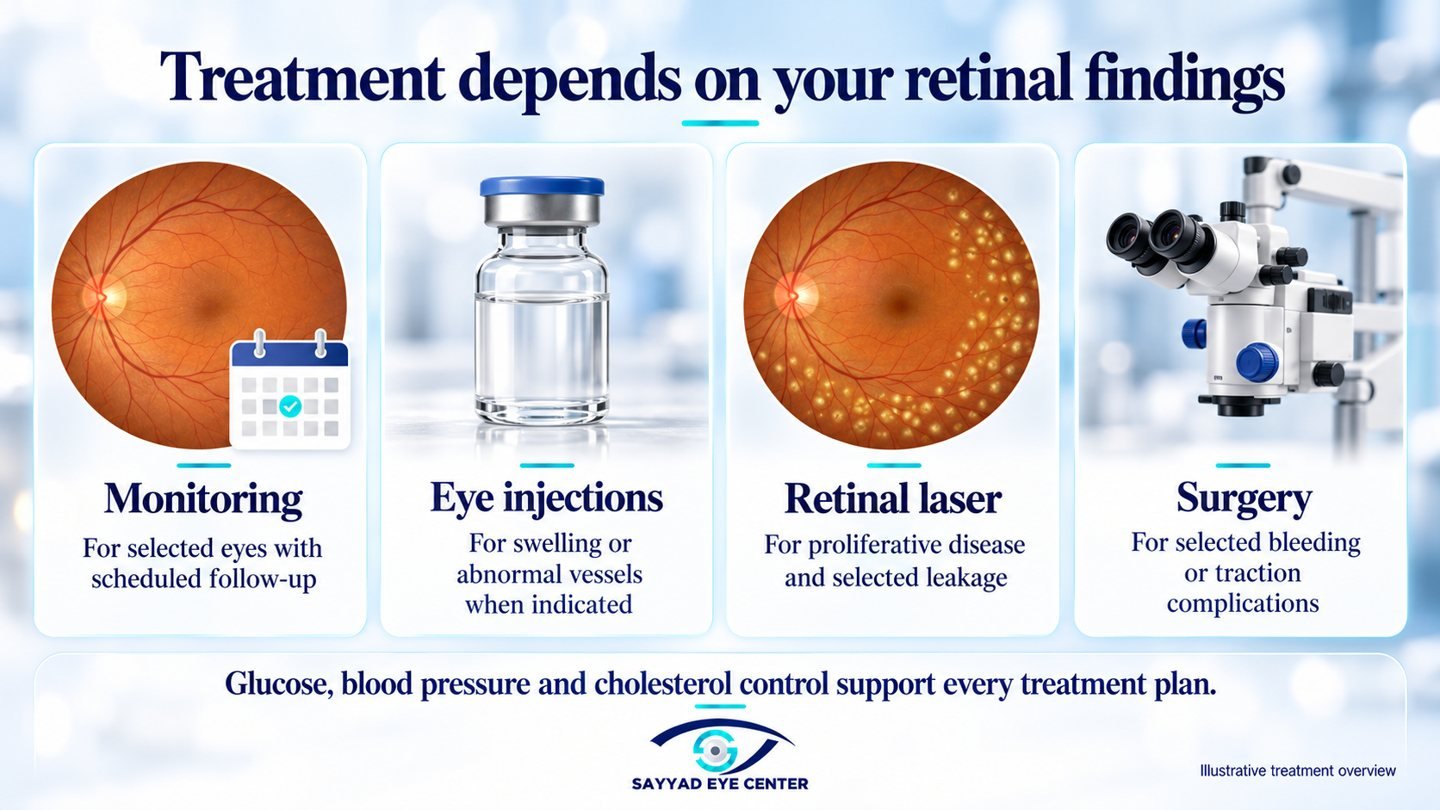
Eye injections: anti-VEGF medicines are commonly used for center-involving macular edema that affects vision. They can also control proliferative disease in suitable patients. Repeat injections and follow-up are often needed. Steroid injections or implants are options for selected eyes; eye pressure and cataract risk need monitoring.
Retinal laser: panretinal photocoagulation is an established treatment for proliferative disease. Macular laser has a role in selected patterns of leakage. This is different from LASIK or SMILE Pro, which reshape the cornea.
Surgery: vitrectomy may be needed for persistent bleeding or traction threatening or involving the macula. Many patients do not need surgery.
The choice between laser, injections and surgery also depends on your ability to attend follow-up. Missing visits can be particularly risky when injections are controlling proliferative disease. Discuss travel plans before treatment begins.
Protecting your sight between visits
Work with your diabetes team on glucose, blood pressure and cholesterol targets. Avoid smoking and take prescribed medicines consistently. Bring your latest HbA1c result, medication list and previous retinal reports.
A rapid, substantial fall in blood glucose can sometimes temporarily worsen existing retinopathy. Tell your eye doctor when diabetes treatment is changing substantially, so monitoring can be coordinated. Do not stop or delay diabetes treatment yourself.
Pregnancy and diabetes
If you already have type 1 or type 2 diabetes, arrange an eye examination before pregnancy where possible, or early in pregnancy. Additional monitoring during pregnancy and after delivery depends on retinal findings.
Gestational diabetes alone does not usually require retinopathy screening. New visual symptoms still need assessment.
Frequently asked questions
Can I have retinopathy with normal vision (6/6)?
Yes. Retinal changes can develop away from central vision without affecting the eye chart.
Does good glucose control mean I can stop screening?
No. Good control lowers risk but does not remove the need for examinations or erase existing damage.
Does insulin cause diabetic retinopathy?
Insulin treats diabetes. Needing it does not mean your eyes will deteriorate. Disease duration, glucose exposure and other risk factors matter. Coordinate major treatment changes with your medical team.
Can changing glucose levels affect my glasses prescription?
Yes. Temporary changes in the natural lens can alter focus. New or persistent blur still needs an examination. It may be sensible to wait for glucose and vision to stabilize before finalizing new glasses.
Does every patient with macular swelling need injections?
No. The decision depends on central involvement and vision as well as the scan. Carefully selected patients with good vision may be monitored closely. Do not postpone treatment already recommended for your eye.
Can treatment improve vision?
It can, particularly when swelling responds. Poor circulation or longstanding damage may limit recovery. Treatment may aim to preserve useful vision rather than restore it completely.
Can I have cataract surgery if I have diabetes?
Often yes. The retina and macula should be assessed first because existing retinal disease can influence the plan and expected improvement. Our cataract guides explain the preparation in detail.
Are eye injections painful?
The eye is numbed first. Brief pressure or discomfort and some irritation afterward can occur. Increasing pain, worsening redness or reduced vision after an injection needs urgent assessment.
Diabetic eye assessment at Sayyad Eye Center
Bring your latest HbA1c result, medicines and previous scans to your visit in Mohandeseen or New Cairo. We can explain the findings and arrange the appropriate monitoring or retinal specialist treatment. Clear vision is a good time to protect your eyes—not a reason to postpone screening.
Medical review
Medically reviewed by Dr Fouad El Sayyad
American Board certified ophthalmologist
Fellowship in Cornea, External Eye Disease and Refractive Surgery
Washington University in St Louis, USA