Your recovery guide after SMILE Pro Femto LASIK or PRK
Know what to expect after SMILE Pro, Femto LASIK or PRK: drops, screens, driving, exercise, follow up and symptoms that need urgent eye care.

Laser vision correction can make everyday life easier with less dependence on glasses. Recovery is usually straightforward, but clear, comfortable vision develops as your eyes heal.
SMILE Pro, Femto LASIK and PRK have different recovery patterns. This guide explains what to expect, how to care for your eyes and when to seek help. Your written discharge instructions remain your personal recovery plan.
How will my vision improve
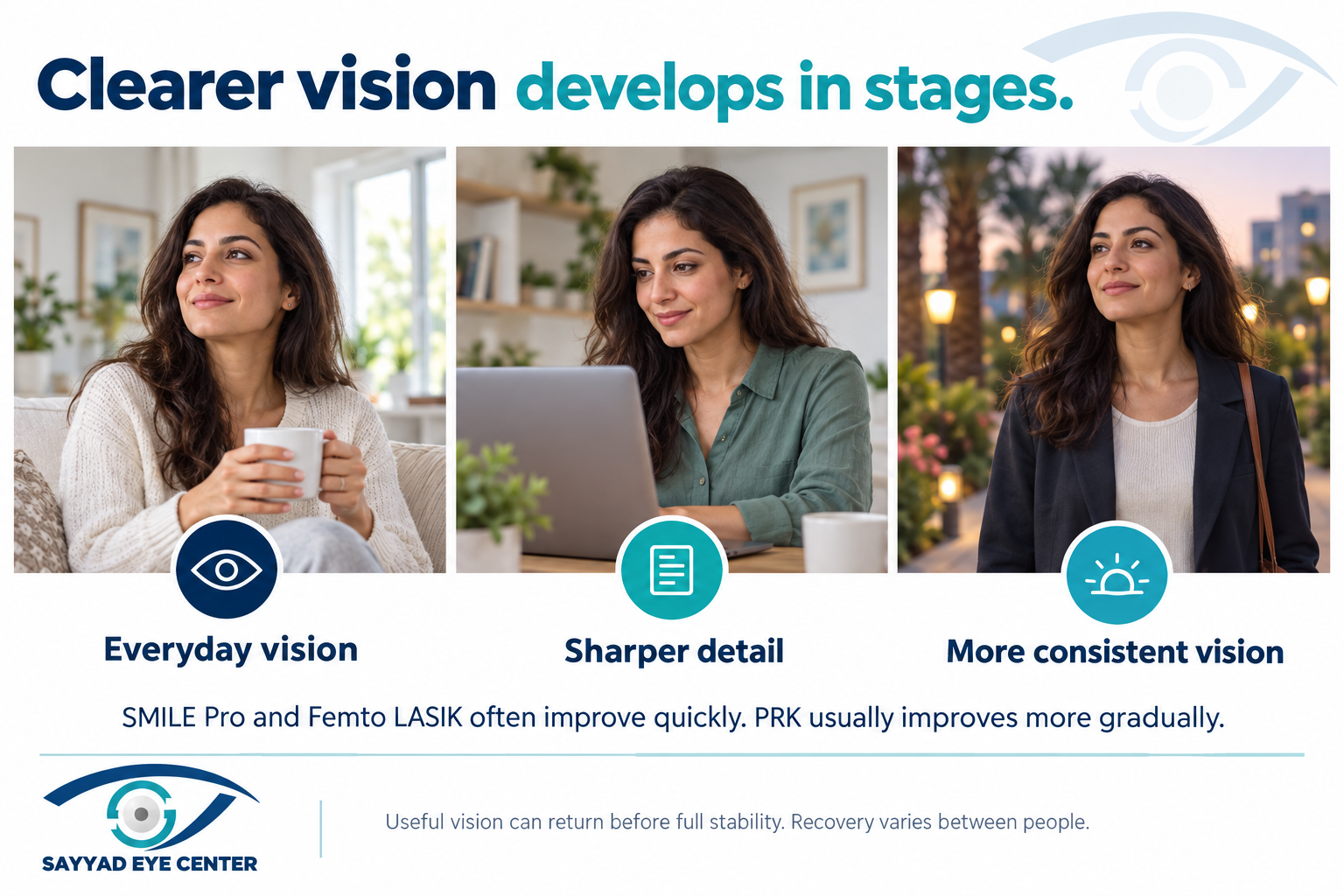
Visual recovery happens in stages. You may see well enough for everyday activities before your vision feels completely sharp and consistent.
Three aspects of recovery matter:
1. Useful vision: seeing well enough for ordinary activities such as reading your phone and working.
2. Visual quality: sharper detail, comfortable screen use and fewer disturbances around lights.
3. Stability: more consistent vision and measurements as the cornea and tear film settle.
These improvements do not necessarily happen at the same speed.
Visual recovery after SMILE Pro
Many patients notice substantial improvement within the first day or two. However, vision may initially look slightly misty or less crisp than expected, even when ordinary activities are already manageable.
Fine detail can continue improving over the following days and weeks. Distant writing may become sharper, screen use easier and vision more consistent.
Early fluctuation does not automatically mean that some prescription remains. Healing and the tear film can temporarily affect clarity. Follow up measurements help distinguish these changes from a remaining prescription.
SMILE Pro does not create a flap, but prescribed drops, eye protection and follow up remain important.
Visual recovery after Femto LASIK
Femto LASIK often provides rapid improvement, with many patients seeing clearly enough for ordinary activities by the following day.
Vision can still fluctuate. Small print may become less sharp after prolonged computer use, and lights may appear more dazzling at night.
Clarity and comfort generally continue settling over the following weeks. Seeing clearly does not mean healing is complete. Avoid rubbing or pressing on the eyes, particularly to protect the flap.
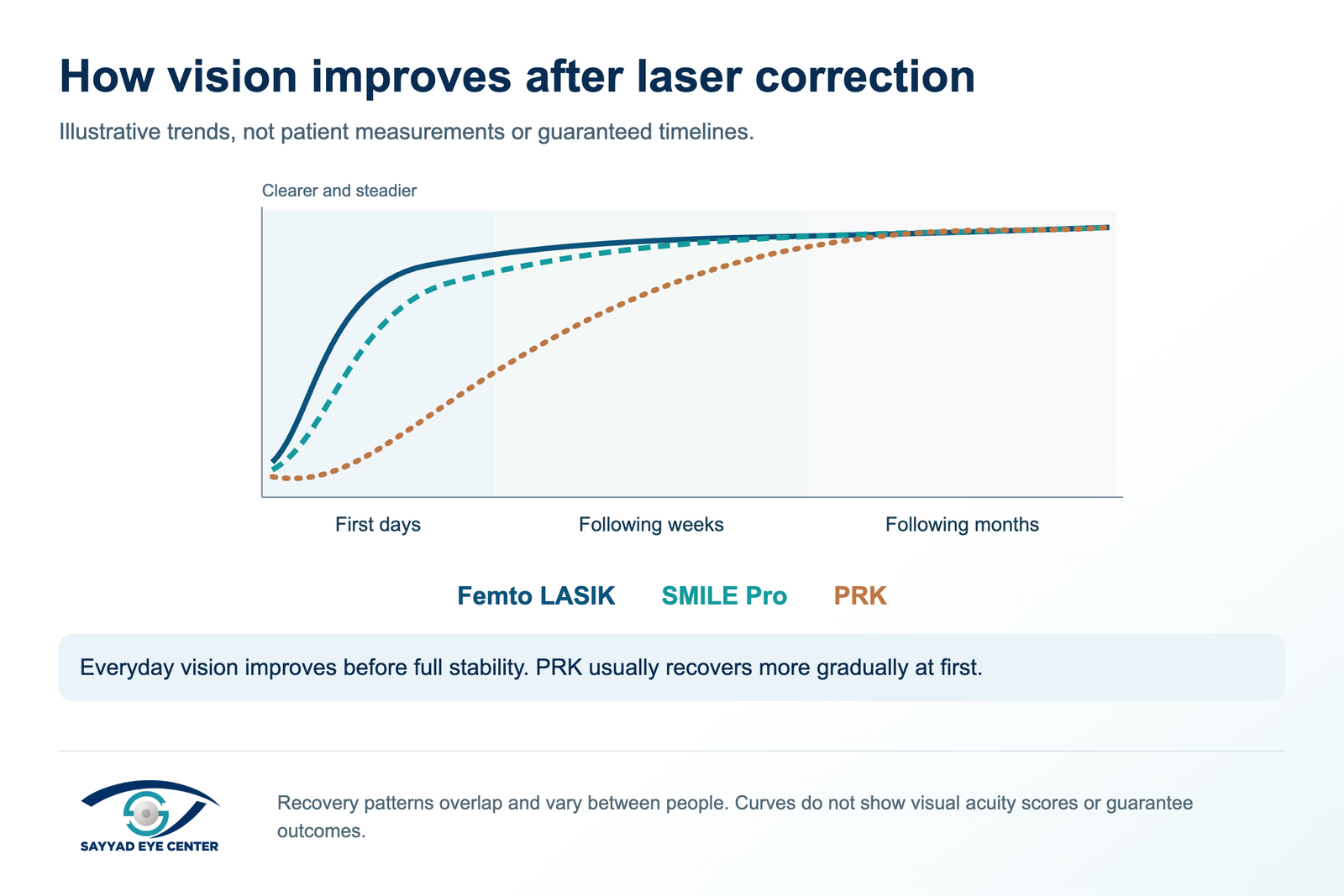
Visual recovery after PRK
PRK improves more gradually because the surface cells must regrow and then become smooth and regular.
During the first few days, vision is usually blurred and variable. Watering, light sensitivity and the protective bandage contact lens can also affect clarity. Discomfort is generally greater than after SMILE Pro or Femto LASIK.
As the surface heals, comfort usually improves. The bandage lens is removed at a follow up visit once healing is sufficient. Its removal does not mean that vision will immediately become fully sharp.
Over the following weeks, reading, distance vision and screen use generally become easier. It may take a month or longer to reach your best vision, with further settling over several months in some patients.
A slower early recovery does not, by itself, indicate a poorer final result.
Why does my vision change throughout the day
The tear film forms the first optical surface of the eye. When it becomes uneven, vision can temporarily lose sharpness.
Blur may be more noticeable after screen use, in air conditioning or towards the end of the day. Blinking or lubricating drops may briefly improve clarity. This can suggest a tear film contribution, but persistent blur still needs assessment.
Use your lubricants according to the prescribed schedule rather than waiting until your eyes feel very dry.
Why is one eye clearer than the other
The eyes may have different prescriptions, treatment amounts or healing responses. A modest difference in early clarity can occur.
A marked difference, new deterioration or blur accompanied by increasing pain or redness needs prompt assessment.
What about night vision
Daytime vision can feel good before night driving becomes comfortable. Halos, glare or starbursts around headlights may be more noticeable during early recovery.
These symptoms often improve as healing progresses. Persistent or troublesome symptoms should be assessed. Avoid night driving while they interfere with your ability to see safely.
The day of your procedure
Arrange for someone to take you home. Do not drive on the day of surgery.
Rest for the first few hours. Close your eyes gently when comfortable, without squeezing them. Avoid rubbing or pressing on your eyes and begin your drops according to the written schedule.
Before leaving, make sure you have your drop instructions, follow up appointment and contact details for urgent concerns.
Using your drops correctly
Your prescription may include antibiotic drops, anti inflammatory drops and lubricants. The combination and duration depend on your procedure and healing.
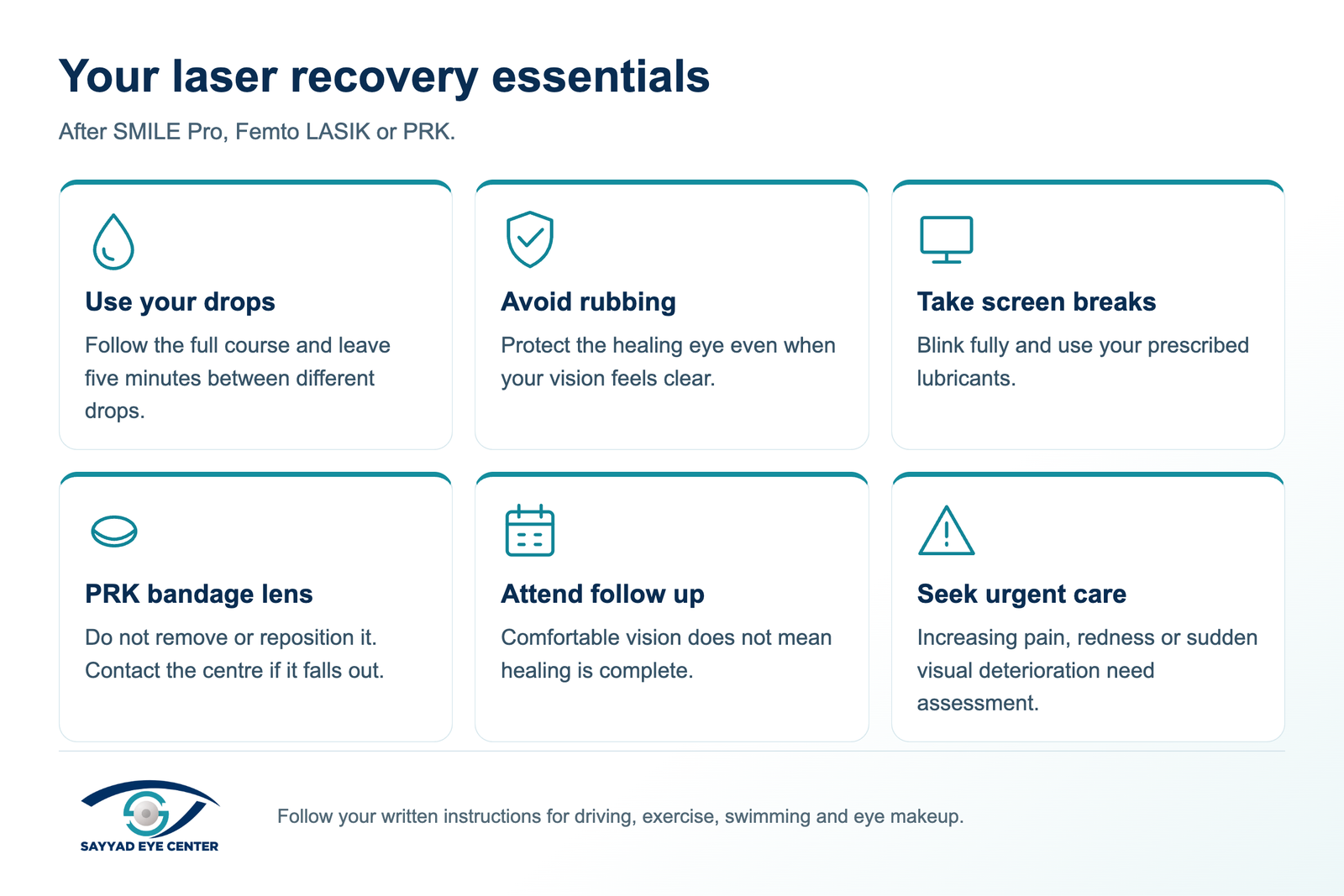
Use the prescribed course even when your vision feels clear. Follow any gradual reduction schedule for steroid drops, and do not extend treatment yourself.
• Wash your hands before each application.
• Avoid touching your eye or lashes with the bottle tip.
• One drop is usually enough.
• Close your eye gently after application.
• Leave at least five minutes between different types of drops.
Do not share drops. Longer steroid courses require monitoring, including eye pressure checks when appropriate.
Caring for the bandage lens after PRK
The bandage contact lens protects the healing surface. Do not remove or reposition it yourself.
If it falls out, contact the centre and do not put it back in. Attend the planned appointment for examination and removal.
Use the pain relief prescribed for you. Increasing pain, especially with worsening vision or redness, needs assessment.
Screens and returning to work
Screens do not reverse the laser correction, but reduced blinking can increase dryness and fluctuating vision.
Start with short, comfortable sessions. Take breaks, blink fully and use your lubricants. Avoid direct airflow from fans or air conditioning.
Many patients return to desk work within the first few days after SMILE Pro or Femto LASIK. PRK usually requires more time. Professional driving, detailed visual work and dusty environments need additional consideration.
Showering and protecting your eyes
During early healing, keep soap, shampoo and direct shower spray out of your eyes. Pat the surrounding skin gently rather than rubbing.
Use any supplied shields as instructed. Avoid eye makeup during initial healing and follow the restart date in your discharge plan.
Wear sunglasses outdoors for comfort and ultraviolet protection, particularly during PRK recovery.
Driving exercise and swimming
Resume driving when your vision is clear and comfortable enough to drive safely and meets legal requirements. Follow any restriction given at your postoperative examination.
Gentle walking is usually possible early when comfortable. Follow your procedure’s written schedule for gym sessions and strenuous exercise. Avoid sweat entering your eyes or wiping them forcefully.
Contact sports require additional protection and a longer pause, particularly after Femto LASIK. Avoid swimming pools, hot tubs and open water during early healing, following the restart date in your discharge plan.
When to seek urgent help
Seek urgent assessment for:
• Severe or increasing pain.
• A sudden or significant reduction in vision.
• Increasing redness or discharge.
• Symptoms that worsen after initially improving.
• An eye injury.
• New flashes, a sudden increase in floaters, or a shadow or curtain across your vision.
Do not wait for your routine appointment. If the centre cannot be reached, attend an eye emergency service. Do not drive yourself with impaired vision.
Follow up and travel
Attend your scheduled reviews even if your eyes feel comfortable. These visits assess vision, healing and your response to treatment.
If you are travelling from abroad, arrange early follow up before booking your return journey. Carry your drops and written instructions in your hand luggage.
Frequently asked questions
Does early blur mean the surgery has failed
No. Early blur can reflect surface healing, dryness or temporary changes in the cornea. Persistent or worsening blur needs examination to establish its cause.
Can I use my phone
Yes, in short, comfortable sessions. Take breaks and rest if irritation increases.
Can I stop my drops when my vision is clear
No. Clear vision does not mean the prescribed treatment course is complete.
When should I judge my final result
Useful vision often returns before full stability. Avoid judging the result from the first morning or comparing yourself with someone who had a different procedure. Follow up measurements show how your recovery is progressing.
Will I need additional laser treatment
Most patients do not need an immediate additional procedure. Any further correction is considered only after the cause of remaining blur is understood, measurements are stable and treatment is suitable.
Will I still need reading glasses
Distance correction does not stop the natural loss of near focusing with age. Reading needs depend on your age and treatment plan, including whether a specific approach to presbyopia was used.
Contact the centre
For a planned consultation or follow up, contact Sayyad Eye Center on +20 100 008 8168. Confirm whether your visit is in Mohandeseen or New Cairo. Patients living abroad should arrange follow up before travel. This routine contact route is not a substitute for emergency eye care.
Medical review
Medically reviewed by Dr Fouad El Sayyad
American Board certified ophthalmologist
Fellowship in Cornea, External Eye Disease and Refractive Surgery
Washington University in St Louis, USA
References
ZEISS SMILE Pro recovery and aftercare
https://www.zeiss.com/vision-care/en/eye-surgery/vision-correction-surgery/smile-pro-laser-eye-surgery/recovery.html
ZEISS LASIK recovery and aftercare
https://www.zeiss.com/vision-care/en/eye-surgery/vision-correction-surgery/lasik-laser-eye-surgery/recovery.html
ZEISS PRK laser vision correction
https://www.zeiss.com/vision-care/en/eye-surgery/vision-correction-surgery/prk-laser-eye-surgery.html
American Academy of Ophthalmology LASIK
https://aao.org/eye-health/treatments/lasik
American Academy of Ophthalmology PRK
https://aao.org/eye-health/treatments/photorefractive-keratectomy-prk