Pink Eye: Causes, Treatment and When to Seek Help
Red, watery or sticky eyes? Learn the differences between viral, bacterial and allergic conjunctivitis, what helps, and when you need an urgent eye examination.

You wake up with a red, sticky eye. Perhaps someone at home has had the same thing, or both eyes have started itching after a dusty day. The first questions are usually simple: is it an infection, can I pass it to my family, and do I need drops?
Pink eye, or conjunctivitis, means inflammation of the thin membrane covering the white of the eye and the inside of the eyelids. Viruses, bacteria and allergies are common causes. They can look similar, but they do not all need the same treatment.
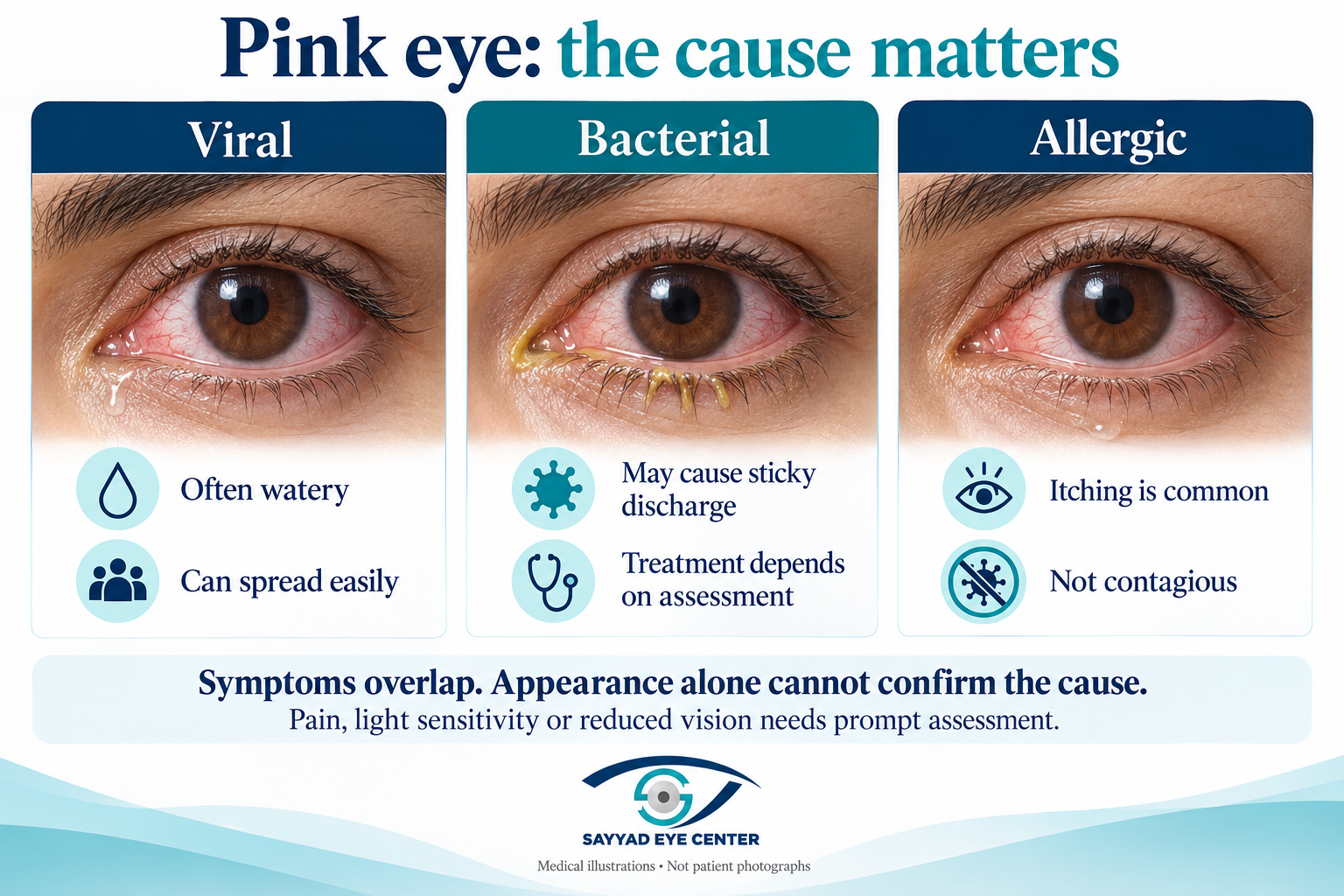
Which type of pink eye might you have?
Viral conjunctivitis
The eye is often watery, gritty and red. It may start in one eye and spread to the other, sometimes around the time of a cold. It can spread easily through contaminated hands, towels and shared items.
Most uncomplicated cases improve with time and supportive care. Antibiotics do not treat the virus. Some viral infections affect the cornea as well, so worsening discomfort, light sensitivity or ongoing blurred vision should be examined.
Bacterial conjunctivitis
Thicker discharge and eyelashes stuck together on waking can suggest a bacterial cause. Mild cases may settle without antibiotics, but antibiotic drops or ointment can be appropriate depending on the examination and severity.
The colour of the discharge alone is not enough to choose treatment. A heavily discharging, painful or rapidly worsening eye needs prompt assessment.
Allergic conjunctivitis
Itching is often the main complaint, usually in both eyes, with watering and sometimes a runny nose. Dust, pollen or animal exposure may trigger symptoms. Allergy itself is not contagious.
Cool compresses, reducing exposure and suitable anti-allergy drops may help. Repeated rubbing makes the eyes more irritated. Children with persistent itching or sensitivity to light should be examined rather than repeatedly treated with an old bottle of drops.
What can you do at home?
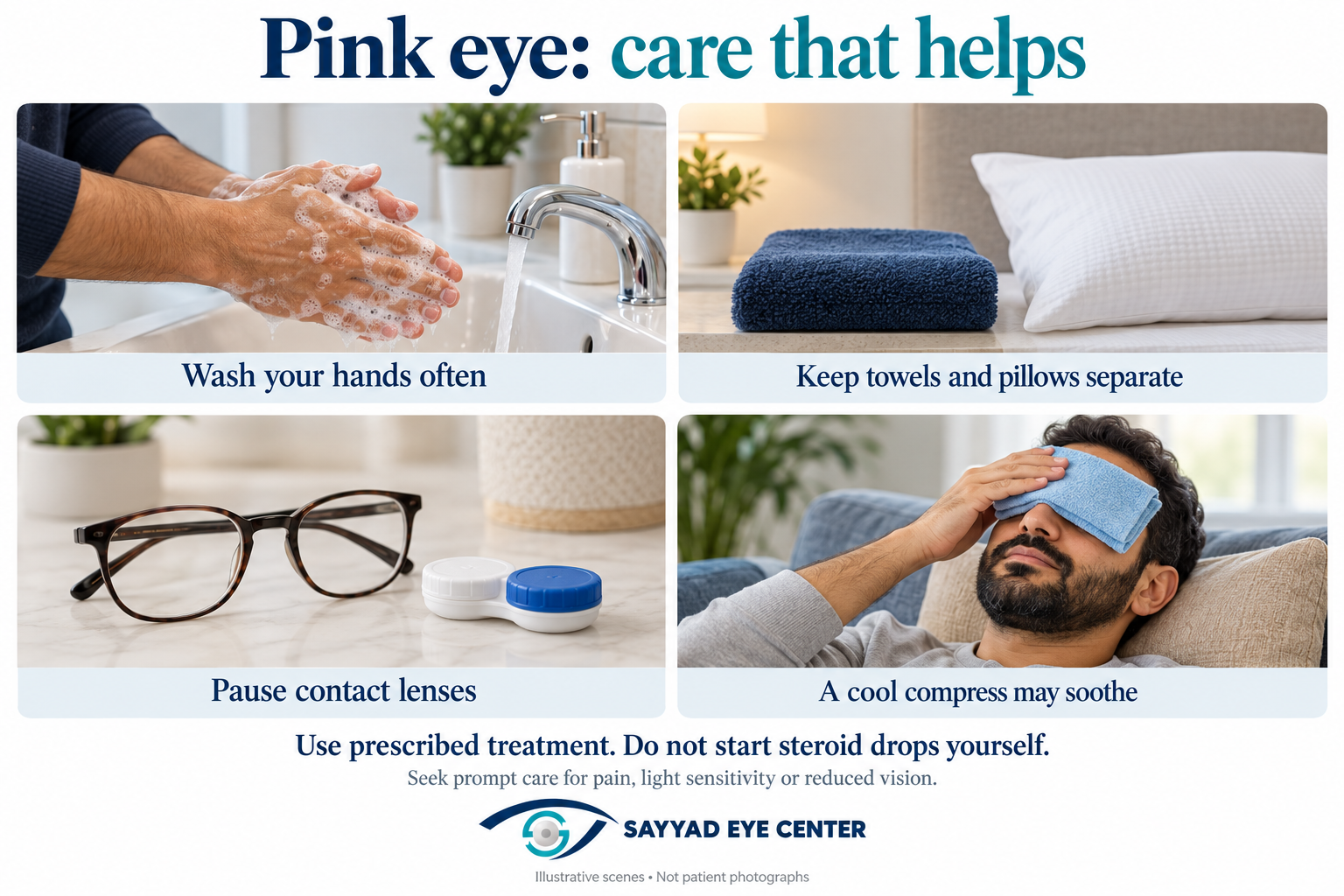
Use a clean, cool compress to soothe the closed eyelids. Lubricating drops can help with irritation. Gently remove discharge using a clean pad moistened with clean water, using a fresh pad for each eye and each wipe.
Wash your hands before and after touching the eye or applying drops. Do not share towels, pillowcases, eye makeup or drops. Avoid touching the bottle tip to the eye or eyelashes. Use separate personal items while an infectious cause is suspected, and wash towels and pillowcases regularly.
Do not put tea, herbal mixtures or homemade solutions into the eye. If a chemical has splashed into it, rinse immediately with plenty of clean water and seek urgent help; do not wait to decide whether it is conjunctivitis.
Do you need antibiotics or steroid drops?
Antibiotic drops can speed recovery from bacterial conjunctivitis, although many mild cases improve without them. A large review of clinical trials found a benefit from antibiotics, but that does not mean every red eye needs an antibiotic. They do not treat allergy or ordinary viral conjunctivitis, and an unnecessary drop can itself irritate the surface.
Do not start leftover steroid drops or an antibiotic-and-steroid combination without an eye examination. Steroids can worsen certain infections and raise eye pressure. There are situations where an ophthalmologist prescribes them, but that decision needs a diagnosis and follow-up.
Contact lenses and a red eye
Remove contact lenses as soon as the eye becomes red or uncomfortable. A contact-lens wearer with redness, pain, light sensitivity or blurred vision needs prompt examination because a corneal infection can resemble pink eye at first.
Wear glasses during recovery. Replace disposable lenses and contaminated cases as advised, and do not resume lenses until the eye has recovered and it is safe to do so. Do not put the same potentially contaminated lens back in because the eye feels a little better.
How long does it last?
Many viral cases settle within one to two weeks, although some take longer. Bacterial cases may improve over several days, with or without prescribed treatment depending on the cause. Allergic symptoms can continue while exposure continues.
The important point is the direction of recovery. If symptoms are getting worse, or are not starting to improve, arrange an examination rather than repeatedly changing drops yourself. Persistent blur after the redness settles also deserves a check.
When should you seek urgent help?
Seek same-day eye care for significant pain, reduced vision that does not clear when discharge is wiped away, marked light sensitivity, or rapidly increasing redness and swelling. A newborn with a red or discharging eye needs immediate medical assessment.
After recent eye surgery, new or increasing redness, pain, discharge or worsening vision should be reported promptly to the surgical team. Do not assume it is ordinary pink eye or wait for the next routine appointment.
Frequently asked questions
Can I catch it by looking at someone?
No. Infectious conjunctivitis spreads through contact with infected secretions, contaminated hands or objects, and sometimes respiratory secretions. Looking at a red eye does not transmit it.
When can my child return to school?
There is no single rule for every cause. A child who is unwell or cannot avoid close contact while symptoms are active may need to stay home. Follow the school’s policy and the advice given for the diagnosed infection. Starting antibiotic drops does not automatically make every case non-contagious after 24 hours.
Can I go to work?
Allergic conjunctivitis is not contagious. With an infectious cause, consider how easily you can maintain hygiene and avoid close contact. Healthcare, childcare and other close-contact roles may have specific return-to-work rules.
Is a sharply defined red patch the same as pink eye?
Usually not. A bright red patch on the white of the eye, without discharge or a change in vision, may be a subconjunctival hemorrhage. Diffuse redness, irritation and discharge suggest a different problem. An examination resolves uncertainty.
Related articles
Contact the centre
For a planned consultation or follow up, contact Sayyad Eye Center on +20 100 008 8168. Confirm whether your visit is in Mohandeseen or New Cairo. Bring any drops you use and tell us about recent eye surgery. For urgent symptoms, seek an eye emergency service if you cannot reach the centre.
Medical review
Medically reviewed by Dr Fouad El Sayyad
American Board certified ophthalmologist
Fellowship in Cornea, External Eye Disease and Refractive Surgery
Washington University in St Louis, USA
References
American Academy of Ophthalmology — Conjunctivitis: What Is Pink Eye?
American Academy of Ophthalmology — Conjunctivitis Preferred Practice Pattern (2024)
Moorfields Eye Hospital NHS Foundation Trust, UK — Infective conjunctivitis in children
Conjunctivitis: Diagnosis and Management. American Family Physician. 2024;110(2):134–144.