Corneal Transplant Surgery
Understand DMEK, DSAEK, DALK and full-thickness corneal transplants, expected benefits, recovery and travel planning with Dr Fouad El Sayyad in Cairo.
A corneal transplant replaces damaged corneal tissue with healthy donor tissue. For suitable patients, it can improve vision, relieve discomfort from certain corneal conditions or help restore the strength of a seriously damaged cornea. Modern transplantation can often replace only the affected layers, preserving healthy parts of your own cornea. The right operation depends on which layer is diseased and the health of the rest of your eye.
What the cornea does
The cornea is the clear window at the front of the eye. Its shape and transparency help focus light. Scarring, swelling or a severely distorted shape can make vision blurred even when glasses are updated. A transplant treats the cornea; it does not replace the whole eye or repair unrelated retinal or optic-nerve damage.
When a transplant may help
Possible reasons include advanced keratoconus with poor vision despite suitable contact lenses, significant corneal scars, and swelling caused by failure of the inner cell layer, such as in Fuchs dystrophy or after some eye operations. In selected urgent cases, severe infection or thinning may require transplantation to protect the eye.
Not every corneal condition needs a transplant. Glasses, specialist contact lenses, treatment of the ocular surface or other procedures may be appropriate first. In keratoconus, cross-linking aims to slow or stop progression in suitable eyes; a transplant is considered for different needs, such as advanced scarring or inadequate usable vision.
Understanding the main operations
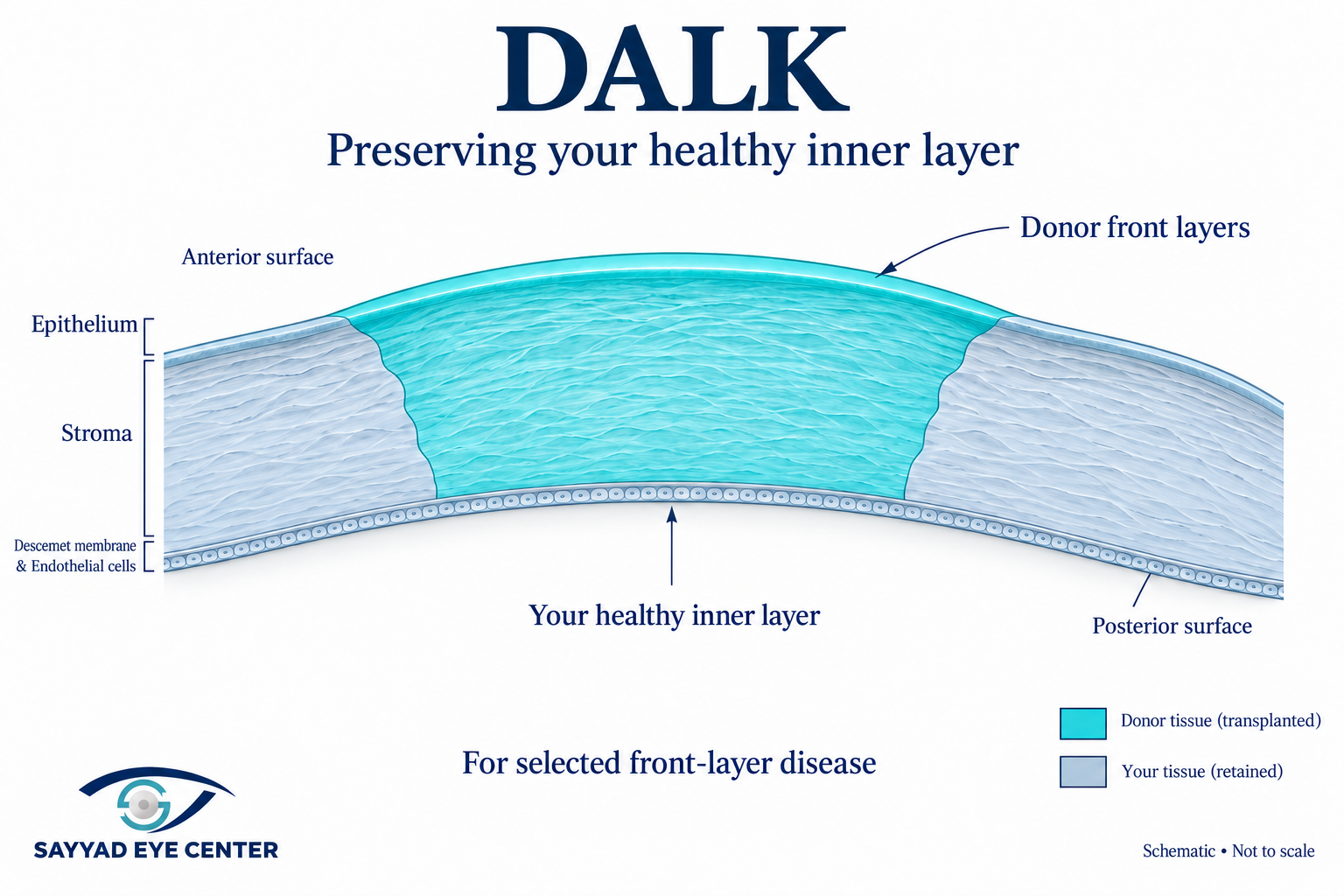
DALK
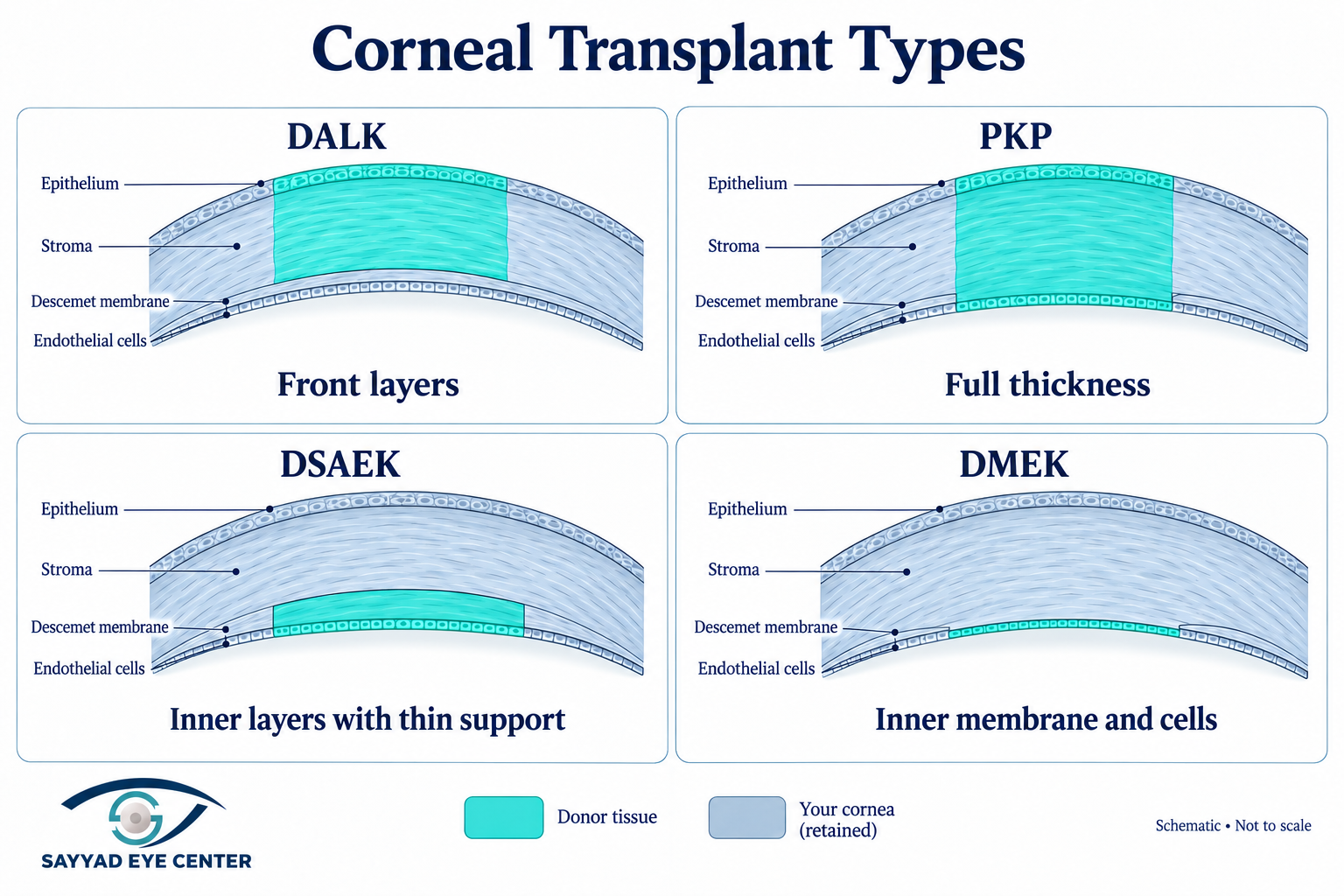
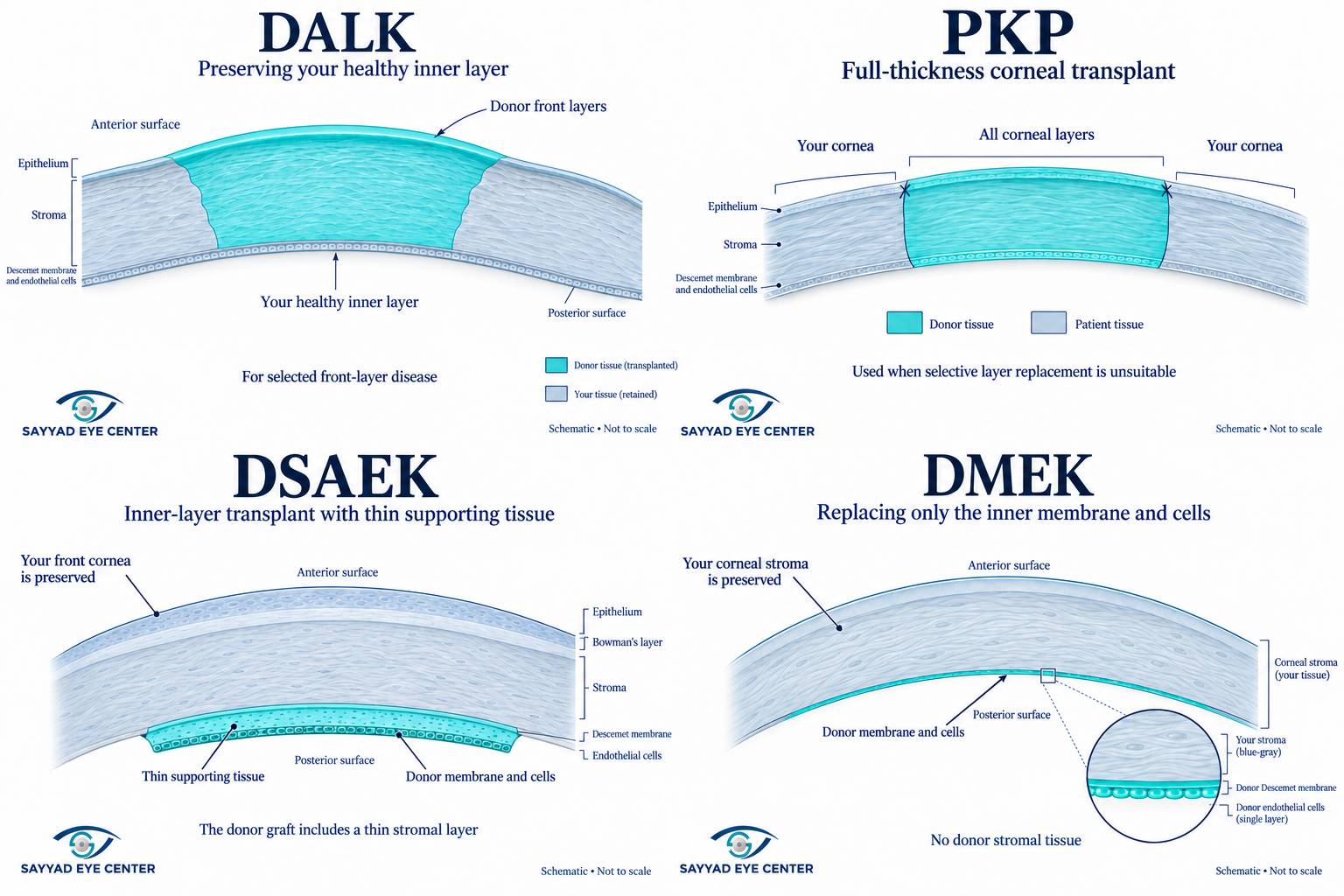
What is replaced: Diseased front and middle tissue; the healthy inner cell layer is retained.
Why it may be chosen: Selected keratoconus or front-layer scars.
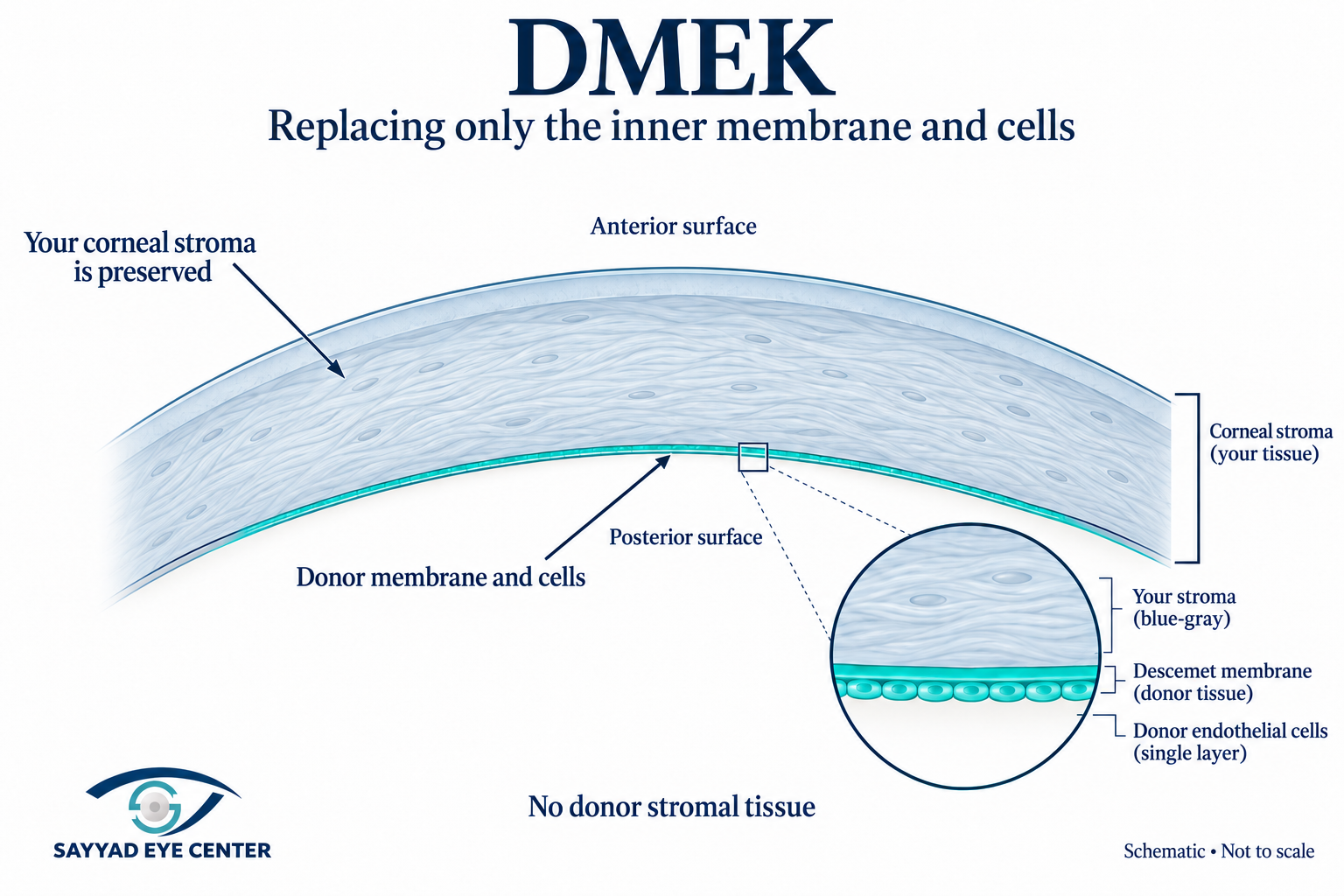
DMEK
What is replaced: The inner cell layer and its very thin supporting membrane.
Why it may be chosen: Endothelial failure when the rest of the cornea is suitable.
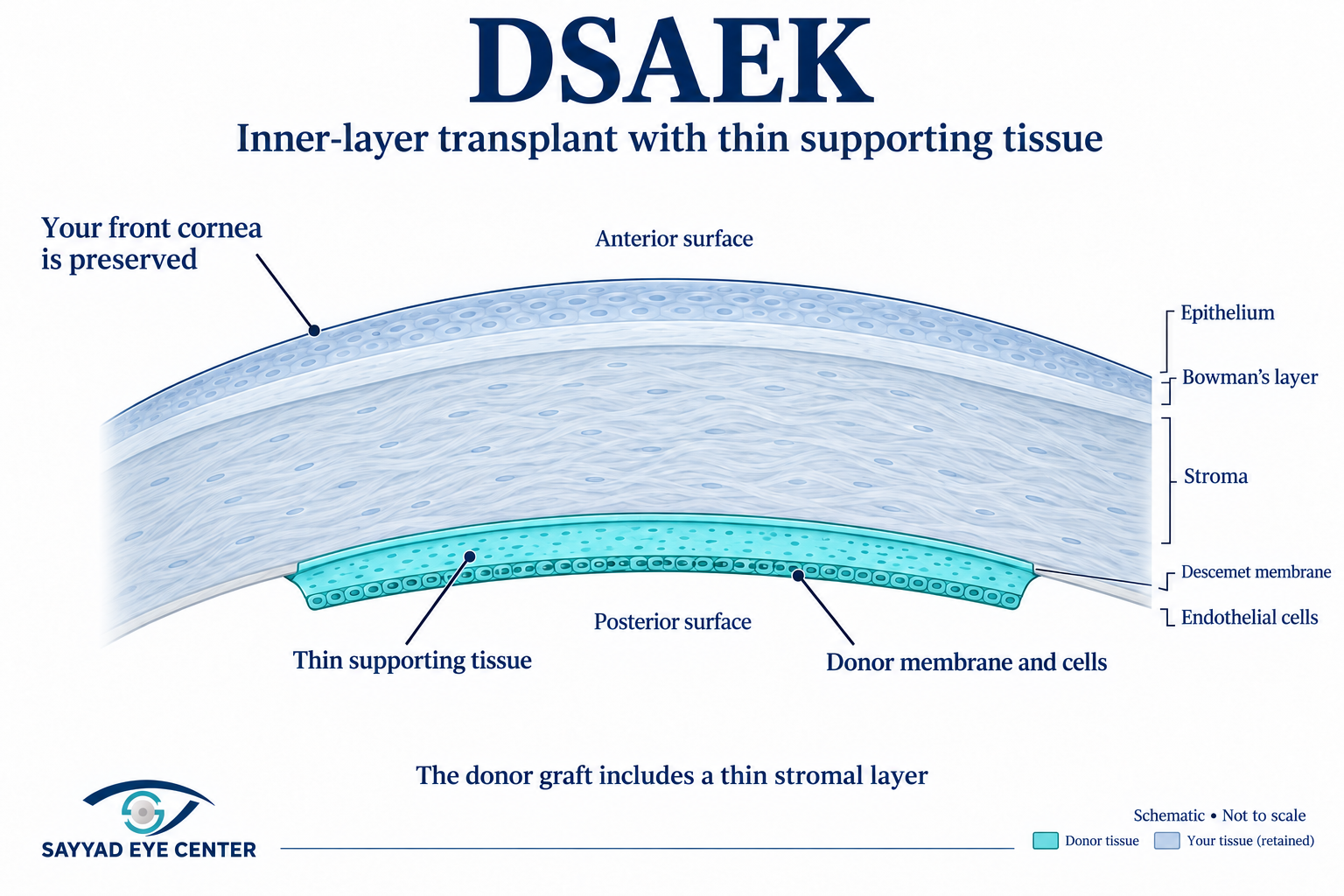
DSAEK
What is replaced: The inner cell layer, its membrane and a thin layer of supporting corneal tissue.
Why it may be chosen: Endothelial failure; may suit some more complex eyes.
PKP
What is replaced: All layers of a central corneal section.
Why it may be chosen: Deep or full-thickness disease when selective replacement is unsuitable.
These operations address different problems. A newer or thinner graft is not automatically the right choice for every eye.
How Dr Fouad plans treatment
At Sayyad Eye Center, Dr Fouad El Sayyad assesses the affected layers, corneal shape, eye pressure and the rest of the eye. Scans and other tests are selected as needed. The consultation should explain the expected visual benefit, alternatives, donor-tissue arrangements and follow-up. Bring previous scans, operation reports and your current eye drops.
Benefits of each approach and recovery
DALK preserves your healthy inner layer
Deep anterior lamellar keratoplasty replaces diseased front tissue while keeping your own healthy endothelium, the inner cell layer. This avoids rejection of a transplanted endothelial layer, although other forms of graft rejection remain possible. Stitches are used, and vision improves as the cornea heals and its shape settles. Sometimes findings during surgery mean a full-thickness transplant is the safer option; your surgeon will discuss this beforehand.
DMEK and DSAEK treat inner layer failure
The endothelium helps keep the cornea clear by controlling fluid. Replacing this failing layer can allow swelling to settle while preserving most of your cornea. DMEK uses an especially thin graft and often offers quicker visual recovery and lower rejection risk than thicker graft approaches in suitable eyes. DSAEK uses slightly thicker tissue, which can be helpful in some complex surgical situations. Both are established options; the examination guides the choice.
An air or gas bubble usually supports the graft against the back of the cornea. Follow the surgeon’s positioning instructions, often involving time lying on your back. Early visits check eye pressure and graft attachment. If part of the graft separates, an additional bubble procedure, called rebubbling, may be needed; this does not automatically mean the transplant has failed.
Full thickness transplantation remains valuable
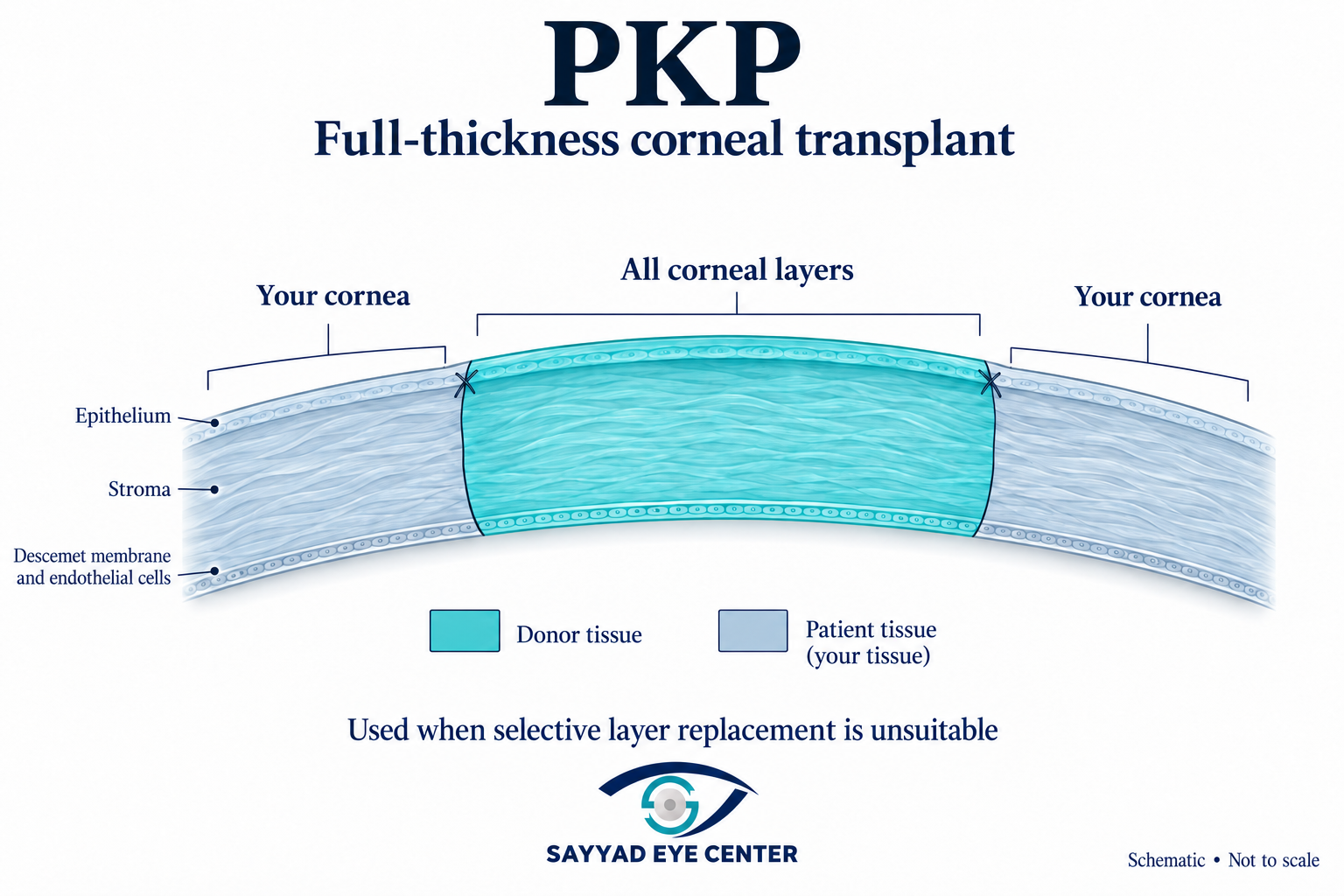
Penetrating keratoplasty replaces a central section through all corneal layers and secures the donor tissue with fine stitches. It can help when scarring or damage involves layers that cannot be treated adequately with a selective transplant. Visual recovery is usually longer, and astigmatism may need management during healing.
How long does recovery take
There are two timelines: returning to everyday activities and reaching the best stable vision. After DMEK or DSAEK, improvement may begin over weeks and continue for months. DALK and PKP commonly take many months to settle; full visual rehabilitation can take a year or longer. Healing, other eye conditions and stitch management all affect the timetable. Your surgeon will advise on work, driving and exercise.
Drops and follow up protect the result
Use prescribed drops exactly as directed, including steroid drops when prescribed, and do not stop or change them without advice. Attend pressure and graft checks even when vision seems good. Stitches may be adjusted or removed over time after DALK or PKP; there is no single schedule for everyone. Avoid rubbing or injuring the eye and follow instructions about washing, swimming and protective eyewear.
When to contact the team
Like any surgery, transplantation has risks. These include rejection, infection, eye-pressure changes and a graft that does not clear or later loses function. Their likelihood differs by operation and eye condition. Early assessment can make problems more treatable.
Contact your eye team the same day for new or increasing redness, light sensitivity, pain or reduced vision, even months or years after surgery. If you cannot reach the team, seek urgent eye care. Do not wait for the next routine appointment.
Frequently asked questions about corneal transplants
Will a transplant restore normal vision
Many suitable patients gain useful clarity, but the expected result depends on the original condition and the retina, optic nerve and other parts of the eye. Discuss what improvement is realistic for your eye rather than a guaranteed vision score.
Will I still need glasses or contact lenses
Often, yes. A clearer cornea can still have astigmatism or another prescription. Glasses or specialist contact lenses may help achieve the best vision, particularly after DALK or PKP.
Is DMEK better than DSAEK for everyone
No. DMEK has important advantages in suitable eyes, but DSAEK may be more appropriate in some complex eyes. Corneal scarring, earlier surgery and the anatomy inside the eye affect the recommendation.
Does everyone with keratoconus need a transplant
No. Many people manage with glasses or specialist contact lenses, and cross-linking may help control progression when indicated. A transplant is generally considered when these options cannot provide adequate function or significant scarring is present.
Where does the donor cornea come from
In Egypt, donor corneas are imported from international eye banks, mainly in the United States and also Sri Lanka. Tissue comes from deceased donors and is evaluated by the supplying eye bank. The team will confirm your tissue arrangements; timing depends on clinical need and availability.
Can the body reject the graft
Yes, although risk varies with the operation and eye. Rejection means an immune reaction to donor tissue. Prompt treatment can sometimes reverse it. Keep using prescribed drops and report new redness, pain, light sensitivity or reduced vision promptly.
How long will the transplant last
A graft may remain clear for many years, but there is no fixed lifetime. The diagnosis, operation, pressure control, inflammation and follow-up affect longevity. Some patients need further treatment or another graft.
Can cataract surgery be performed at the same time
Sometimes. Combined or staged surgery may be considered, especially with endothelial disease and cataract. The choice depends on the cornea, lens measurements and the expected benefits of each sequence.
When can I fly after the operation
Do not fly while an air or gas bubble remains in the eye. Wait until your surgeon confirms it has gone and clears you to travel. Timing varies; do not rely on a fixed number of days. Tell any doctor about an intraocular gas bubble before other treatment.
How should I plan treatment when visiting Egypt
Arrange assessment and donor-tissue planning before fixing travel dates. Allow for early follow-up and possible additional visits. Agree a local eye-care contact after returning abroad and carry your reports, drop schedule and emergency contact details.
Arrange a corneal assessment in Cairo
Contact Sayyad Eye Center for an assessment with Dr Fouad El Sayyad. The team can confirm consultation access in New Cairo or Mohandeseen, the surgical location and tissue arrangements. A careful assessment should lead to honest advice and time to answer your questions.
Medical review: Dr Fouad El Sayyad, Consultant Cornea, Cataract and Refractive Surgeon; American Board Certified in Ophthalmology; Fellowship in Cornea, External Eye Disease and Refractive Surgery, Washington University in St. Louis, USA.
References
American Academy of Ophthalmology patient information and clinical publications. Place these sources at the end of each published language version; do not add reference numbers after sentences. No wiki references are used.
AAO Corneal transplants patient booklet https://store.aao.org/media/resources/051175/051175-corneal-transplants.pdf
AAO About corneal transplantation https://www.aao.org/eye-health/treatments/about-corneal-transplantation
AAO Flying after eye surgery https://www.aao.org/eye-health/tips-prevention/can-i-fly-with-this-eye
AAO Corneal Edema and Opacification Preferred Practice Pattern https://www.aaojournal.org/article/S0161-6420%2824%2900011-3/fulltext
AAO Cornea Subspecialty Day educational syllabus https://cdn.aao.org/pdf/AAOSub_2021_COR_Syllabus.pdf
Prepared on 6 October 2026. This guide supports an individual consultation. Medical approval and publication dates should reflect actual completion.
Questions to bring to your consultation
• Which layers are damaged, and why is this operation recommended?
• What useful improvement is realistic for my eye?
• Could glasses, specialist contact lenses or another treatment meet my needs?
• What are the tissue arrangements, expected visits and drop plan?
• Will I need positioning or an air or gas bubble, and when can I travel?
• Who should I contact urgently here and after returning abroad?