Cataracts and Cataract Surgery: Symptoms, Treatment, Lens Choices and Recovery
Understand cataract symptoms, when surgery may help, how phacoemulsification works, lens choices and recovery. A patient guide from Sayyad Eye Center.

This guide supports your consultation and does not replace the instructions given for your own eye.Cataracts can make everyday life gradually more difficult: headlights become dazzling, reading takes more effort, and colours seem less bright. Surgery removes the cloudy lens and replaces it with a clear artificial lens. For suitable patients, it can improve clarity, reduce cataract-related glare and make daily activities easier. Careful lens planning may also reduce dependence on glasses.
This guide explains when to consider surgery, how modern phacoemulsification works, what your lens choice means and how to prepare for recovery. At Sayyad Eye Center, the starting point is a thorough assessment and honest advice about the benefit you can expect from treatment.
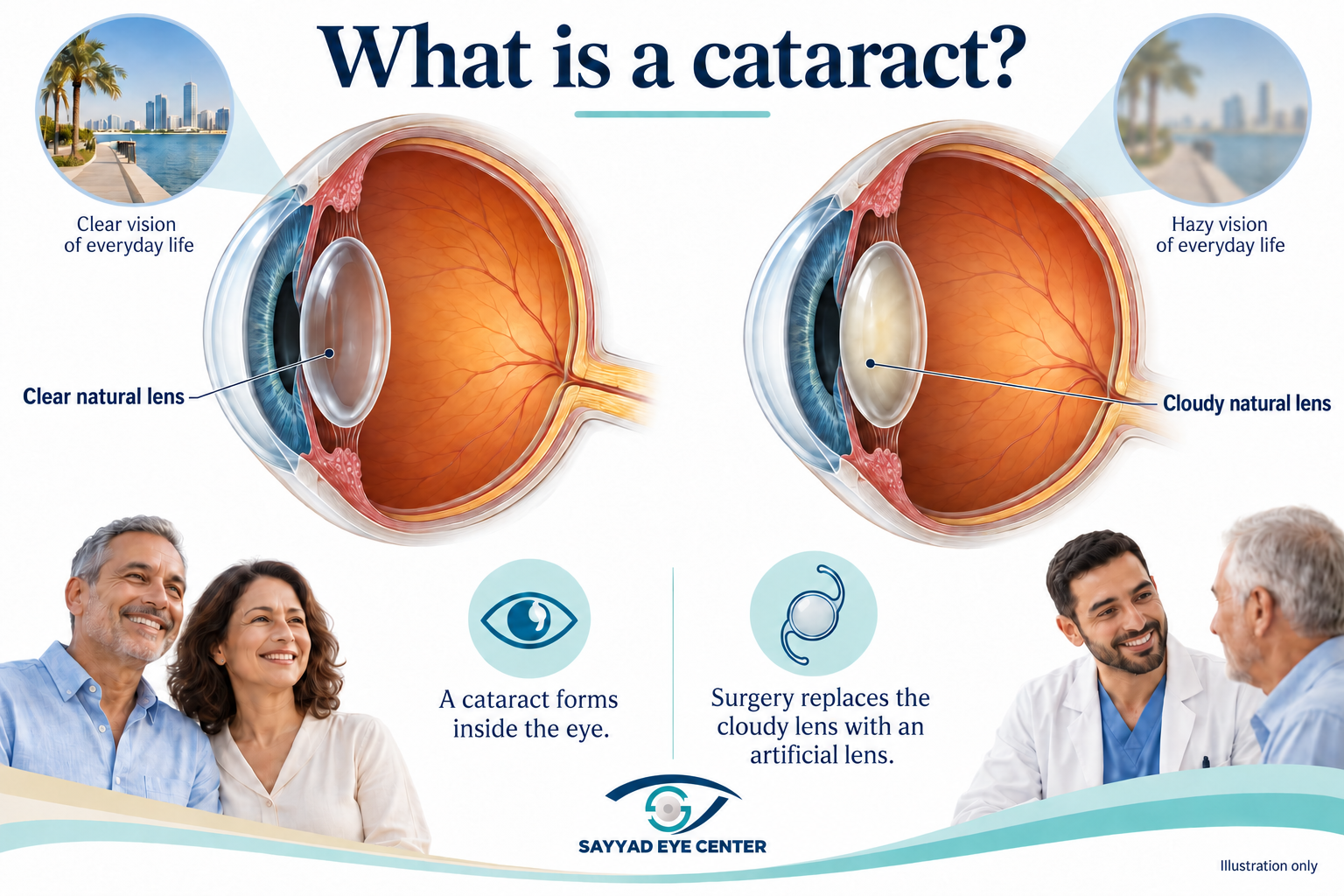
What is a cataract
A cataract is clouding of the natural lens inside the eye, behind the coloured iris. It is not a layer growing over the eye or a collection of water. It can affect one or both eyes and may progress at different speeds. Most cataracts develop with age; diabetes, steroid use, eye injury, inflammation and previous eye surgery can also contribute. Cataracts in children require a separate pediatric assessment.
Symptoms you may notice
• Gradually blurred or hazy vision, even with your glasses.
• Glare or halos around headlights and difficulty driving at night.
• Faded colours, reduced contrast or needing more light to read.
• Frequent prescription changes or, sometimes, double vision in one eye.
These symptoms can have other causes, so an eye examination is needed. Cataracts usually cause gradual, painless changes. Sudden vision loss, significant pain or a new curtain in your vision needs urgent assessment rather than a routine cataract appointment.
When is the right time for surgery
Consider an assessment when vision affects reading, driving, work, recognising faces or moving around comfortably. You do not need to wait for a cataract to become “ripe.” If symptoms are mild, updated glasses, better lighting and monitoring may be enough for now. Sometimes surgery is recommended to help examine or treat another eye condition.
There is no proven eye drop that removes an established cataract. Surgery is the treatment that replaces the cloudy lens, but the timing should reflect your daily needs and the health of the whole eye.
What improvement can you expect
Many patients notice clearer detail and brighter colours after surgery. Your result also depends on the cornea, retina and optic nerve. Cataract surgery cannot reverse established damage from conditions such as macular disease or glaucoma. Your doctor should explain how much of your visual difficulty comes from the cataract and what may remain afterward.
Cataract assessment with Dr Fouad El Sayyad
Tell Dr Fouad what you want to do more comfortably and ask which plan best suits your eyes. A careful consultation includes discussing alternatives, the expected benefit and your questions, with no pressure to choose the most expensive lens. Consultations are available through Sayyad Eye Center in Mohandeseen and New Cairo; confirm the appropriate branch and surgery location when booking.
Planning surgery and choosing your lens
The measurements that guide the plan
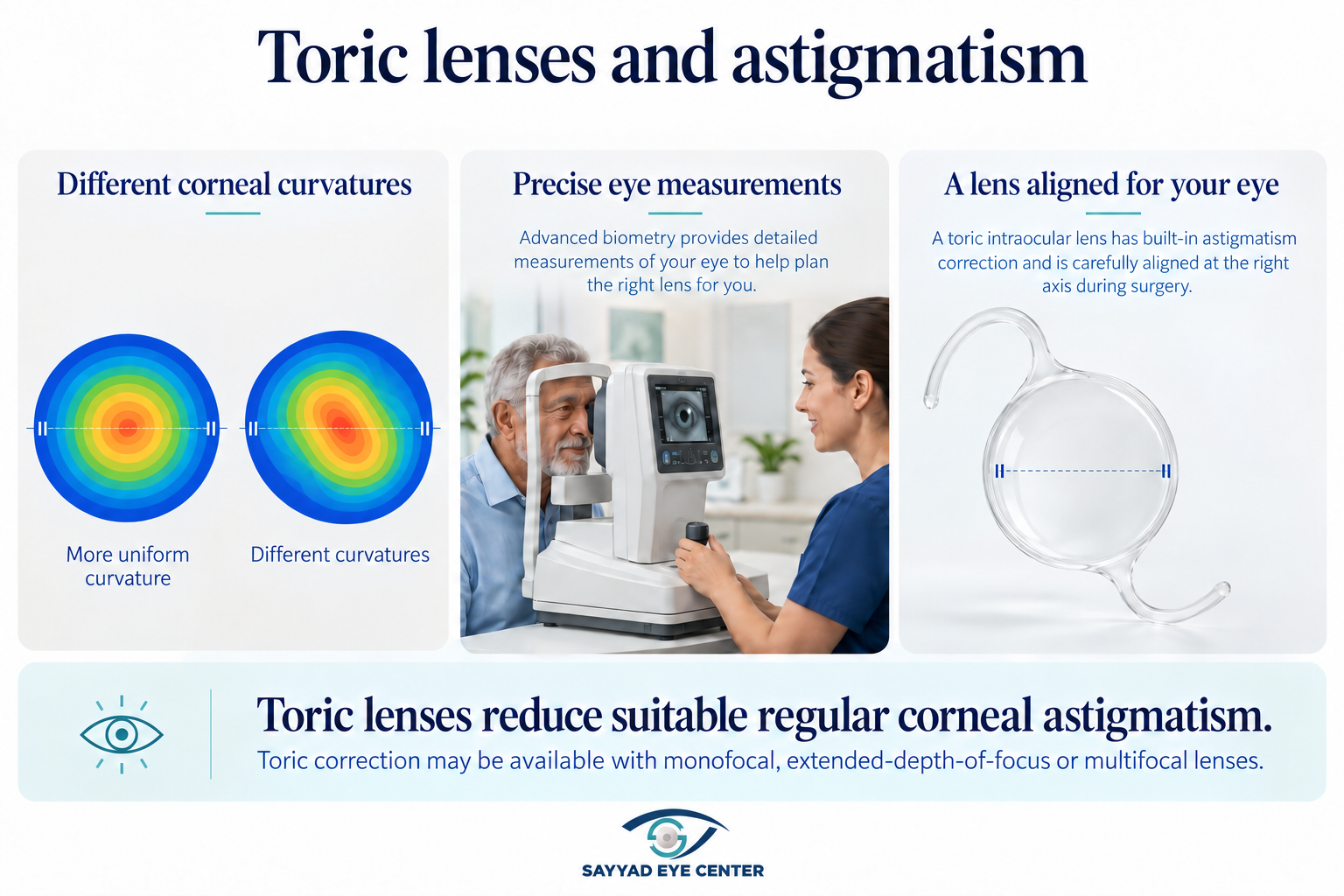
The assessment includes vision and prescription testing, examination of the eye and measurements to calculate the power of the implanted lens. The team assesses corneal shape and astigmatism, the retina and optic nerve, and dry eye or other conditions that could affect accuracy or recovery. Corneal scans and retinal OCT are used when indicated.
Bring earlier eye reports and tell your surgeon about previous LASIK, PRK, SMILE or other eye surgery; these can change lens calculations. Ask how long to leave contact lenses out before testing. Provide a complete list of medicines and allergies, and do not stop prescribed medication without medical instructions.
How phacoemulsification works
At Sayyad Eye Center, cataract surgery uses modern phacoemulsification, often called phaco. Through a small incision, ultrasound breaks up the cloudy lens so it can be removed. A clear, usually foldable intraocular lens, or IOL, is then placed inside the eye, usually in the remaining natural lens capsule. Small incisions often heal without stitches, although some eyes need them.
Most procedures are day surgery with local anaesthesia, commonly numbing drops, and additional support when appropriate. You may notice light or movement; tell the team if you feel discomfort. The whole visit includes preparation and observation as well as the operation, so allow the time advised by the clinic and arrange someone to take you home.
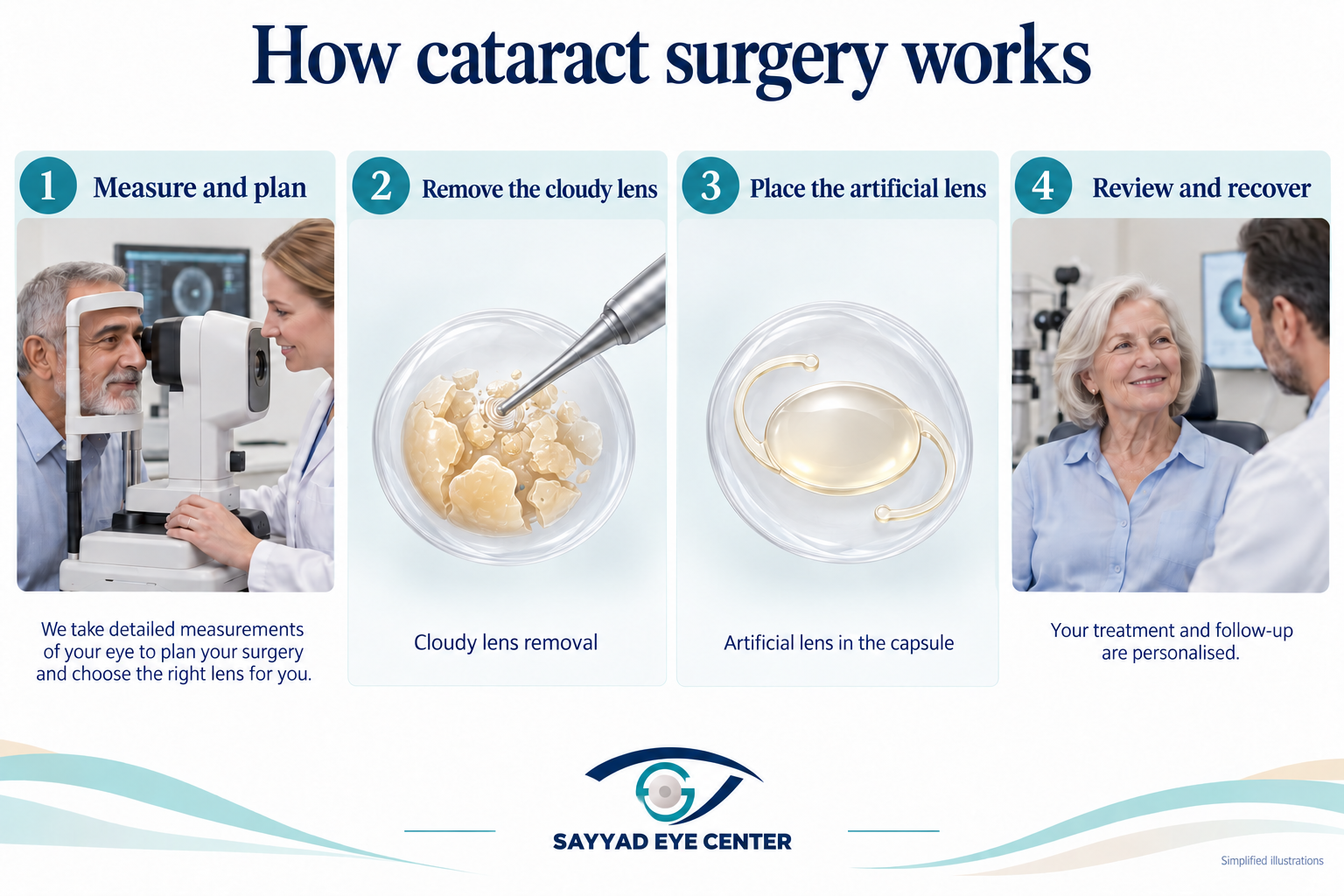
Is cataract surgery a laser procedure
Phaco uses ultrasound rather than a laser to remove the cloudy lens. Femtosecond laser can assist selected surgical steps, but it does not automatically produce better vision or faster recovery for every patient. Accurate measurements, a suitable lens and careful surgery remain central to the result. YAG laser, used later for certain capsule clouding, is a different procedure.
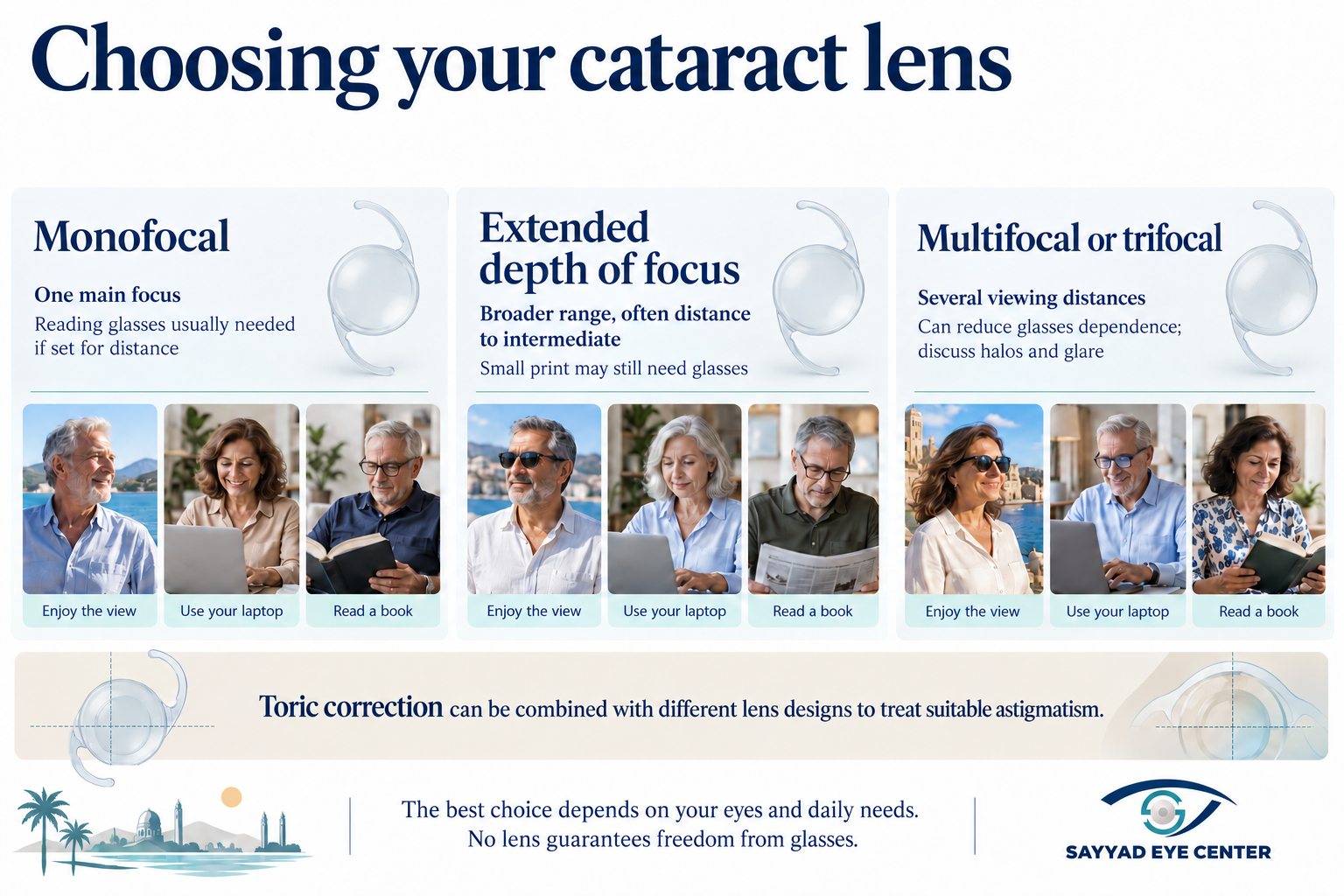
Understanding the main lens options
Monofocal
Clear focus at one main distance. If set for distance, reading glasses are usually needed. Other targets or monovision may suit selected patients.
EDOF
A broader useful range, commonly distance to intermediate. Small print may still need glasses. The range and optical effects depend on the design.
Multifocal or trifocal
Can reduce glasses dependence across several distances. Halos, glare and contrast trade-offs need discussion, especially for night driving.
Toric correction
Reduces suitable regular corneal astigmatism. Toric is an astigmatism-correcting feature; it may be available in monofocal, EDOF or multifocal designs.
“Premium” does not mean best for every eye. No lens guarantees complete freedom from glasses. Agree your visual target before surgery, including priorities for distance, computer work, reading and night driving. For a fuller comparison, read our separate guide Choosing a Lens for Cataract Surgery.
Recovery and looking after your eye
What recovery usually feels like
Many people notice an improvement during the first few days. Vision may fluctuate, and mild grittiness, watering or light sensitivity can occur while the eye settles. Healing continues over the following weeks; the timing of a new glasses prescription depends on your examination. If symptoms are worsening rather than settling, contact the eye team.
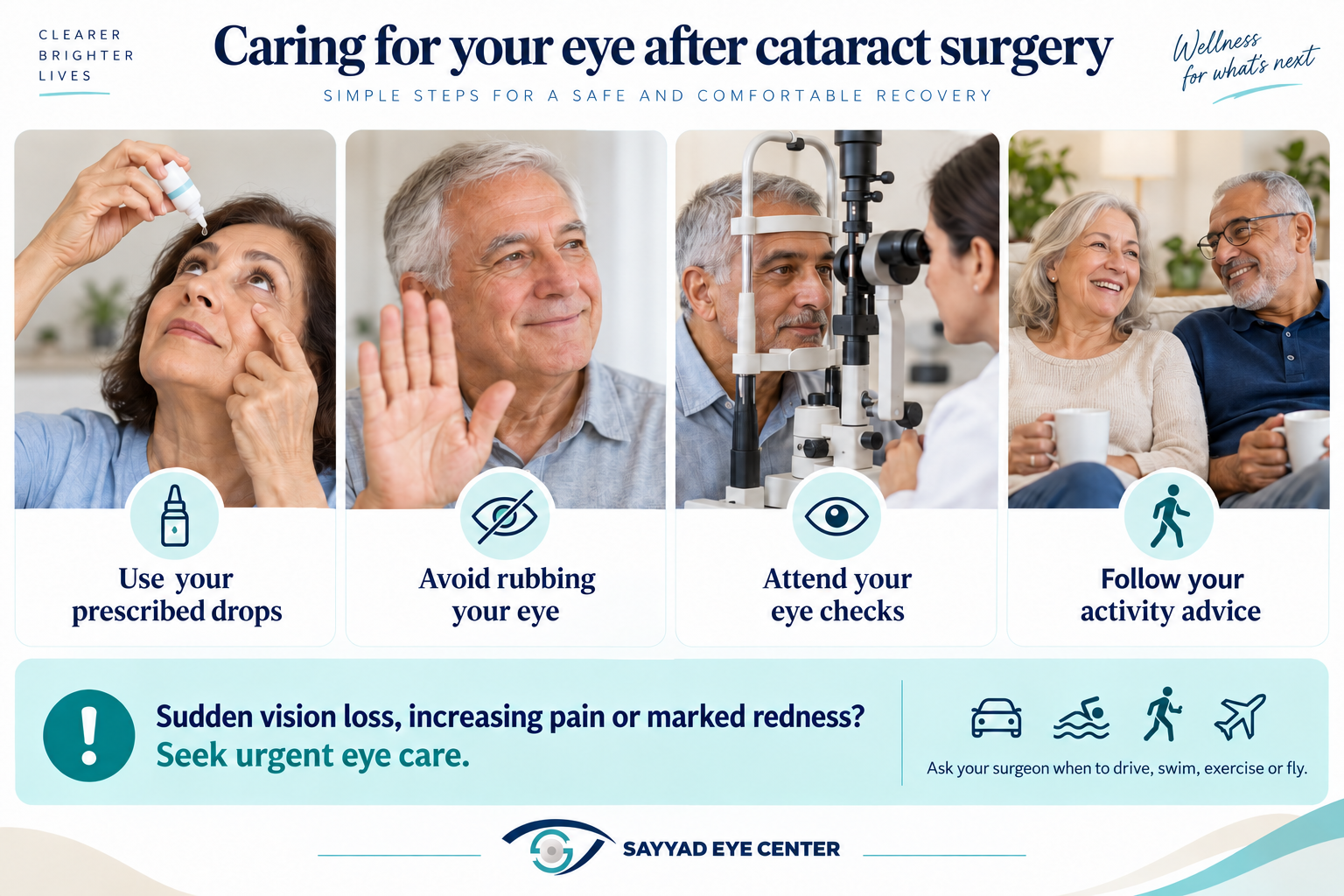
Your practical recovery plan
• Use prescribed drops according to your written schedule. Wash your hands and avoid touching the bottle tip to the eye.
• Avoid rubbing or pressing on the eye. Use an eye shield if your surgeon advises it.
• Follow your individual instructions for washing, swimming, exercise, lifting and returning to work.
• Attend the early review and later appointments, even if the eye feels comfortable.
• Do not drive until your surgeon confirms that your vision is suitable and you meet the relevant driving requirements.
Risks in perspective
Cataract surgery is a well-established operation, and most patients recover well. Like any surgery, it carries risks. Serious complications are uncommon, but infection, retinal detachment or other problems can affect sight. Inflammation, pressure changes, swelling or lens-related problems may require extra treatment. Your personal risk depends on the eye and medical history; careful planning and follow-up are part of protecting the result.
Seek urgent eye care for sudden or worsening vision loss, increasing or severe pain, marked redness, or new flashes, floaters or a curtain in your vision. These are not symptoms to wait out until your next routine visit.
Can cataracts return
The original cataract cannot return once the natural lens has been removed. The thin capsule behind the implant can become cloudy months or years later; this is called posterior capsule opacification, or PCO. If it affects vision, a short outpatient YAG laser procedure can often clear the visual pathway. An examination should confirm the cause of any new blur.
Planning treatment if you live abroad
Allow time for the assessment, surgery and required early reviews. Your surgeon will advise when you can travel and how follow-up will continue after you return home. If an air or gas bubble has been placed inside the eye during any associated procedure, do not fly until the surgeon confirms it has completely gone. Our international-patient guide explains travel planning and accommodation.
Questions to bring to your consultation
How much of my blurred vision comes from the cataract? Which lens and visual target suit my activities? What glasses might I still need? When will I be reviewed, and whom should I contact if I have a problem? Ask for a written quotation explaining the lens, surgery and follow-up included; cost varies with the individual plan.
Frequently asked questions about cataracts
Do I need surgery as soon as a cataract is found
Not necessarily. Surgery is usually considered when the cataract affects activities that matter to you, or when there is another medical reason to remove it. Mild cataracts can often be monitored.
Is phaco the same as laser cataract surgery
No. Phaco uses ultrasound. A femtosecond laser may help with selected steps in some surgical approaches, but its use does not by itself guarantee a better result.
Will the operation hurt
The eye is numbed for surgery. You may notice light, movement or mild pressure, but significant pain is not expected. Tell the team promptly if you are uncomfortable.
Which lens is best for me
The best match depends on your measurements, eye health and priorities. Toric correction can address suitable astigmatism, while monofocal, EDOF and multifocal designs offer different focusing ranges.
Can I have cataract surgery after LASIK or with diabetes
Often yes, after an individual assessment. Previous laser correction affects lens calculations, and diabetes may require particular attention to the retina and recovery plan.
Will I still need glasses
Possibly. The lens design, target focus, astigmatism and eye health all matter. Many patients reduce their dependence on glasses, but some tasks may still require them.
Can both eyes be treated during the same visit to Egypt
It may be possible to plan both eyes within one stay. The timing and follow-up are individual decisions; do not assume both operations and recovery will fit a fixed short trip.
When can I work or travel again
This depends on the operation, healing and what your work or journey involves. Confirm your review schedule and obtain personal advice before fixing return dates.
Does a cloudy capsule mean the surgery failed
No. PCO can develop after an otherwise successful operation. If it is the cause of reduced vision, YAG laser can often help after assessment.
Arrange your cataract assessment
Contact Sayyad Eye Center on +20 10 000 88168 or info@sayyadeyecenter.com. Explain your symptoms, bring your current glasses and previous eye reports, and ask which branch is suitable for your appointment.
Medical references
Traditional cataract surgery and laser cataract surgery
Factors to consider in choosing an intraocular lens
Cataract surgery recovery and activities
Detached retina and precautions with an intraocular gas bubble