
Numbing eye drops: why unsupervised use can harm your eyes
Numbing eye drops relieve pain briefly but repeated unsupervised use can harm the cornea. Learn their proper role, warning signs and what to do.
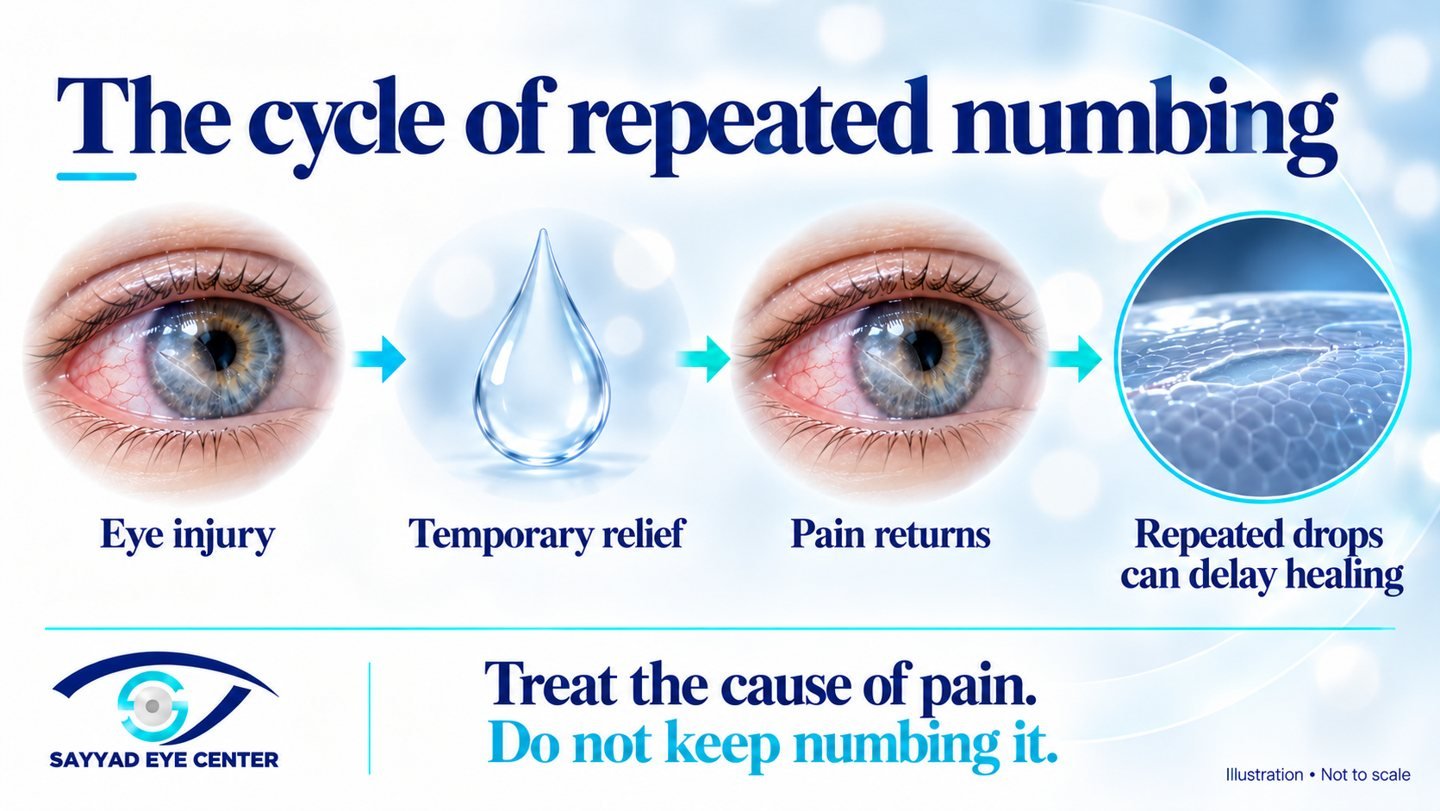
An eye is scratched or sore. A numbing drop takes the pain away almost immediately, and it is tempting to use another whenever the discomfort returns. The problem is that relief does not mean the surface has healed. Repeated use can interfere with healing while making the warning symptoms harder to interpret.
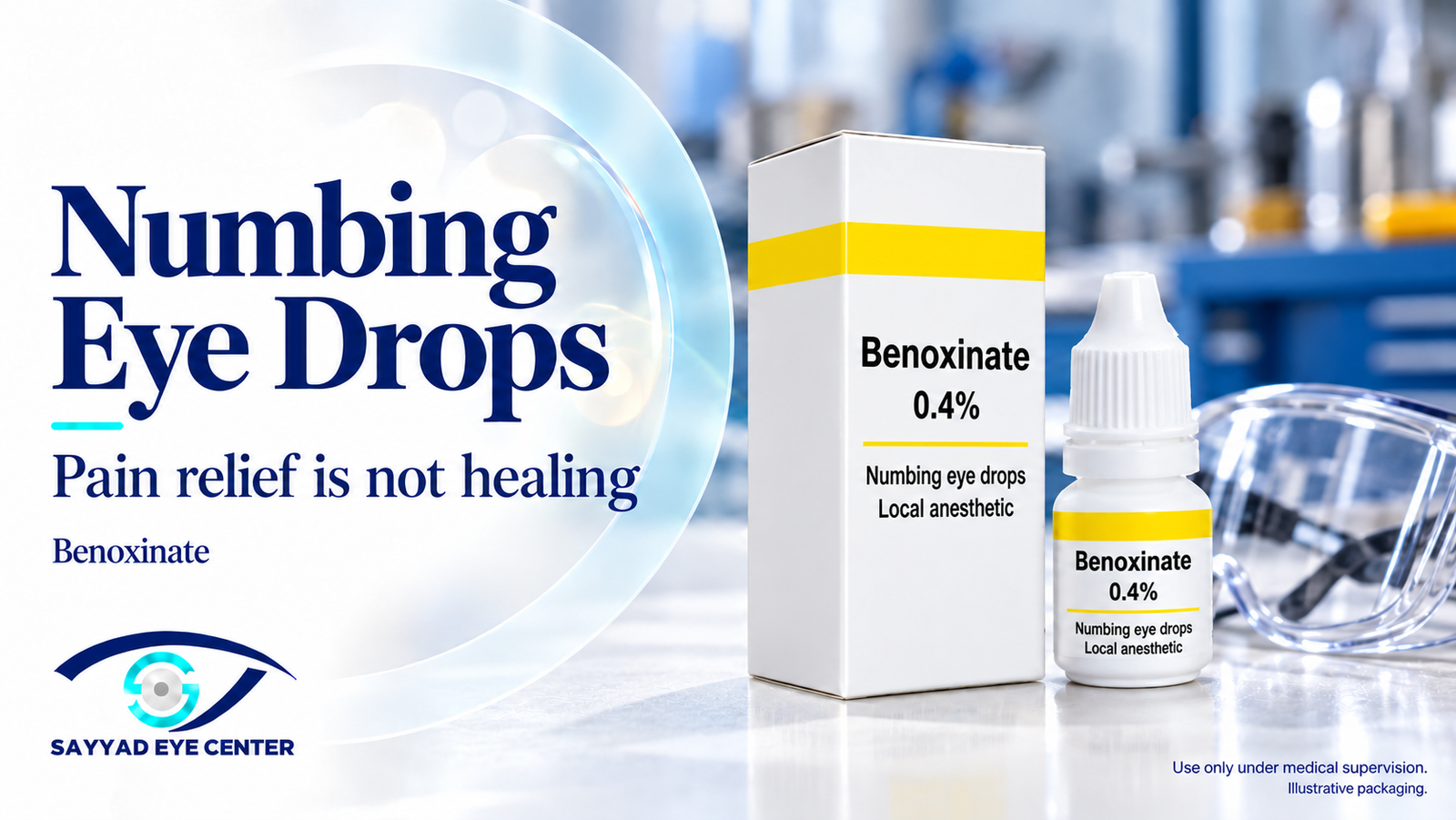
These drops have an important place in eye care. A controlled dose helps us examine the eye or perform a procedure comfortably. Taking a bottle home and repeatedly treating unexplained pain is a different situation.
What are numbing eye drops?
Topical anaesthetic drops temporarily reduce sensation at the eye’s surface. Examples include proparacaine, also called proxymetacaine, tetracaine and oxybuprocaine. They are different from lubricants, antibiotics and steroid drops. They do not treat every cause of eye pain or clear an infection.
They may be used for pressure measurements, removal of a superficial foreign body or certain procedures. Temporary numbness is useful for those tasks. It does not make the medicine a general-purpose home painkiller. Availability and prescription rules differ between countries; being able to obtain a bottle does not establish that repeated use is safe.
Why can repeated use damage the cornea?
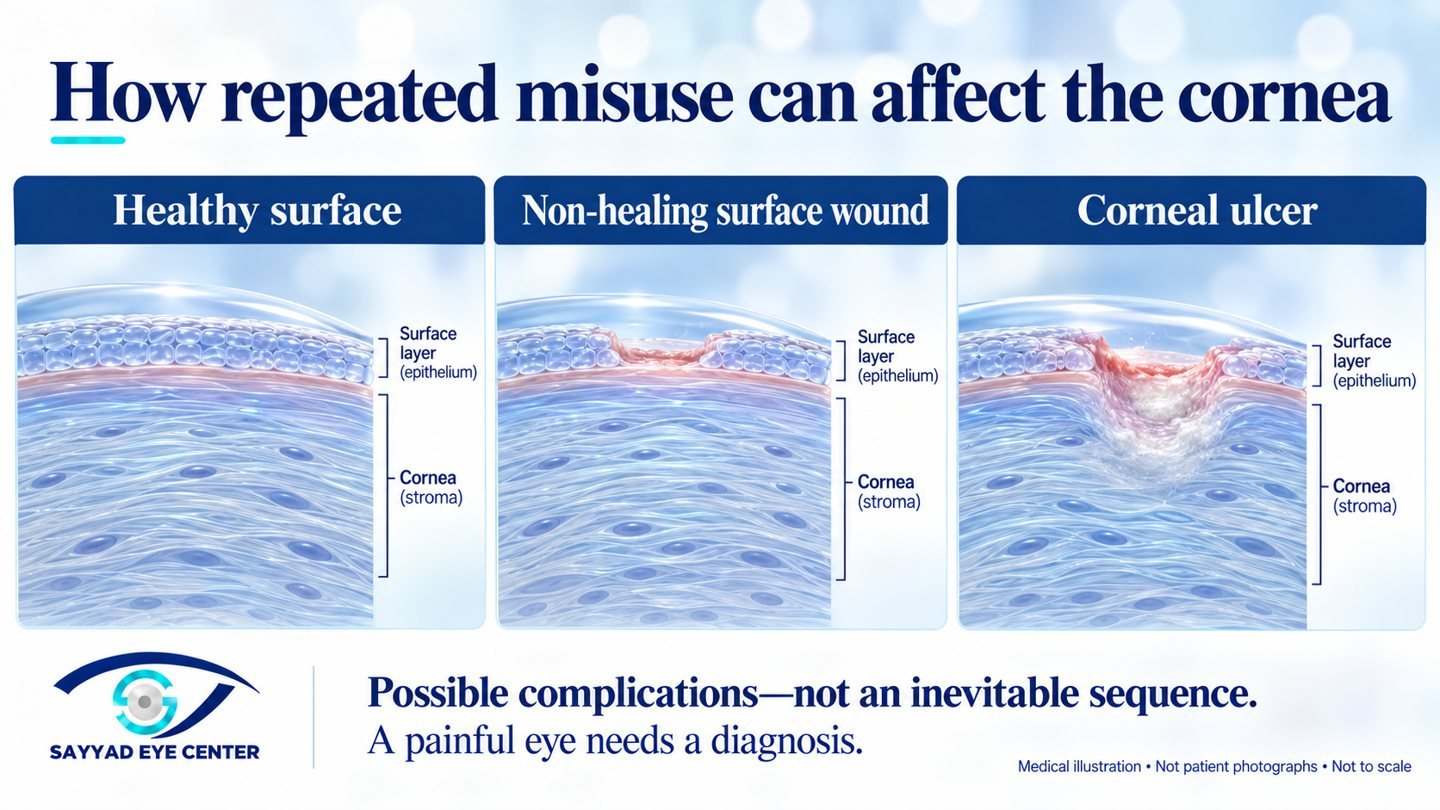
The cornea is the clear front window of the eye. Its outer layer needs to repair itself after a scratch. Repeated anaesthetic exposure can injure those surface cells and delay closure of the wound. A person may then use more drops because the pain returns, creating a cycle of temporary relief and ongoing injury.
With misuse, the surface can develop a persistent defect, inflammation, ulceration or infection. Severe cases can leave scarring or thinning and threaten sight. These outcomes are not what we expect from a properly administered examination dose; they explain why repeated self-treatment is unsafe.
Numbness also reduces the protective feedback that normally tells you to stop rubbing or touching the eye. Avoid rubbing a numb eye and follow the instructions after a procedure, including when contact lenses can be worn again.
Does relief prove that it is only a scratch?
No. Pain improving after a numbing drop cannot reliably distinguish a simple abrasion from other surface problems. A retained foreign body, contact-lens infection or a more serious injury may still be present. The cause needs an examination, not a trial of stronger or more frequent drops.
A painful red eye in a contact-lens wearer deserves urgent assessment. Remove the lens if you can do so easily, do not reinsert it, and bring the lenses, case and drops to the appointment. Do not let brief relief delay care.
What does the research actually say?
The Cochrane review of randomized trials found the evidence too uncertain to establish reliable benefit and safety for routine treatment of corneal-abrasion pain with topical anaesthetics. The trials were small, follow-up was limited and rare harms could not be excluded confidently. A 2025 paper summarizing the same review reached the same cautious interpretation; it was not a separate set of clinical trials.
There is professional disagreement about a tightly limited prescription for selected adults with a properly diagnosed simple abrasion. A 2024 American College of Emergency Physicians guideline permits a restricted short course within a specific clinical protocol. Ophthalmology commentary has challenged the strength of the evidence for that approach.
Neither position supports buying a bottle to use whenever an eye hurts, extending a course, or using it for an undiagnosed red eye. If a specialist has given you a specific short-term plan, use only that plan and return as directed. Do not share it with another person or keep restarting it.
What if I have already been using these drops?
If you are repeatedly using a numbing drop without a current supervised plan, stop self-medicating and arrange urgent eye assessment, preferably the same day. Bring the bottle and explain how often you used it and for how many days. Do not be embarrassed; that information can change the diagnosis and treatment.
If it was prescribed as part of a specific procedure or short course, do not take extra doses or extend the course. Contact the treating team promptly if you need more pain relief than the plan provides. Persistent or worsening pain needs reassessment rather than an automatic refill.
Seek immediate eye care for reduced vision, severe or increasing pain, pronounced light sensitivity or a white spot on the cornea. After an injury or recent surgery, a worsening eye should not be managed by repeatedly numbing it.
How is the pain treated safely instead?
Treatment depends on the cause. The examination checks vision and looks for a scratch, retained material, infection or another problem, often using fluorescein dye and a slit lamp. The plan may include suitable oral pain relief, lubricants, an antibiotic when indicated or other prescribed treatment. A bandage contact lens is a medical treatment for selected cases, not something to fit yourself.

Do not substitute steroid drops, herbal solutions or skin-numbing products. If a chemical enters the eye, start rinsing immediately with plenty of clean water and seek emergency care; do not delay rinsing to find a numbing drop. Pain after welding or grinding also deserves assessment rather than a borrowed bottle.
Frequently asked questions
Are the drops used during my examination dangerous?
They are useful when used appropriately for a clinical purpose. The concern here is repeated, unsupervised use, not a routine controlled examination dose. Tell the team about previous reactions to medicines.
What if the bottle was sold to me without a prescription?
That does not replace an eye examination. Check the active ingredient and do not assume a medicine is harmless because it was easy to buy.
Can I use them after PRK or another laser operation?
Follow your surgeon’s written pain-control plan. Protocols differ, and some closely supervised plans use limited topical anaesthesia. Do not add a numbing drop yourself, increase its frequency or continue it beyond the prescribed period.
Is there a safe number of drops I can use on my own?
There is no general self-treatment schedule that safely covers all causes of eye pain. Diagnosis, formulation, quantity, duration and follow-up matter. A research protocol should not be copied into home treatment.
Can the cornea recover after overuse?
It may heal once the exposure is stopped and the underlying problem is treated, but recovery depends on the degree of injury and any infection or scarring. Earlier assessment gives the best opportunity to prevent further damage.
Related articles
Contact the centre
For a planned consultation or follow-up, contact Sayyad Eye Center on +20 100 008 8168. Confirm whether your visit is in Mohandeseen or New Cairo. Bring your medicines and previous reports. For urgent warning symptoms, use an eye emergency service if the centre is unavailable; do not wait for a message reply.
References
Medical review
Medically reviewed by Dr Fouad El Sayyad
American Board certified ophthalmologist
Fellowship in Cornea, External Eye Disease and Refractive Surgery
Washington University in St Louis, USA