Glaucoma
Understand glaucoma, eye pressure and treatment with drops, laser or surgery. Learn when to seek urgent care and arrange an assessment in Cairo.
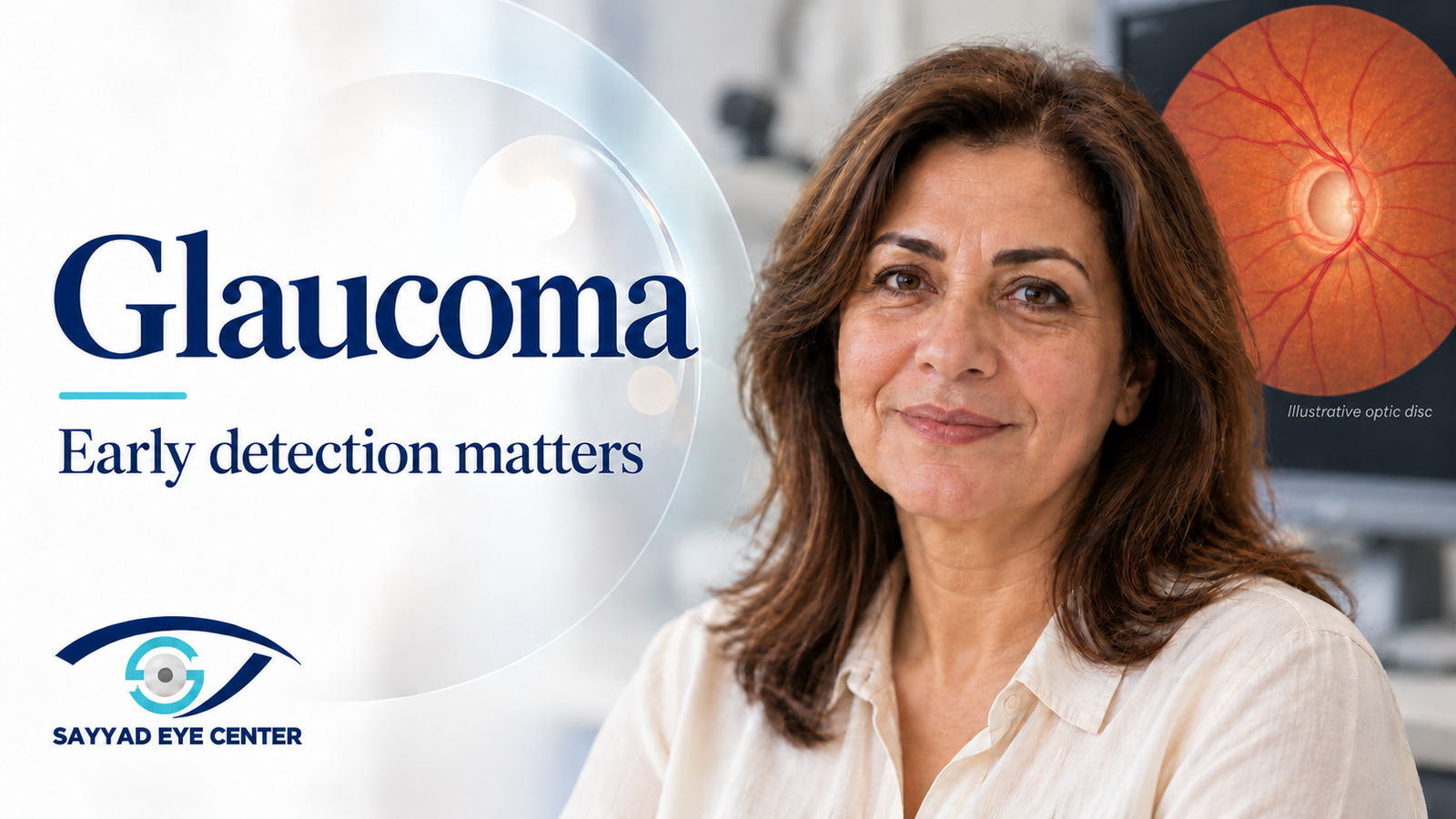
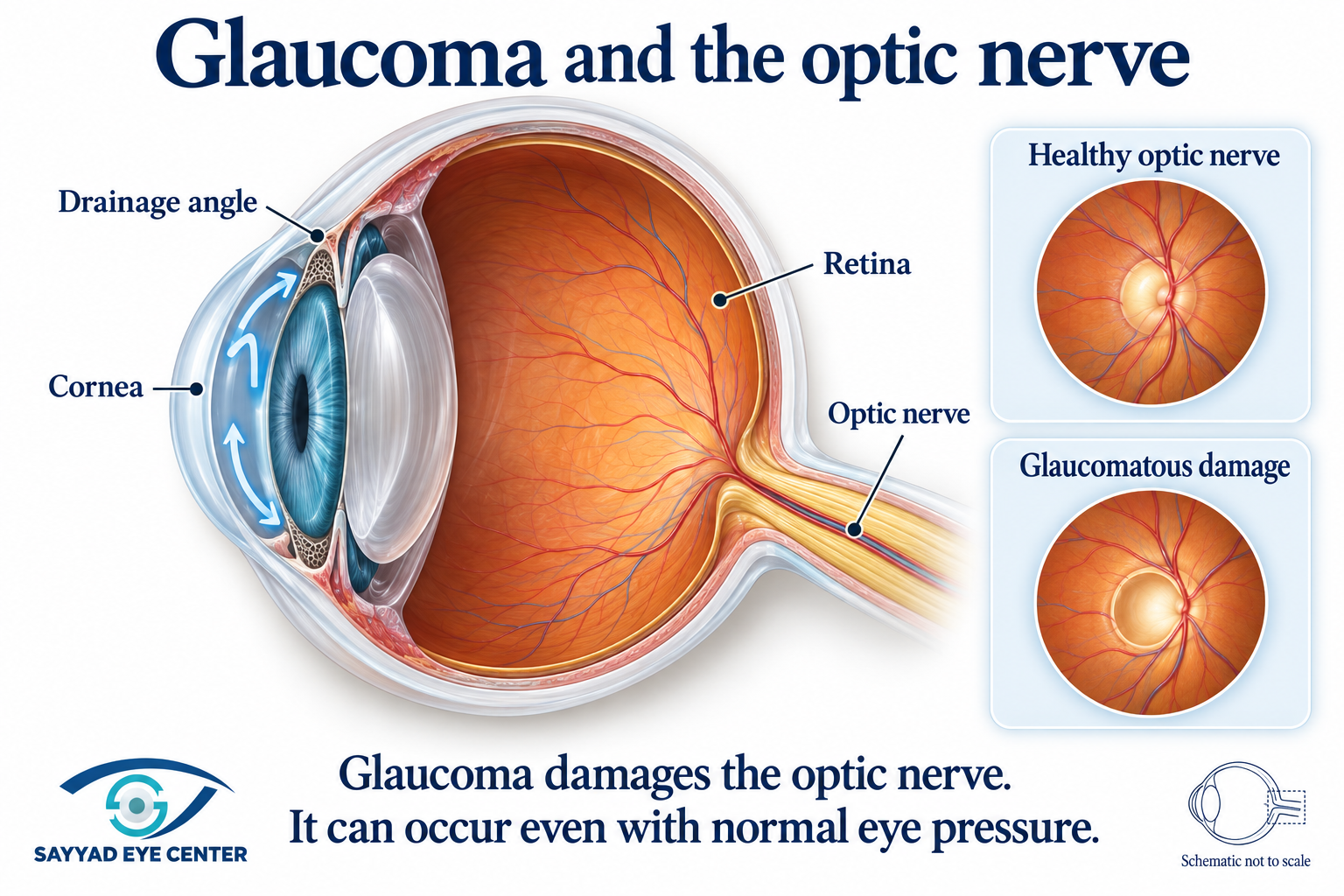
Glaucoma is a group of conditions that damage the optic nerve, which carries visual information from the eye to the brain. Early diagnosis and appropriate treatment can help preserve sight. Treatment usually lowers eye pressure and may involve medication, laser or surgery. The right option depends on the type of glaucoma and how much protection your optic nerve needs.
Why an examination matters even when vision seems normal
Open-angle glaucoma often develops without pain or noticeable early symptoms. A person may read clearly while losing parts of their peripheral vision. Existing damage is generally irreversible, so treatment aims to protect the vision that remains. A pressure measurement alone cannot diagnose or exclude glaucoma.
The main types of glaucoma
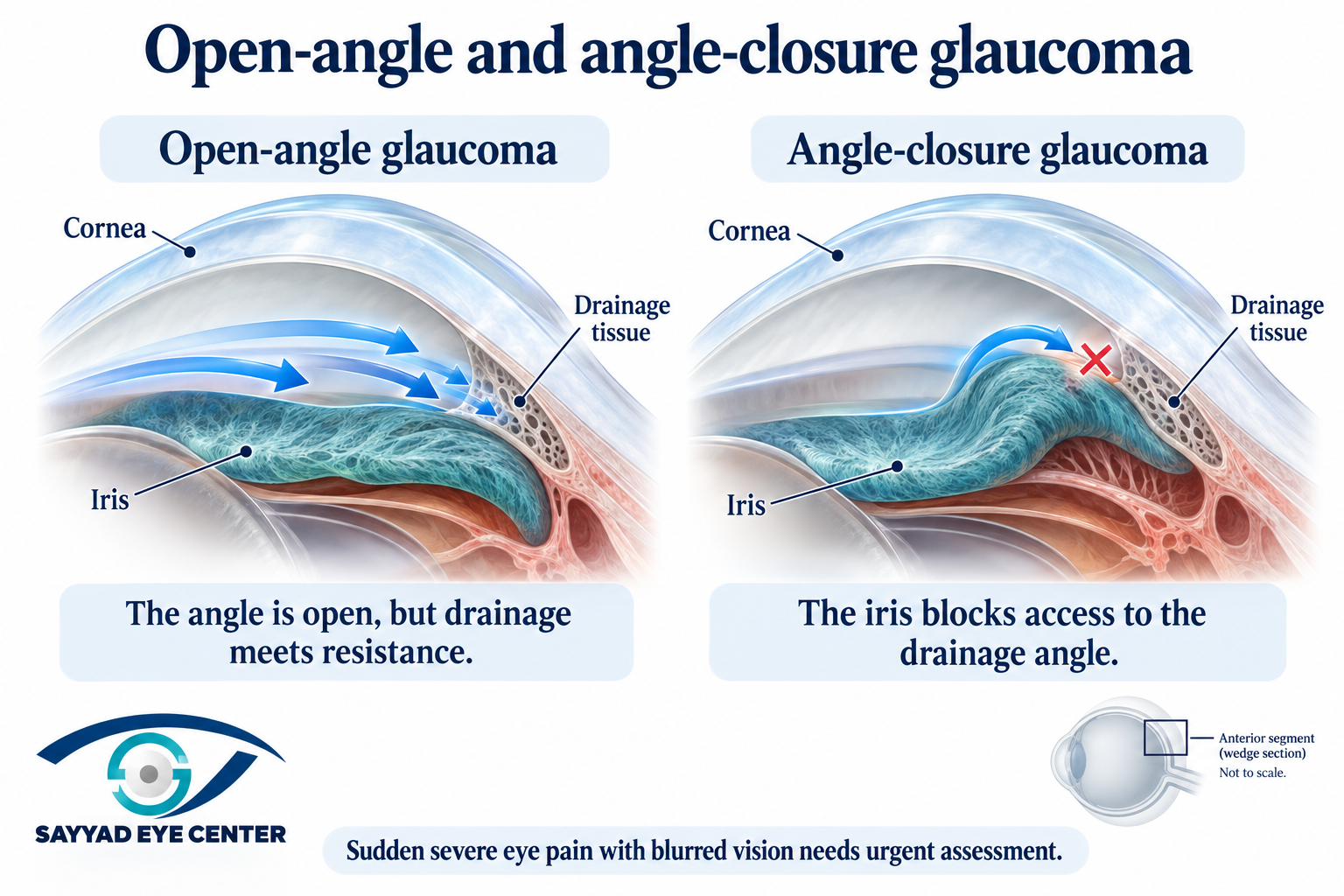
Primary open-angle glaucoma. The drainage angle is open, but fluid does not leave the eye efficiently enough. Damage usually develops gradually. Regular testing helps detect change before it becomes obvious in everyday life.
Angle-closure glaucoma. The iris blocks access to the drainage angle. This can develop slowly or cause a sudden attack. A narrow angle is a risk finding and does not automatically mean that glaucoma damage is already present.
Normal-tension glaucoma. Optic nerve damage occurs even though measured pressure is within the usual population range. Lowering pressure can still help protect the nerve.
Secondary glaucoma. Another condition or treatment contributes to the problem, such as inflammation, injury, steroid use, pigment dispersion, pseudoexfoliation or abnormal blood vessels associated with retinal disease. Treatment may need to address both pressure and the underlying cause.
Childhood glaucoma. Congenital and juvenile forms can affect babies, children or young adults. They require specialist assessment, and childhood treatment can differ substantially from adult care.
Symptoms that need emergency care
Sudden severe eye pain, redness, blurred vision or coloured halos, particularly with headache, nausea or vomiting, can indicate acute angle closure. Seek emergency eye care immediately. Do not wait for a routine appointment or an online reply. Not all glaucoma is painful; these warning symptoms describe an acute situation.
Who should discuss glaucoma testing
Tell your eye doctor about glaucoma in close relatives, previously high eye pressure, steroid use, eye injury or previous eye surgery. Risk also increases with age. Your doctor will recommend an examination schedule based on your history and findings rather than waiting for symptoms.
Diagnosis and medication
How glaucoma is assessed
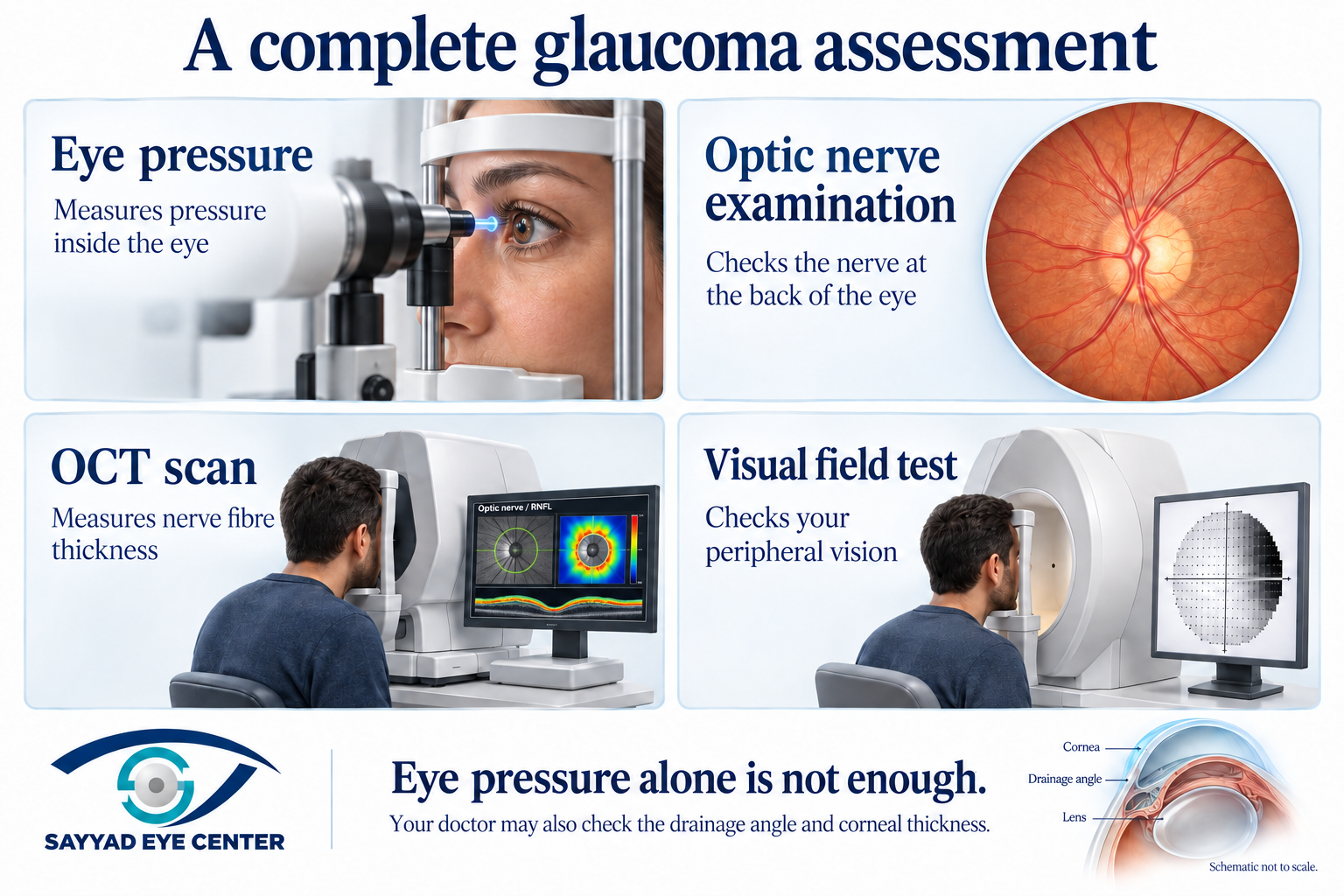
Assessment combines eye pressure measurements, optic nerve examination, visual field testing and often OCT scans of the nerve fibre layers. Gonioscopy checks whether the drainage angle is open or narrow. Measuring corneal thickness helps interpret pressure readings. Comparing results over time is often more useful than a single scan or pressure value.
High pressure and glaucoma are not identical
Ocular hypertension means pressure is elevated without established glaucomatous damage. Some people need treatment because their risk is higher; others can be monitored. A glaucoma suspect may have suspicious findings that need follow-up before a firm diagnosis can be made.
Your target eye pressure
The specialist sets an individual pressure goal using the degree of damage, rate of change and other risk factors. There is no single safe pressure for everyone. If tests show progression, the goal or treatment may change even when a reading falls within the usual range.
Eye drops and other medicines
Drops reduce fluid production or improve drainage. Common groups include prostaglandin analogues, beta blockers, carbonic anhydrase inhibitors and alpha agonists. Combination drops can simplify some regimens. The choice depends on the eye, general health, tolerability and availability. Oral pressure-lowering medicine may be used in selected situations under medical supervision.
Use the prescribed schedule even when the eye feels normal. Tell your doctor about asthma, heart problems, pregnancy and all other medicines. Report irritation or other side effects; a different formulation, medication or treatment may help. Do not stop or change treatment without advice.
Making drops easier to use
Ask the team to demonstrate the technique. Avoid touching the bottle tip to the eye. If different drops are due together, leave at least five minutes between them unless instructed otherwise. Ask about gently closing the eyelids and pressing the inner corner after a drop to reduce drainage into the nose. Bring the bottles to appointments and request a written schedule if it is difficult to remember.
Choosing the first treatment
Treatment does not always follow a fixed sequence of drops, then laser, then surgery. SLT can be an initial option for suitable open-angle glaucoma. Advanced or rapidly progressing disease may need surgery earlier. Discuss the pressure reduction required, practical burden of daily drops and the follow-up each option involves.
Laser and surgical treatment
Selective laser trabeculoplasty or SLT
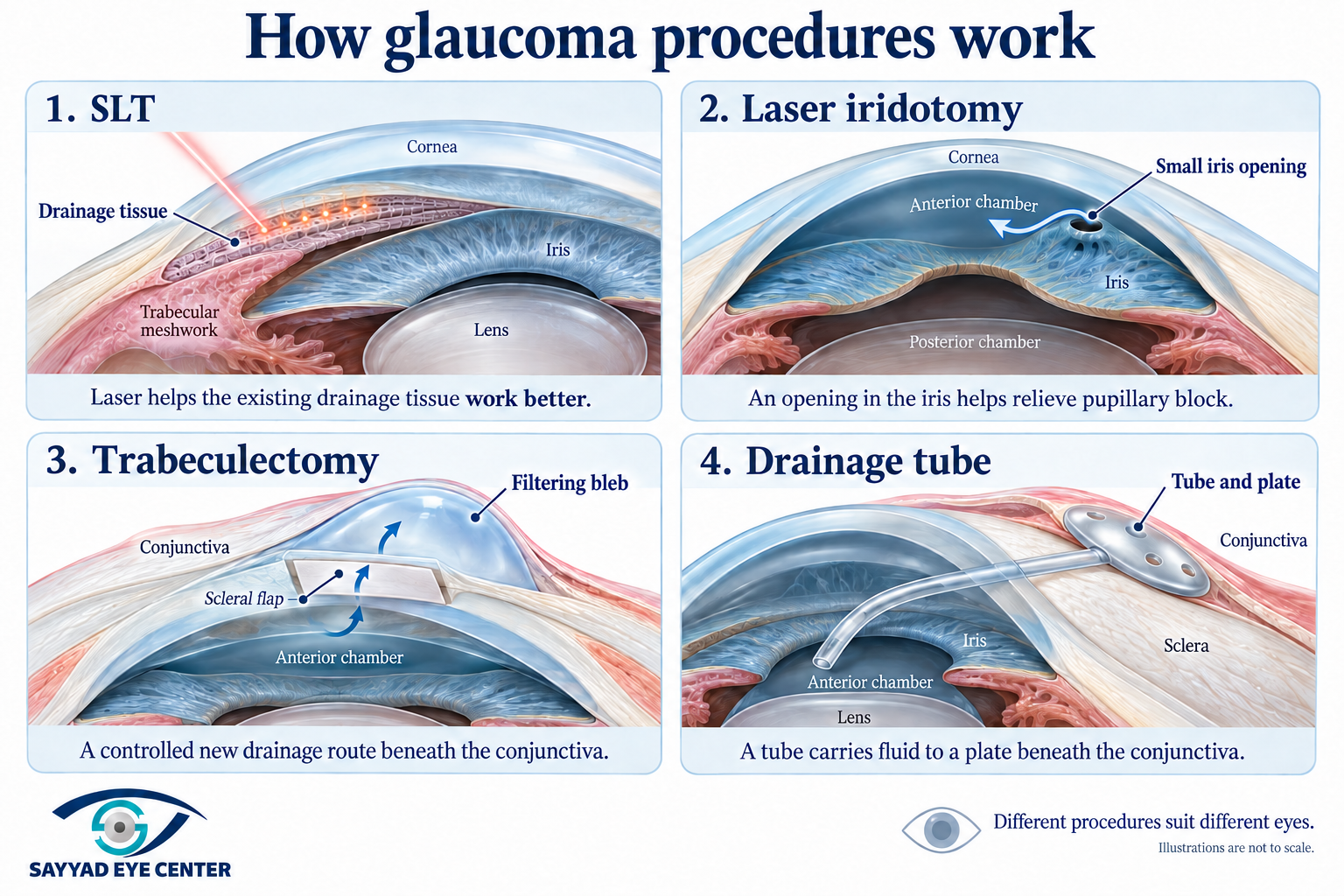
SLT treats the natural drainage tissue to improve fluid outflow in suitable open-angle eyes. It is usually an outpatient treatment and may reduce the need for drops. Its effect varies and can lessen over time; some patients need repeat laser or additional treatment. Continue medication until your doctor tells you otherwise.
Laser peripheral iridotomy
A small opening in the iris provides an alternative route for fluid when pupillary block contributes to angle closure. It is used for selected narrow-angle or angle-closure situations. It is different from SLT and does not reverse existing nerve damage. Pressure checks and further treatment may still be needed.
Cyclophotocoagulation
This laser targets the fluid-producing ciliary body to reduce pressure. Different techniques are available for selected cases. Your specialist weighs the expected benefit against inflammation, excessive pressure lowering and other risks; it is not interchangeable with SLT.
Trabeculectomy
The surgeon creates a controlled drainage route beneath the surface covering of the eye. This can achieve a substantial pressure reduction when needed. Healing influences the result, so close postoperative monitoring and adjustments are important.
Glaucoma drainage tubes
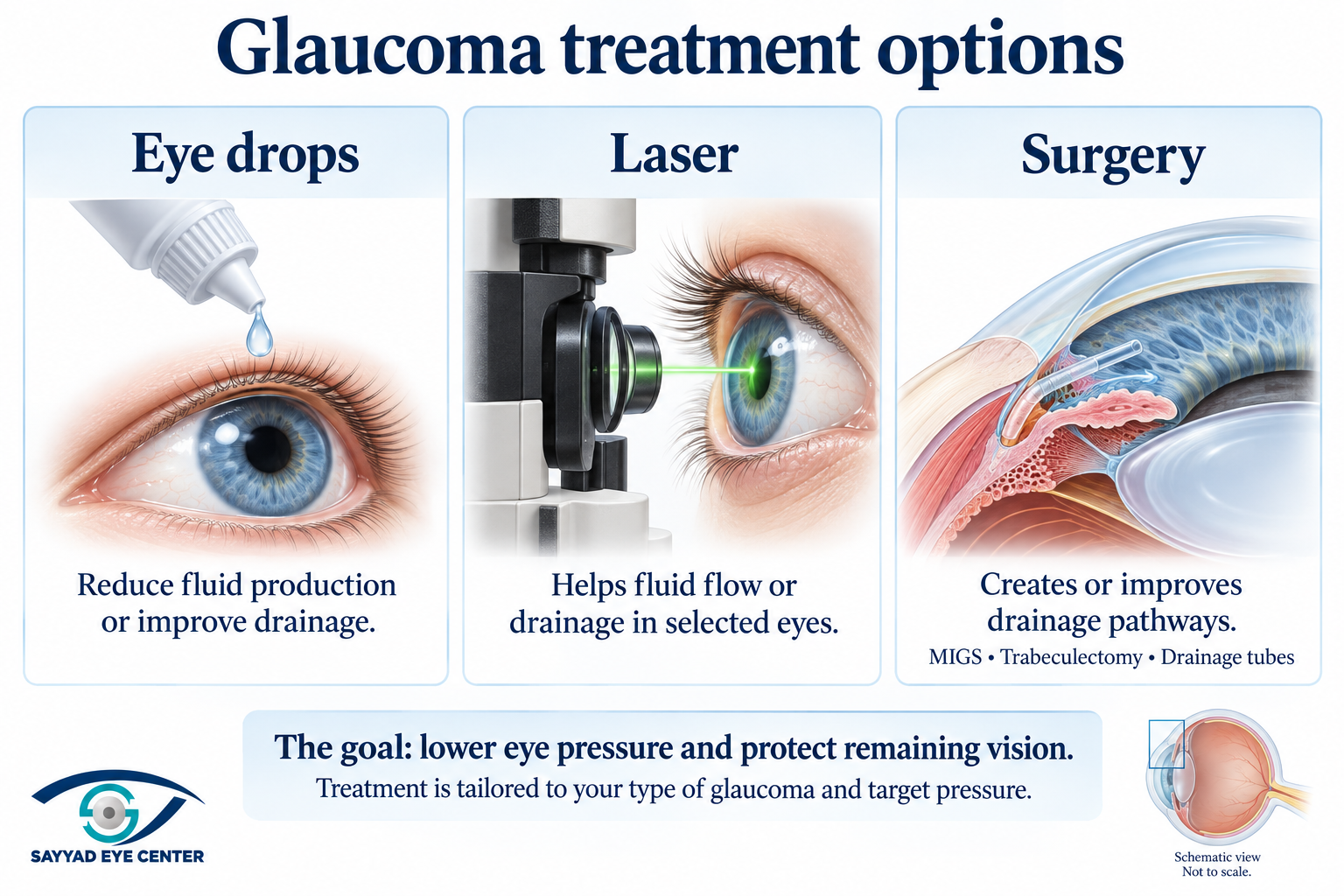
A small tube carries fluid to an implanted drainage plate beneath the eye’s surface covering. This may suit selected eyes, including some with previous surgery or complex glaucoma. The implant and procedure are chosen according to the individual eye.
Minimally invasive glaucoma surgery or MIGS
MIGS includes several procedures designed to improve drainage with less tissue disruption. Some can be combined with cataract surgery in suitable patients, often with mild to moderate open-angle glaucoma. They may reduce pressure or medication burden, but may not achieve the very low pressure required in advanced disease. A smaller procedure is not automatically the best choice for every eye.
Cataract surgery and glaucoma
Removing the natural lens can deepen a narrow drainage angle and lower pressure in selected eyes. Cataract surgery may be performed alone or combined with glaucoma surgery. It does not automatically replace glaucoma care, and the choice depends on both conditions.
Benefits and risks
The aim is lasting pressure control and protection of remaining sight. Surgery does not restore nerve tissue already lost. Risks include infection, bleeding, pressure that is too high or too low, and changes in vision. Further procedures or drops may be needed. Your surgeon will explain the balance for your eye, including the risk of continued glaucoma progression without adequate treatment.
Follow up and frequently asked questions
Living with glaucoma
Keep appointments even when vision feels unchanged. Long-term care may include repeat fields, OCT and pressure checks. After surgery, follow the written plan for drops, activity and visits; some operations require frequent early checks. Increasing pain, sudden visual deterioration or marked redness needs prompt contact with the treating team or an emergency eye service.
Can glaucoma be cured
Current treatment controls the disease and aims to prevent further damage. It does not generally reverse lost vision. Continued monitoring remains important after successful laser or surgery.
Will I go blind
Blindness is not inevitable. Early detection, appropriate treatment and consistent follow-up give the best opportunity to preserve useful sight. The outlook depends on the damage already present and how well progression is controlled.
Is glaucoma the same as cataract
No. Cataract clouds the natural lens, while glaucoma damages the optic nerve. Both can occur together, but their treatment and expected visual recovery differ.
Which is better drops laser or surgery
There is no universal winner. The answer depends on the glaucoma type, target pressure, severity, test results, other eye conditions and your ability to use drops reliably. Ask why the proposed option suits your eye.
Can I stop drops after laser or surgery
Only if your specialist advises it. Some people need fewer drops; others still need medication to reach their pressure goal.
Should my family be checked
Tell close relatives about your diagnosis so they can discuss their risk and examination schedule with an eye doctor.
Can I travel for treatment in Cairo
For planned care, share previous visual fields, OCT scans, pressure records and your medication list. Agree on the likely stay and postoperative visits before booking the return journey. Acute symptoms need immediate local care wherever you are.
Glaucoma care at Sayyad Eye Center
Arrange a glaucoma assessment in New Cairo or Mohandeseen and confirm specialist availability. Patients coming from Sheikh Zayed or 6th of October can ask which branch best suits their visit. Bring previous tests so the doctor can assess changes over time.
Medical reviewer: Dr Omar Magdy — Consultant of Glaucoma & Cornea, Sayyad Eye Center.
References
AAO patient guide to glaucoma
https://aao.org/eye-health/diseases/what-is-glaucoma
AAO glaucoma patient brochure
https://store.aao.org/media/resources/051189/051189-glaucoma-rf1.pdf
AAO combined cataract glaucoma surgery and MIGS
https://aao.org/eye-health/treatments/combined-cataract-glaucoma-surgery-facts
AAO evidence on laser as initial glaucoma treatment
https://aao.org/newsroom/news-releases/detail/evidence-support-shift-in-standard-glaucoma-care
AAO Primary Open Angle Glaucoma Preferred Practice Pattern
https://www.aaojournal.org/article/S0161-6420(20)31024-1/fulltext
AAO Primary Open Angle Glaucoma Suspect Preferred Practice Pattern
https://www.aaojournal.org/article/S0161-6420(25)00814-0/fulltext