ZEISS PRESBYOND Laser Blended Vision
Learn how ZEISS PRESBYOND addresses age-related reading difficulties, who may qualify, recovery and alternatives at Sayyad Eye Center in Cairo.

PRESBYOND is a personalised laser treatment for presbyopia, the age-related difficulty with near focusing. It reshapes the cornea to help suitable patients use both eyes together across near, intermediate and distance tasks. The aim is greater freedom from glasses in everyday life, while keeping the natural lens in place.
Why reading becomes harder after forty
As the natural lens becomes less flexible, small print and phone messages become harder to focus on. Holding a menu farther away or needing brighter light can be early clues. This can happen even if your distance vision is excellent or you previously had successful laser correction. Presbyopia is different from long-sightedness, although both may occur together.
How Laser Blended Vision works
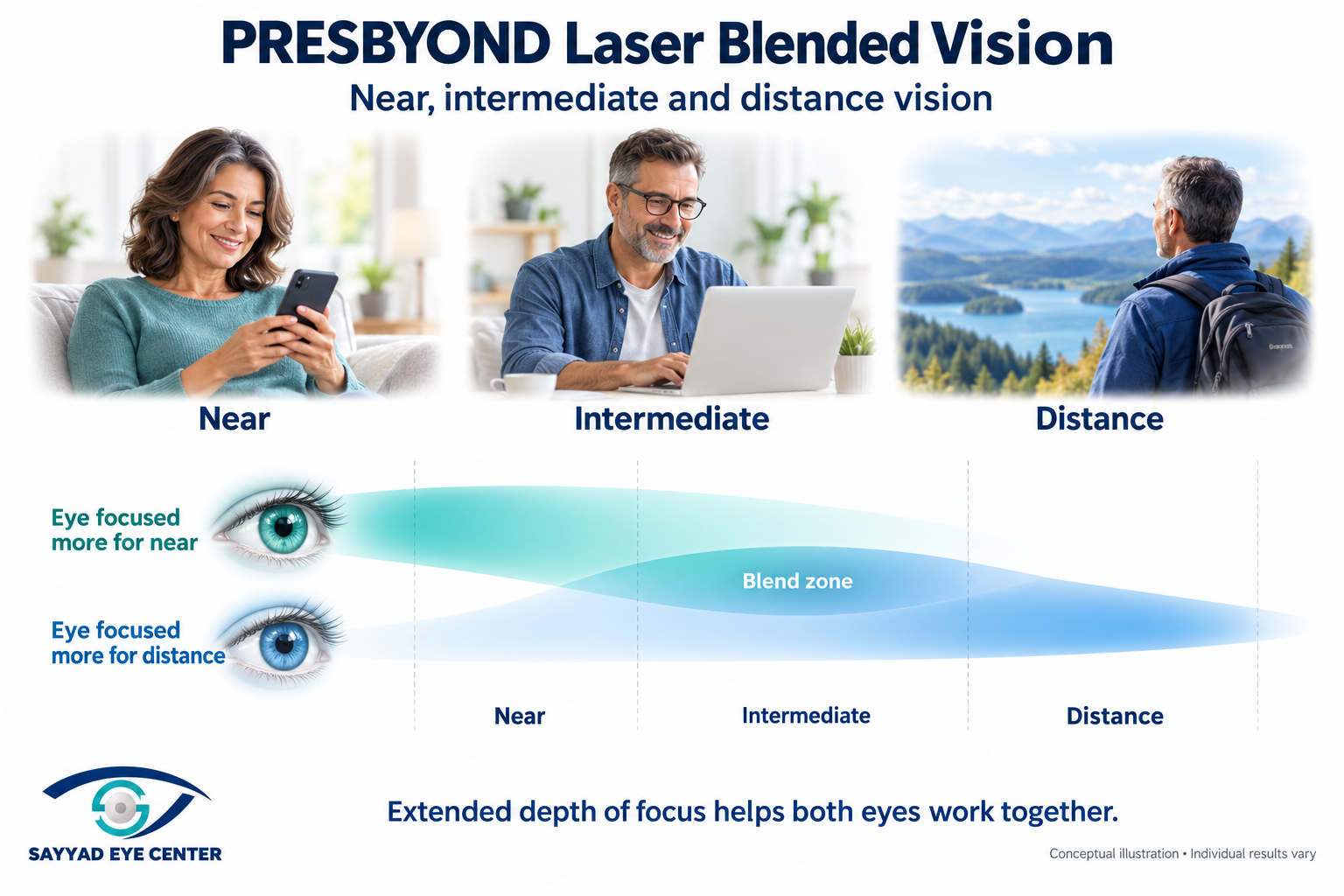
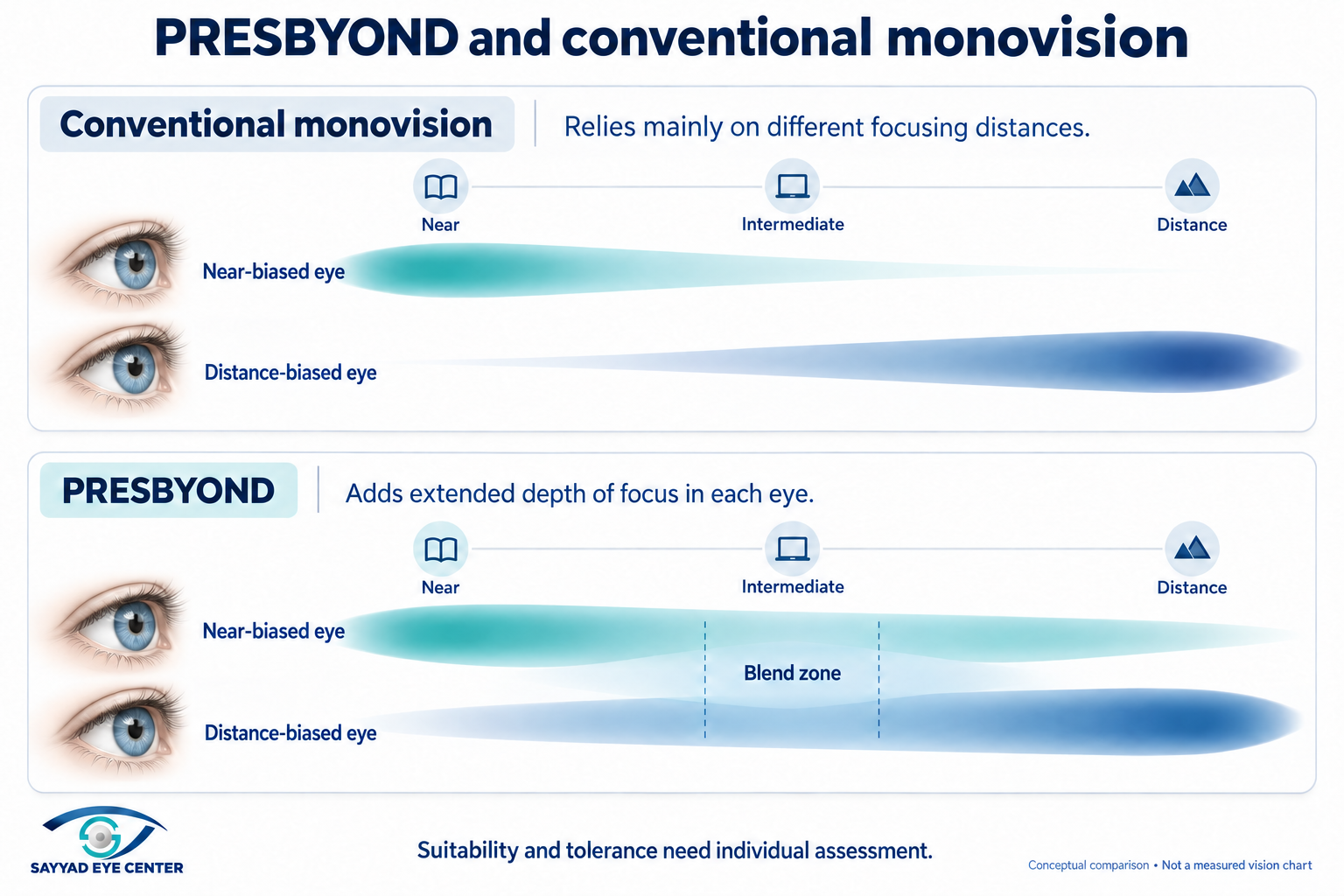
The treatment combines a small, planned difference in focus between the eyes with an increased depth of focus in each eye. Usually the dominant eye is aimed mainly at distance and the other eye slightly more at near. Both eyes still contribute to vision. Their useful focusing ranges overlap, creating what ZEISS calls a blend zone, particularly at intermediate distances such as a computer screen.
The surgeon uses measurements of your eyes to plan a customised corneal profile. Controlled changes in spherical aberration, an optical property of the eye, extend the focusing range. PRESBYOND compensates for presbyopia; it does not make the natural lens young again or restore its original ability to change focus.
The benefits patients usually care about
The practical goal is to make everyday tasks such as reading messages, using a laptop and looking into the distance easier with less reliance on glasses. It is a corneal procedure, so it does not involve removing the natural lens or inserting an implant. It can also address suitable distance prescriptions, including selected cases with astigmatism, within the treatment limits.
Some patients still use glasses for very small print, prolonged close work or demanding night driving. Your working distances, lighting and visual priorities matter more than a promise to never wear glasses again.
PRESBYOND compared with conventional monovision
Conventional monovision mainly relies on setting the eyes at different focal distances. PRESBYOND also extends each eye’s depth of focus to improve the overlap between those ranges. This can make combining the images easier, but tolerance and depth perception still need assessment. Neither approach is suitable for everyone.
Assessment treatment and recovery
Who may be suitable
People troubled by reading glasses, commonly from their forties onwards, may be considered if their prescription is stable, their corneas are suitable for LASIK and the natural lenses remain sufficiently clear. Age alone does not determine eligibility. Cataract, keratoconus, significant dry eye or other eye disease may change the recommendation.
What a careful consultation should include
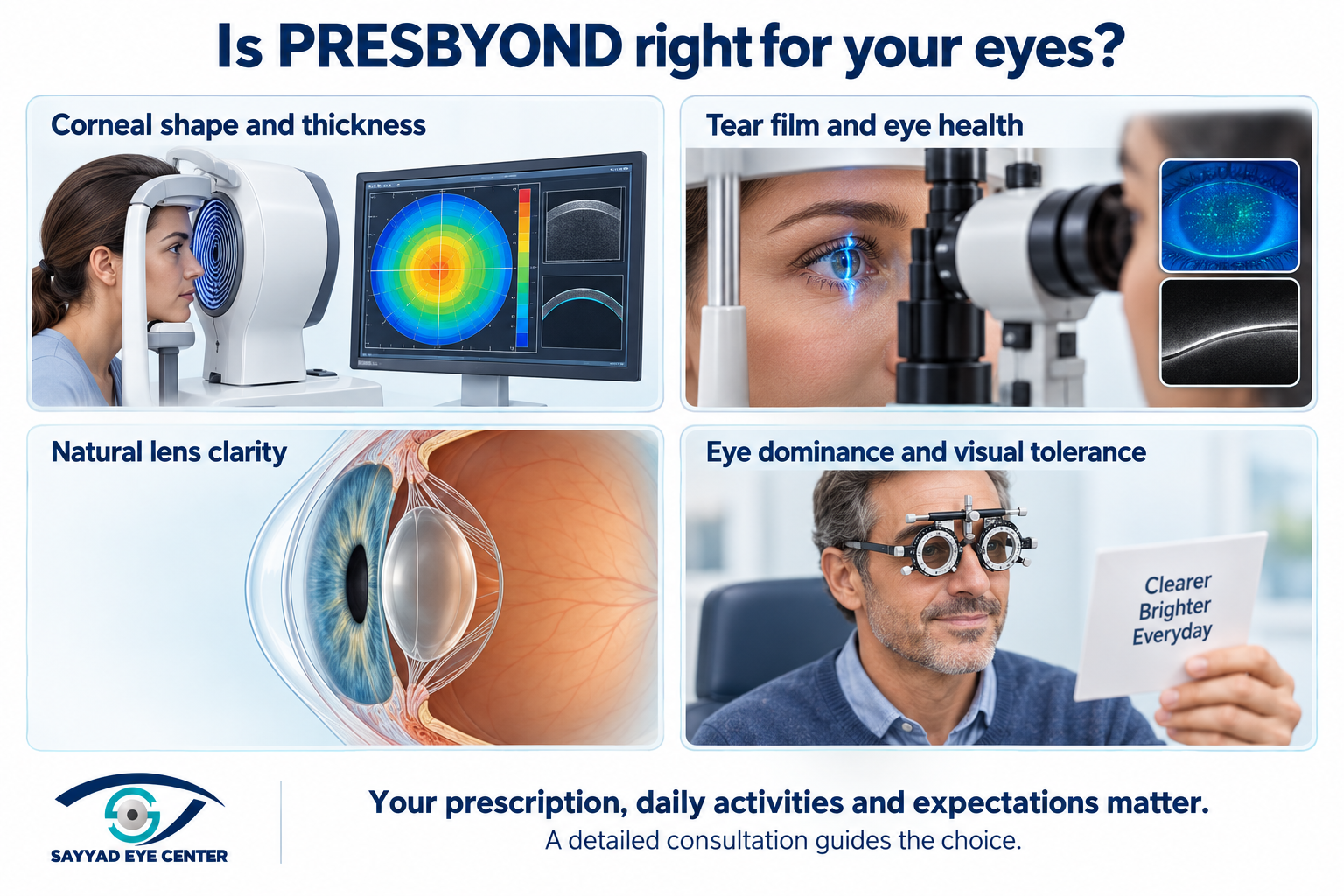
Assessment includes your prescription and best corrected vision, corneal shape and thickness, tear film, lens clarity and eye health. The surgeon checks eye dominance and how comfortably you tolerate a small difference in focus between the eyes. A trial with lenses may help assess tolerance, although it cannot reproduce every optical effect of the laser treatment.
Bring your glasses and previous laser records, if applicable. Explain your typical reading distance, screen work, night driving and hobbies. Your doctor should give honest advice, answer your questions and explain why PRESBYOND or an alternative suits your eyes. Follow the clinic’s instructions about stopping contact lenses before measurements.
What happens during the procedure
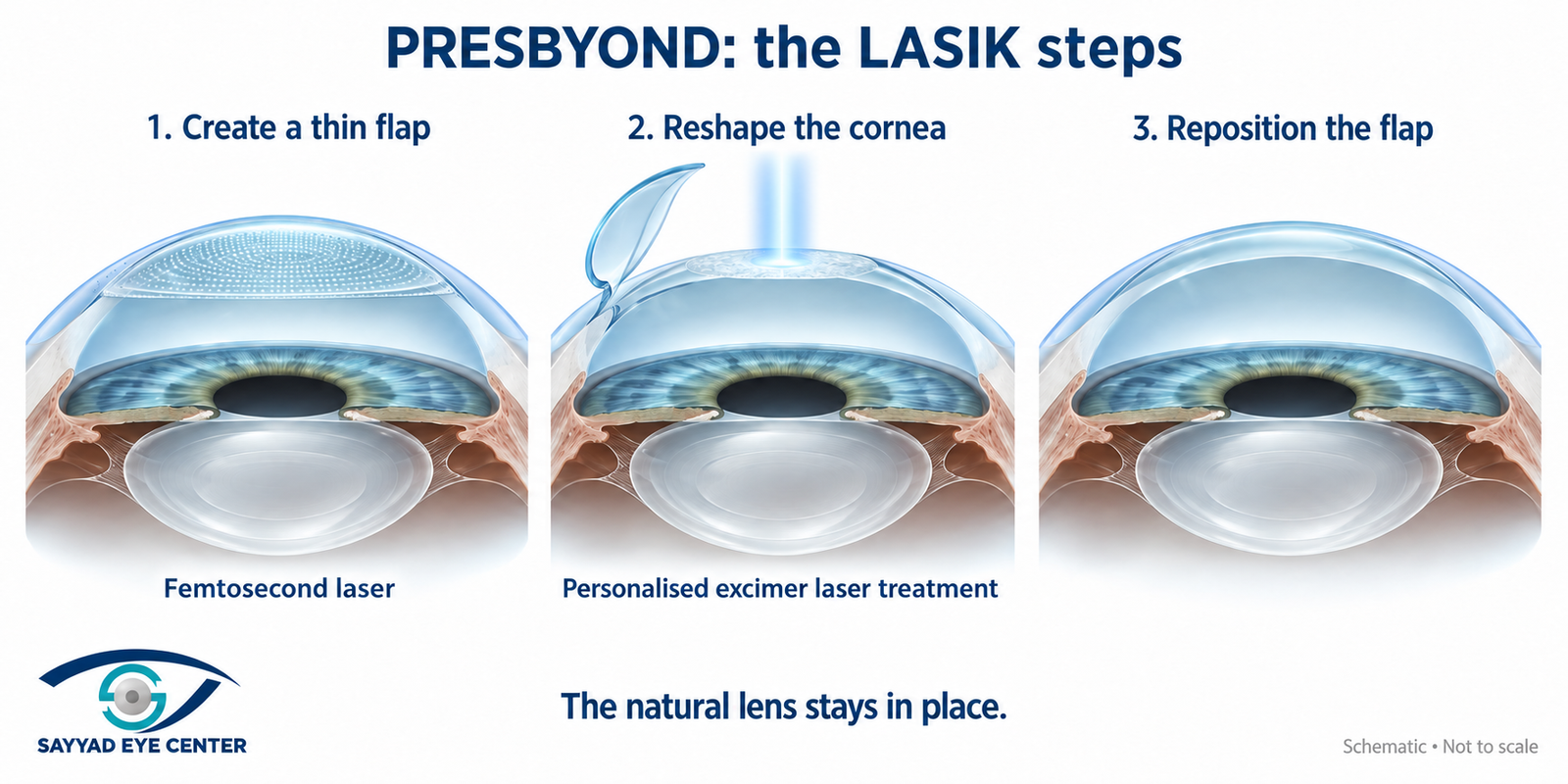
Numbing drops are applied. In a femtosecond LASIK approach, a femtosecond laser creates a thin corneal flap. The flap is lifted and an excimer laser reshapes the underlying cornea using the personalised PRESBYOND plan. The surgeon then repositions the flap. The natural lens remains inside the eye.
ZEISS describes PRESBYOND as a planning software option used with the MEL 90 excimer laser. It is not SMILE Pro and does not involve extracting a lenticule. A femtosecond laser used to create the flap and the excimer laser that performs the reshaping have different roles.
Healing and adaptation are different
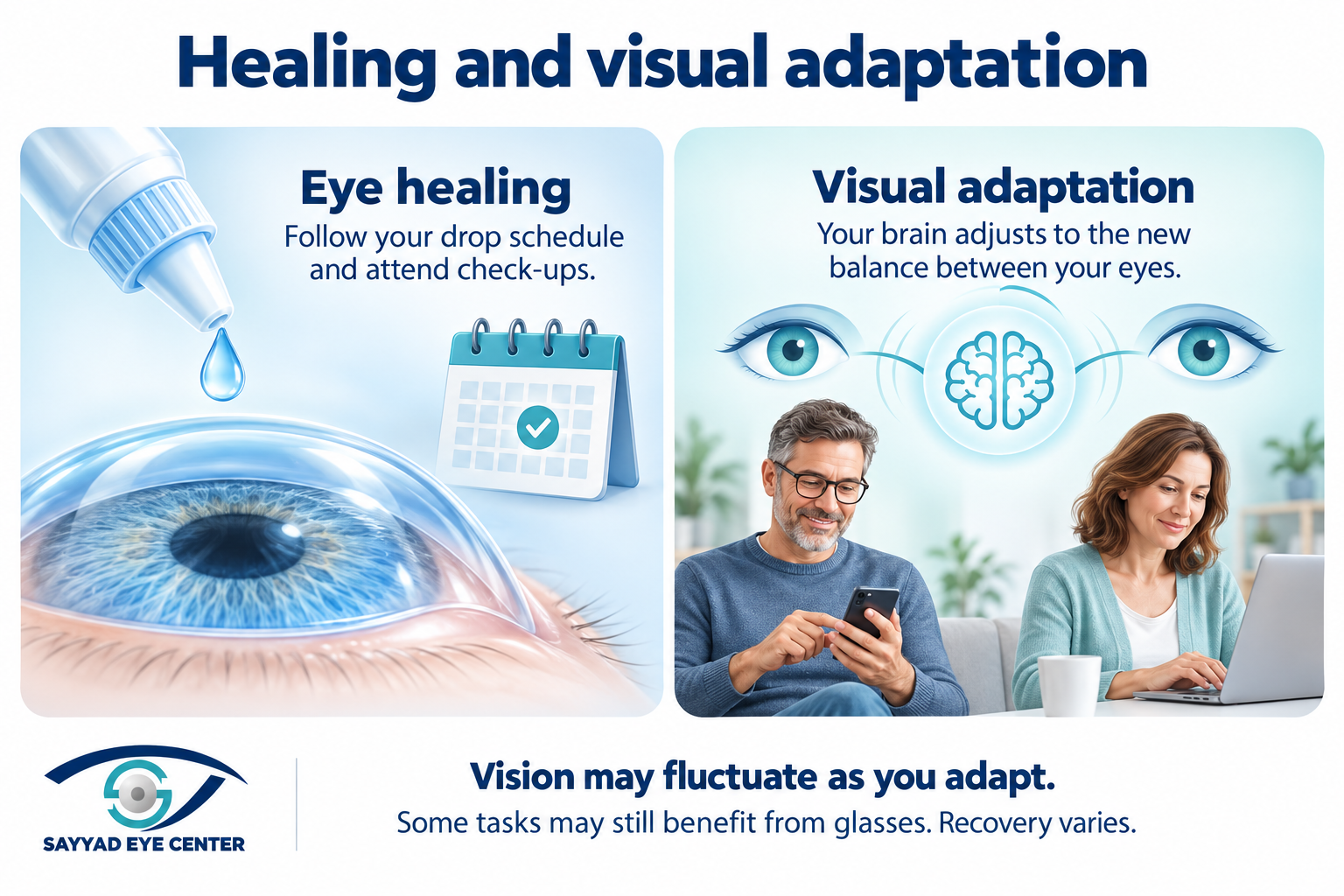
Vision may improve early, but comfortable blended vision can take longer. The surface heals while the brain adjusts to the new balance between the eyes. Clarity may fluctuate and adaptation can continue over weeks or months. Do not judge the final result from the first day or from testing each eye separately.
Use prescribed drops and attend follow-up visits. Avoid rubbing your eyes and follow your surgeon’s restrictions for exercise, swimming and makeup. Arrange transport home and resume driving only when your vision meets the relevant standard and your doctor agrees. Worsening vision, increasing pain or marked redness needs prompt assessment.
Side effects and risks in perspective
Like any surgery, PRESBYOND has risks. Temporary dryness, glare, halos and fluctuating vision can occur; occasionally symptoms persist. Some people find the difference between the eyes difficult to adapt to or need further correction. Rare but potentially serious LASIK complications include infection, flap complications and corneal weakening. Careful screening reduces risk but cannot remove it completely.
PRESBYOND questions patients ask
Will I definitely stop using reading glasses
The aim is to reduce dependence on glasses. Your result depends on your eyes, healing, adaptation and the task. Occasional glasses may still give the most comfortable vision.
Does the treatment last forever
The corneal reshaping is lasting, but your eyes continue to age. Presbyopia, prescription changes or future cataract can alter vision. Later glasses, further treatment or cataract surgery may be needed.
Can I have PRESBYOND after previous LASIK or SMILE
Possibly, but this requires a fresh assessment of corneal shape, remaining tissue, previous treatment and lens clarity. It is not an automatic enhancement. Bring your original surgical records if available.
Is PRESBYOND the same as SMILE Pro
No. PRESBYOND is a LASIK-based strategy designed to manage presbyopia. SMILE Pro uses lenticule extraction for suitable refractive errors. Standard correction of distance vision alone does not resolve age-related loss of near focusing.
What if I already have cataract
PRESBYOND does not remove cataract. If lens clouding affects your vision, cataract surgery and a discussion of lens options may be more appropriate. Lens replacement is an operation inside the eye with different benefits and risks.
What are the alternatives
Reading or progressive glasses and suitable contact lenses remain useful options. Selected patients may consider conventional monovision or lens-based surgery. The choice should reflect eye health, tolerance and priorities.
Can I still have cataract surgery in the future
Yes. Tell the future surgeon about your corneal laser treatment and retain your measurements and operative records. Previous laser correction needs to be taken into account when planning the lens implant.
Can I travel to Cairo for assessment
Yes, an in-person examination is needed to decide suitability. Before travelling from the GCC, Europe or elsewhere, share relevant records and agree on assessment and follow-up arrangements. Confirm the treatment location and schedule before booking a return flight.
Discuss your options at Sayyad Eye Center
Arrange a presbyopia consultation in New Cairo or Mohandeseen. Patients living in Sheikh Zayed or 6th of October can ask which branch is most convenient. A personalised assessment should establish what is causing your reading difficulty and which approach offers the most useful vision for your daily life.
References
PRESBYOND technical overview
https://www.zeiss.com/meditec/en/products/refractive-lasers/excimer-laser/presbyond.html
Patient guide to PRESBYOND
https://www.zeiss.com/vision-care/en/eye-surgery/vision-correction-surgery/presbyond.html
Presbyopia management and treatment planning
https://www.zeiss.com/meditec/en/specialties/ophthalmology/presbyopia-management/plan.html
PRESBYOND overview for eyes without cataract
https://www.zeiss.com/meditec/en/c/refractive-lasers/zeiss-presbyond-growth-in-focus.html