SMILE Pro in New Cairo
Considering SMILE Pro in New Cairo? Learn about VISUMAX 800, suitability, recovery and risks, then book an assessment with Sayyad Eye Center.
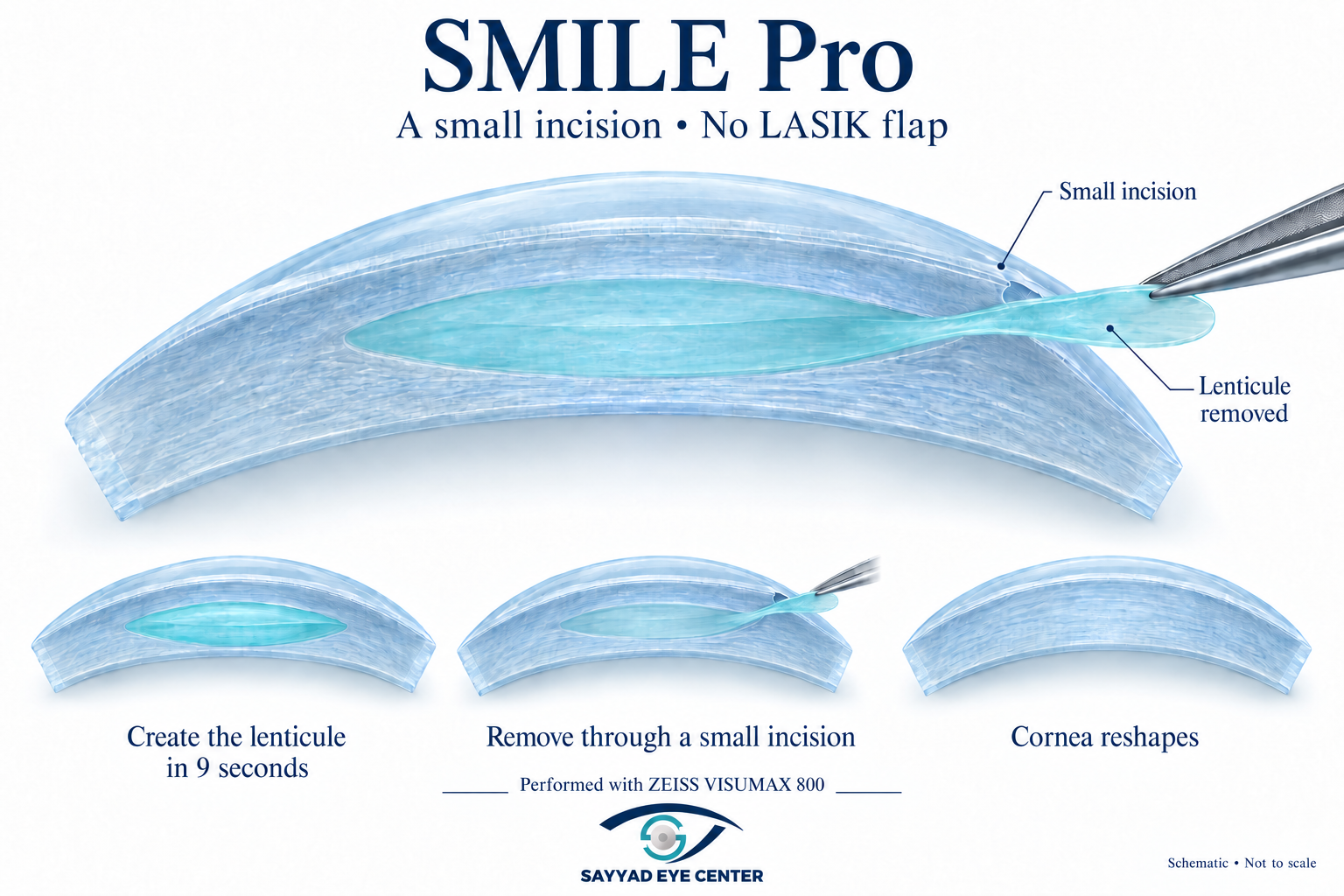
SMILE Pro is a laser vision correction procedure that reshapes the cornea through a small opening, without creating a LASIK-style flap. It can reduce dependence on glasses or contact lenses in suitable patients. Your prescription, corneal scans and eye health determine whether it is right for you.
At Sayyad Eye Center, we use ZEISS VISUMAX 800 for SMILE Pro treatment at a new facility in New Cairo. Your journey starts with a refractive assessment and a discussion of your visual needs with Dr Fouad El Sayyad.
What is SMILE Pro
The cornea is the clear front surface of the eye. During SMILE Pro, a femtosecond laser creates a thin piece of tissue within it, called a lenticule. The surgeon removes this tissue through a small opening, changing the shape of the cornea so light focuses more accurately. [1, 2]
SMILE Pro uses the VISUMAX 800 platform. Its faster laser stage and positioning aids support the surgeon during treatment. These features do not remove the need for careful screening or guarantee a particular result. [1]
Who may be suitable for SMILE Pro
SMILE Pro is an option for selected adults with a stable prescription, including patients with short-sightedness and astigmatism. Treatment ranges and other indications depend on local approval and the individual eye; your glasses prescription alone is not enough to decide. [3]
Your assessment should answer four questions:
• Is your prescription stable enough for treatment?
• Are the shape and thickness of your cornea suitable for the planned correction?
• Is your tear film healthy, or does dry eye need treatment first?
• Are your expectations realistic for work, night driving, sport and reading?
Laser surgery may need to be postponed or avoided with unstable vision, keratoconus or suspicious corneal scans, uncontrolled dry eye, active eye disease, or pregnancy and breastfeeding. Tell your surgeon about medical conditions, medicines and previous eye surgery. [3]
What happens at the assessment
The examination includes measuring your prescription, mapping the cornea and its thickness, assessing the tear film and checking the health of the eye. Additional tests, including a retinal examination, may be needed. Bring previous prescriptions and reports if available, and ask when to stop contact lenses before measurements.
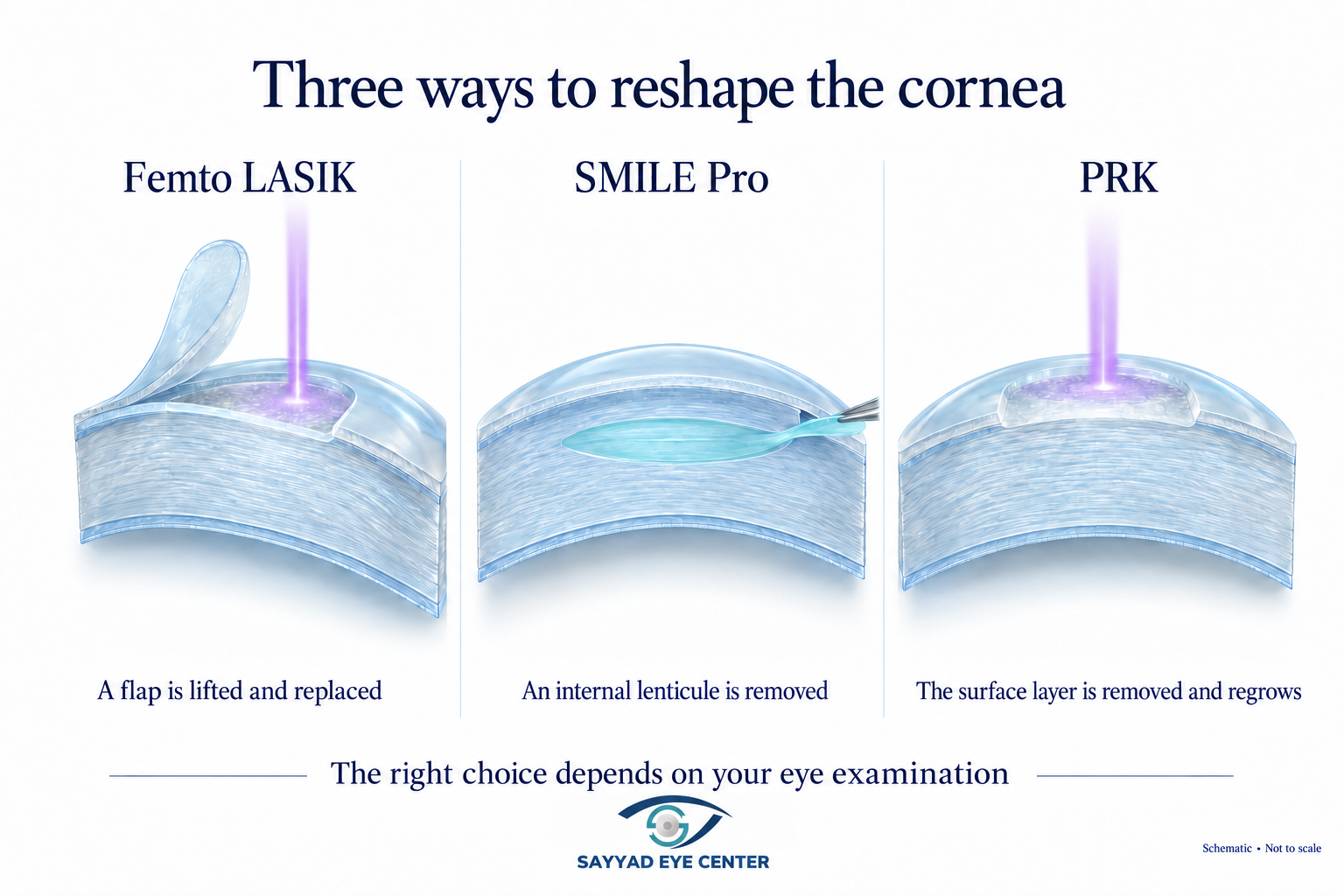
Your doctor should offer honest, individualized advice after a careful assessment, take time to answer your questions, and explain why SMILE Pro may suit you or why another option may be preferable. Glasses, contact lenses, LASIK, surface laser treatment or ICL may be considered according to your examination.
Treatment and recovery
What happens on the day
Numbing eye drops are used. You may notice pressure or a change in what you see while the laser works. The surgeon then removes the lenticule and checks your eye. Arrange for someone to take you home; do not plan to drive yourself. [2]
You may see SMILE Pro described in seconds. That refers to the laser stage, not your entire operation or appointment. Preparation, positioning, tissue removal and checks take additional time.
How long does recovery take
Many patients notice an early improvement in vision, but clear, comfortable vision can develop at a different pace in each eye. Mild watering, a gritty feeling, light sensitivity or fluctuating clarity can occur initially. Vision may continue to settle over the following weeks. [4, 5]
Returning to ordinary activities is different from being ready for night driving, swimming or contact sport. Your surgeon should give you a written plan based on your progress, rather than a fixed recovery promise.
Looking after your eyes
• Use prescribed drops as directed and attend your follow-up appointments.
• Avoid rubbing your eyes. Follow instructions about washing, makeup, swimming and sport.
• Take screen breaks if your eyes feel dry or tired, and use lubricating drops if prescribed.
• Resume driving only when your surgeon confirms that your vision is suitable. [4]
What are the possible risks
SMILE Pro is surgery and is not risk-free. Dryness, glare, halos, fluctuating vision and some remaining prescription can occur. Symptoms often improve, but they can persist. Some patients still need glasses or further assessment for additional correction. [5]
Other possible complications include infection, inflammation and corneal weakening, known as ectasia. Careful screening reduces avoidable risk but does not eliminate it. Your surgeon should explain the risks most relevant to your eyes before you decide.
Seek urgent advice for worsening pain, a sudden drop in vision, increasing redness or discharge. Do not wait for a routine follow-up if symptoms are getting worse.
Planning treatment when you live abroad
If you are visiting Egypt from the UAE, Saudi Arabia, another GCC country or Europe, tell the team your travel dates before booking treatment. Allow time for assessment, surgery if suitable and the required follow-up. Agree when you may fly and how to obtain care after returning home; do not assume next-day travel will suit your case.
Frequently asked questions about SMILE Pro
Is SMILE Pro better than LASIK
Neither is best for every eye. SMILE Pro does not create a LASIK-style flap, while LASIK offers different treatment options. Corneal measurements, prescription, eye health and visual priorities guide the choice. Ask why the recommended procedure fits your examination.
Is SMILE Pro painful
Numbing drops help keep you comfortable. You may feel pressure during treatment and some irritation afterwards. Comfort varies, so “completely painless” is not a promise. Worsening pain after surgery needs prompt advice.
Will SMILE Pro cause dry eye
Comparative studies of SMILE and Femto-LASIK suggest fewer dry-eye symptoms and better recovery of corneal sensitivity after SMILE, particularly in the first few months. Much of this evidence concerns SMILE generally, rather than VISUMAX 800 specifically. Dryness can still occur: discuss existing symptoms before surgery so your doctor can assess and treat the ocular surface and plan your aftercare. [5, 7]
When can I return to work or drive
This depends on your vision, comfort and the demands of your work. Desk work, dusty workplaces and professional driving require different planning. Arrange leave around your surgeon’s advice, and do not drive on the day of surgery. [2, 4]
Will I need glasses again
The aim is to reduce dependence on glasses, not guarantee lifelong freedom from them. Residual prescription or later changes may mean glasses are still useful. Distance correction does not stop age-related loss of near focus, so reading glasses may be needed as you get older. [5, 6]
Does a thin cornea rule out treatment
Thickness is only one part of the assessment. Corneal shape, structural health and the amount of tissue to be removed also matter. SMILE Pro is not an automatic solution for a thin or abnormal cornea; another approach may be safer.
How much does SMILE Pro cost in New Cairo
The indicative cost is approximately the equivalent of US$1,200. Prices may change slightly from month to month. Ask the center for a current written quotation confirming whether it covers one or both eyes, the payment currency, and which tests, medicines and follow-up visits are included.
Where is treatment performed
We use ZEISS VISUMAX 800 at a new facility in New Cairo. When arranging your appointment with Sayyad Eye Center, confirm the location of your assessment, your treatment and each follow-up visit.
Book a SMILE Pro suitability assessment
If you are considering SMILE Pro in New Cairo, book a refractive assessment with Dr Fouad El Sayyad at Sayyad Eye Center. The consultation will help you understand your options and whether the procedure matches your eyes and goals.
Medical review
Medically reviewed by Dr Fouad El Sayyad, Consultant Cornea, Cataract and Refractive Surgeon; American Board Certified in Ophthalmology; fellowship-trained in Cornea and Refractive Surgery in the USA.
References
Place these links in a short References section below each published article. ZEISS is the manufacturer and is used here for product and procedure information. AAO supports the explanation of age-related near-vision change. The comparative dry-eye statement is supported by the peer-reviewed meta-analysis in reference 7. Sources do not imply endorsement of the center.
1 ZEISS SMILE pro overview and VISUMAX 800 https://www.zeiss.com/vision-care/en/eye-surgery/vision-correction-surgery/smile-pro-laser-eye-surgery.html
2 ZEISS SMILE pro procedure https://www.zeiss.com/vision-care/en/eye-surgery/vision-correction-surgery/smile-pro-laser-eye-surgery/procedure.html
3 ZEISS SMILE pro suitability https://www.zeiss.com/vision-care/en/eye-surgery/vision-correction-surgery/smile-pro-laser-eye-surgery/suitability.html
4 ZEISS SMILE pro recovery and aftercare https://www.zeiss.com/vision-care/en/eye-surgery/vision-correction-surgery/smile-pro-laser-eye-surgery/recovery.html
5 ZEISS SMILE pro possible side effects https://www.zeiss.com/vision-care/en/eye-surgery/vision-correction-surgery/smile-pro-laser-eye-surgery/side-effects.html
6 American Academy of Ophthalmology What Is Presbyopia https://aao.org/eye-health/diseases/what-is-presbyopia
7 Dry eye and corneal sensitivity after SMILE and femtosecond LASIK Meta analysis 2017 https://pubmed.ncbi.nlm.nih.gov/28503439/
Sources checked 5 October 2026. Clinical copy also builds on the center’s supplied bilingual Laser Vision Correction draft. Local device use and the new New Cairo facility are management-supplied facts.